
Have Questions?
We'll review your message and get back to you within 48 hours.
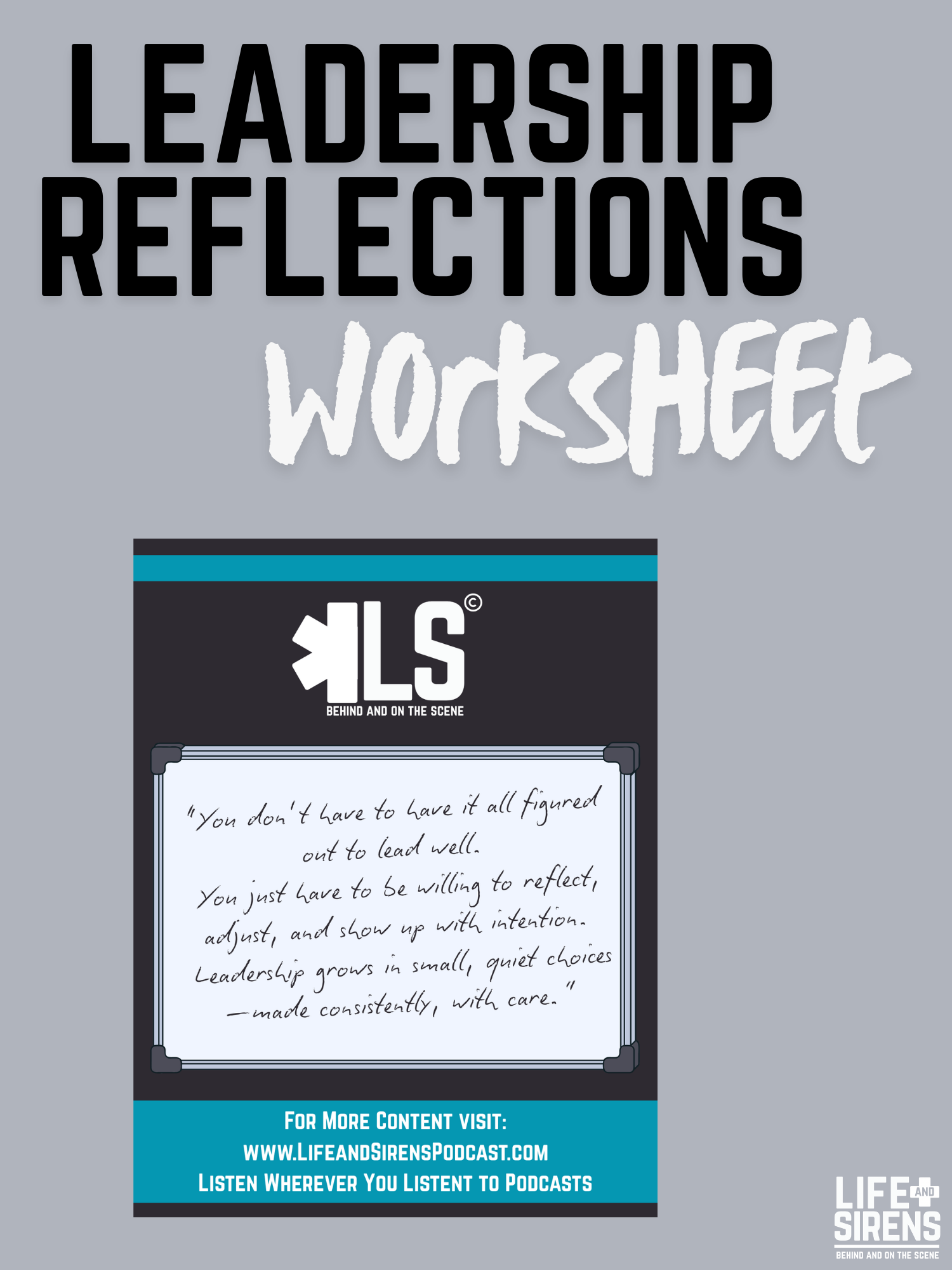



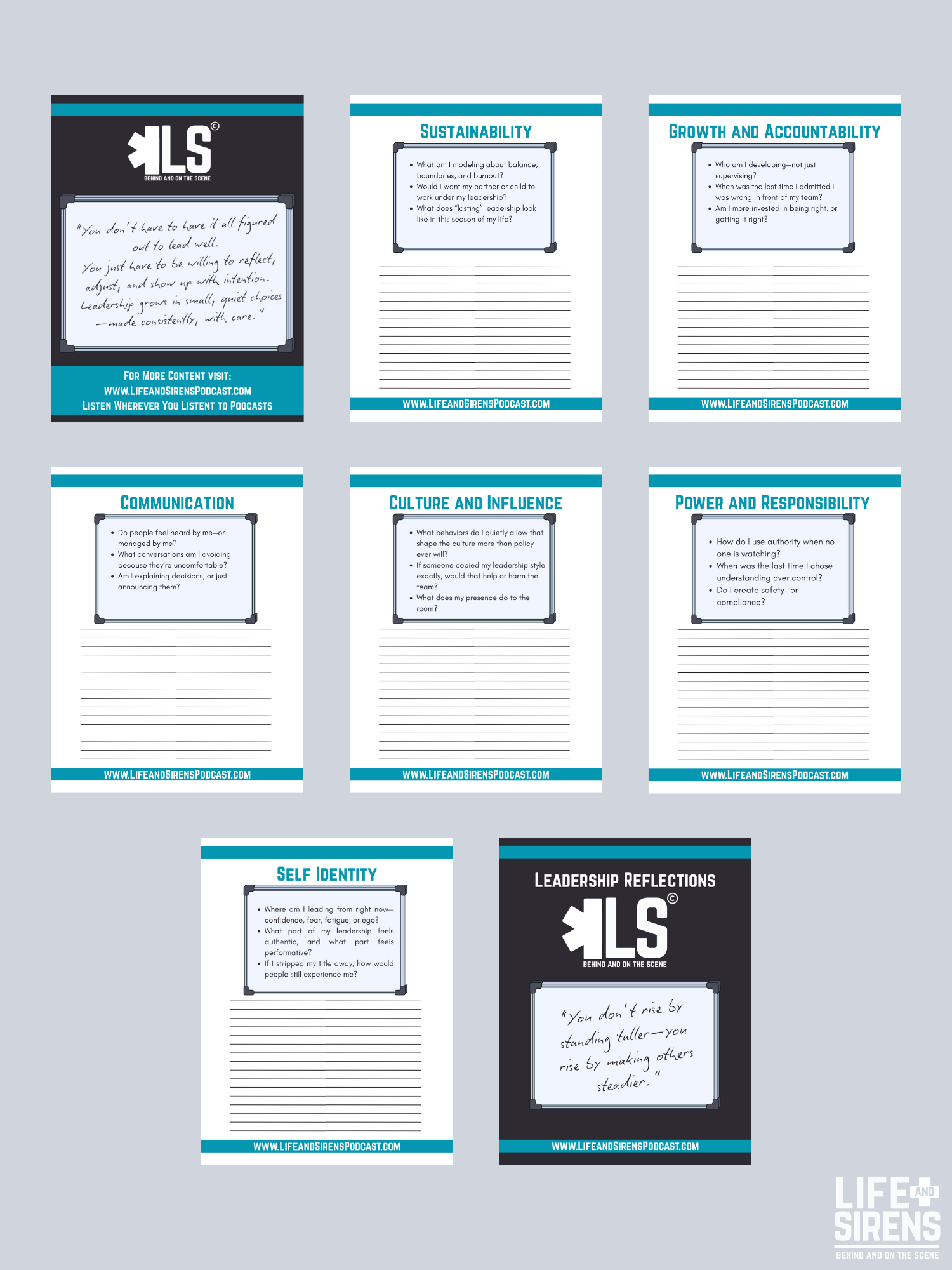
“You don’t rise by standing taller—you rise by making others steadier.”
The Life & Sirens Leadership Reflections Workbook is an 8-page guided reflection tool designed to help EMS leaders grow with intention, clarity, and accountability.
Built for supervisors, captains, training officers, and anyone shaping culture in emergency services.
Leadership doesn’t grow in titles — it grows in reflection.
This tool is designed to spark honest self-evaluation, strengthen culture, and encourage intentional leadership inside EMS agencies.
Digital download (PDF)
Printable format
Instant access after purchase
Designed for personal development or leadership training sessions
📄 Format: PDF download
📱 Use: Digital or print-friendly
⚠️ Disclaimer:
This resource is for educational and informational purposes only and is not intended to replace local protocols, medical direction, or clinical judgment. Always follow your agency’s policies and medical oversight.
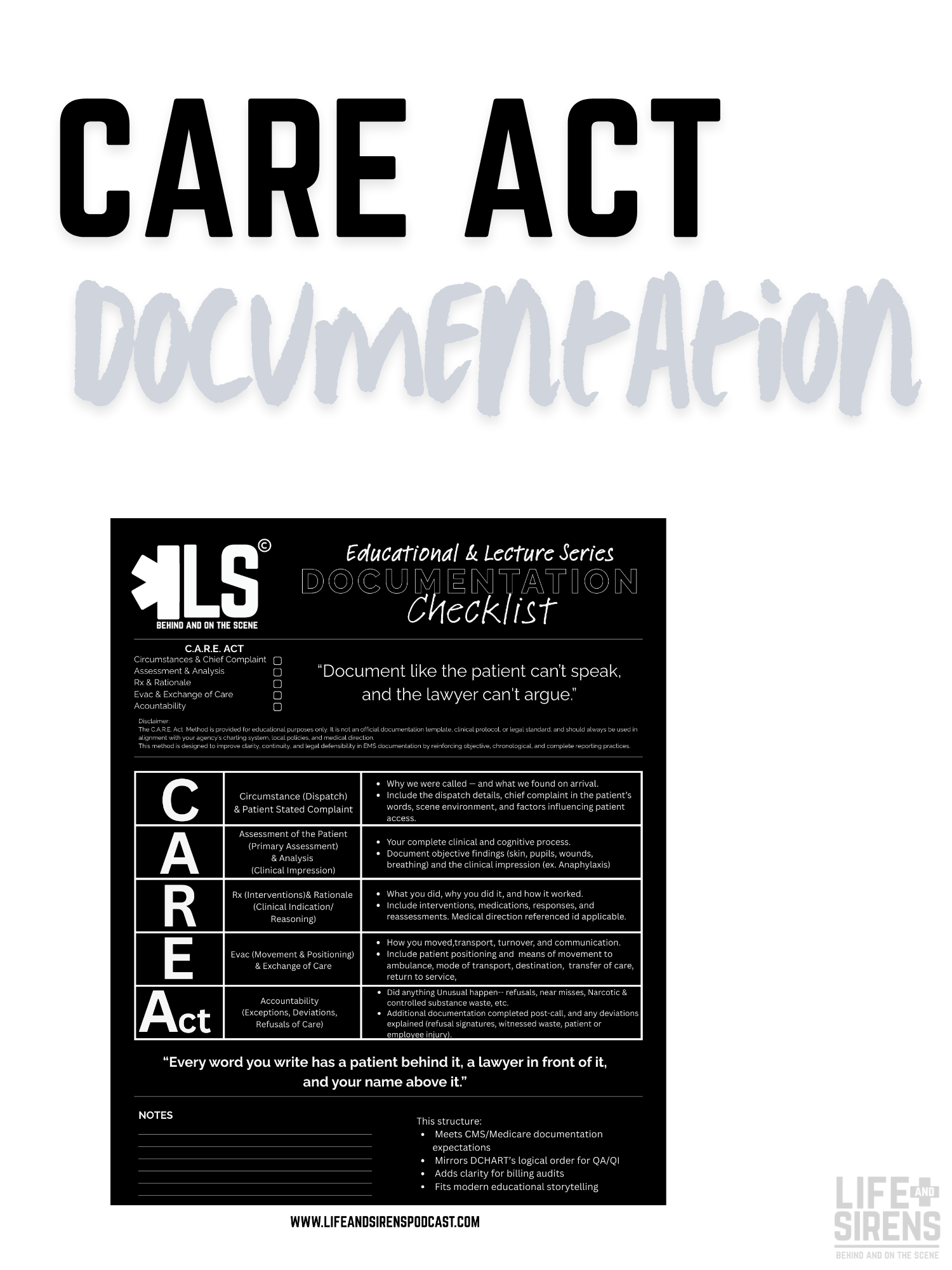
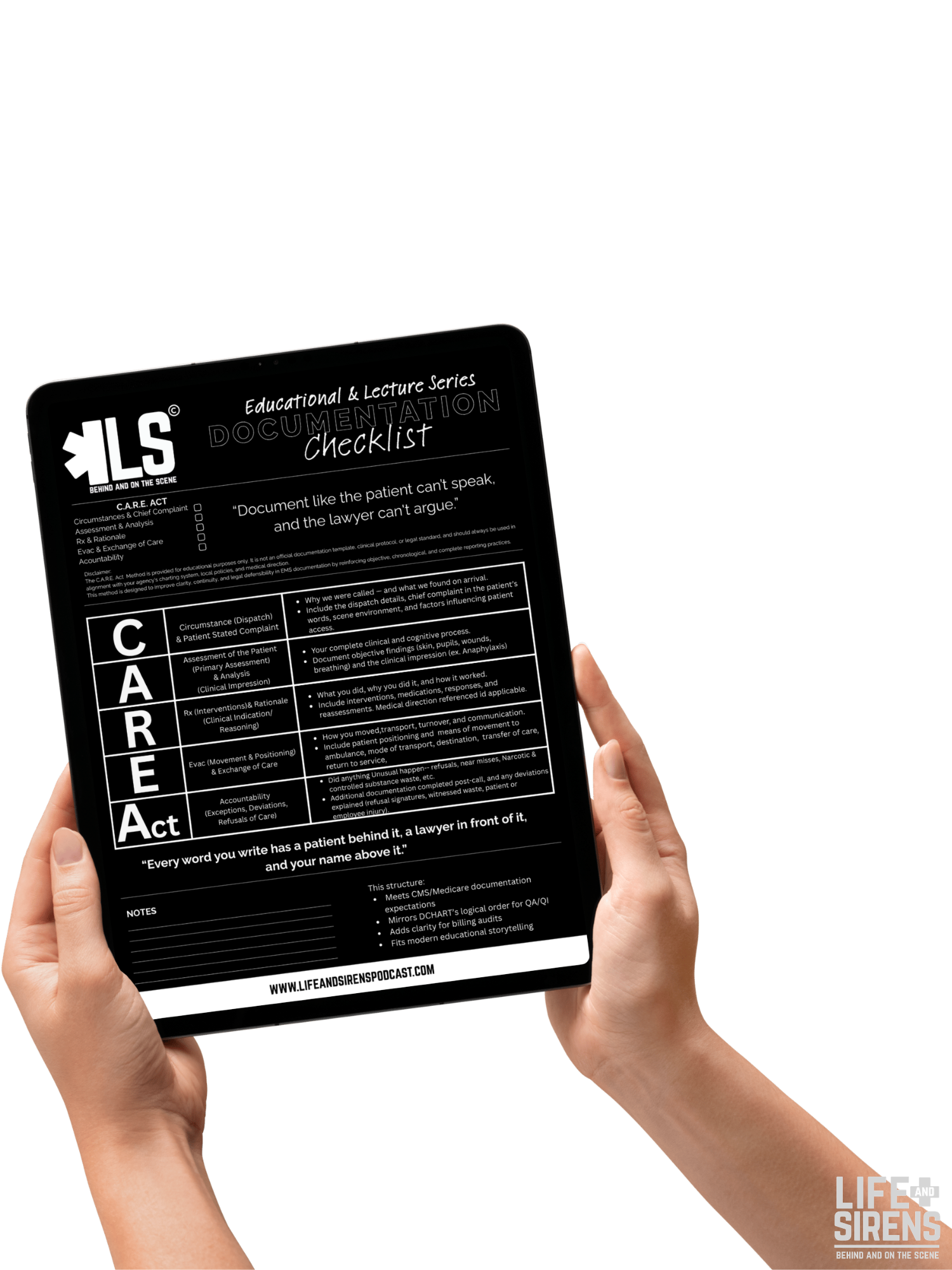
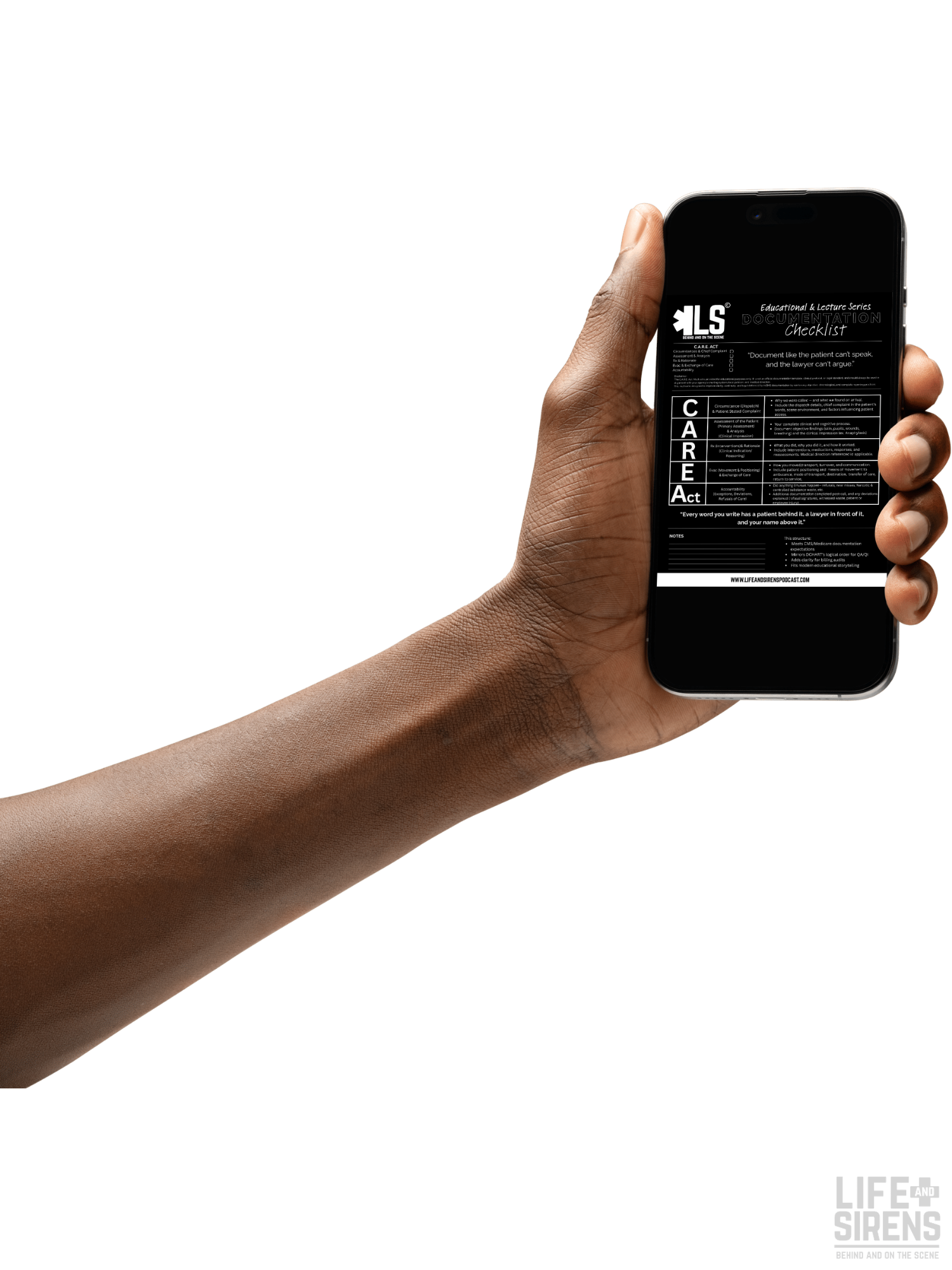
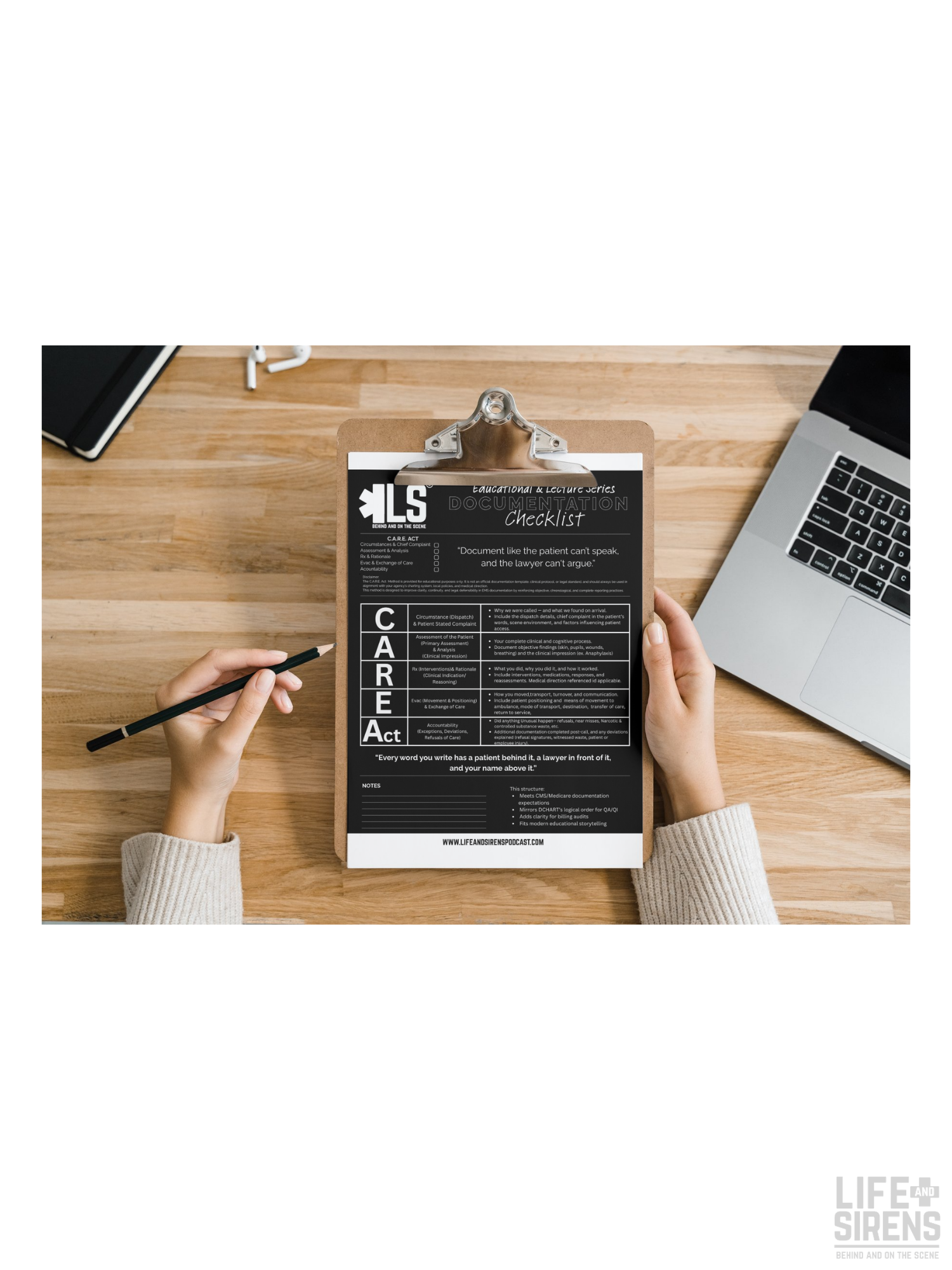
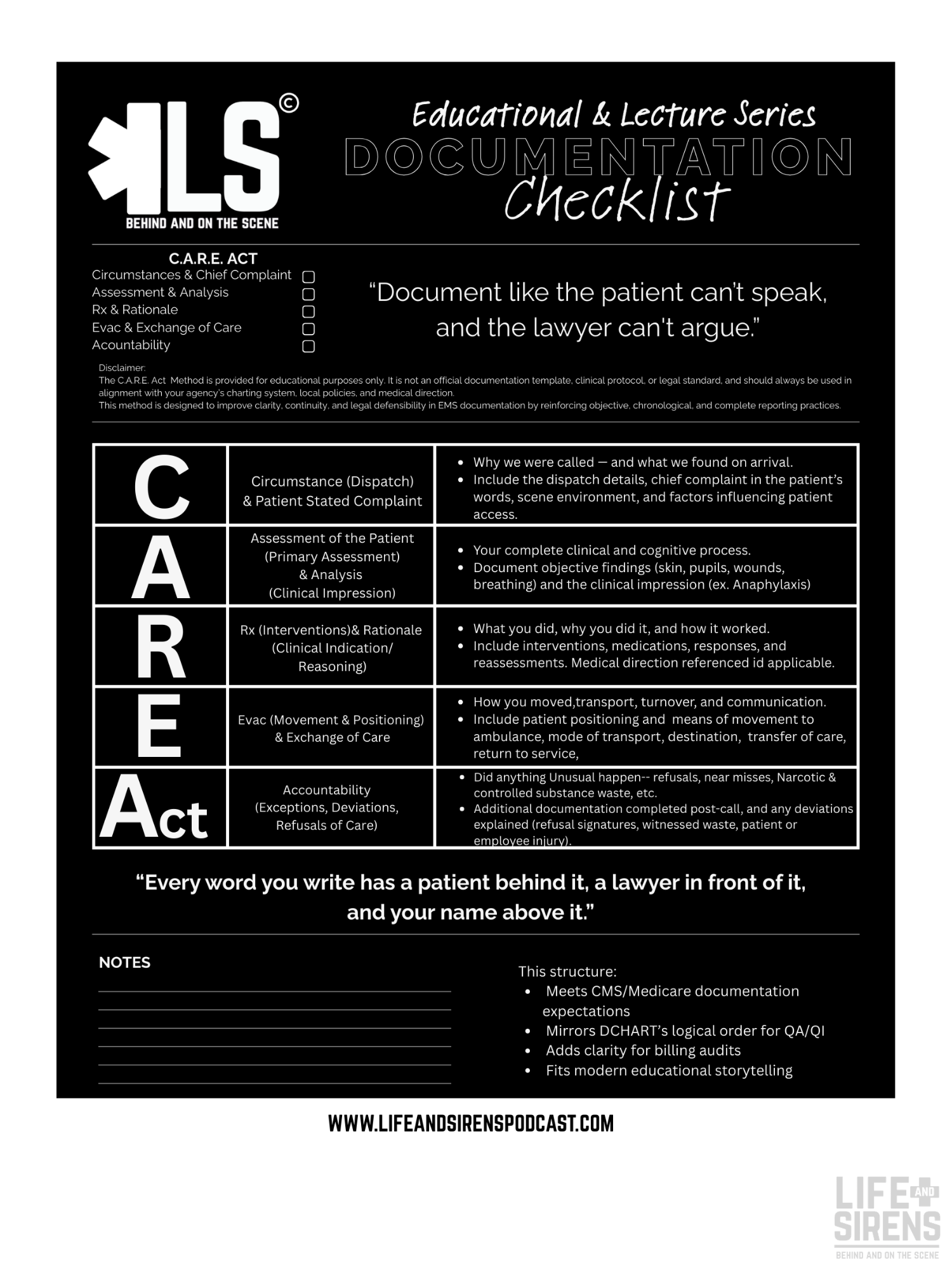
“Document like the patient can’t speak, and the lawyer can’t argue.”
The C.A.R.E. Act Documentation Method is a structured approach to EMS documentation designed to improve clarity, defensibility, and continuity of care.
This educational tool reinforces objective, chronological, and complete reporting practices — helping providers chart with purpose and confidence.
1-page printable PDF
C.A.R.E. Act structured breakdown:
C – Circumstances & Chief Complaint
A – Assessment & Analysis
R – Rx & Rationale
E – Evac & Exchange of Care
Act – Accountability
Bullet-point prompts under each section
Notes section for training use
CMS/Medicare documentation alignment reminders
Digital download (PDF)
Printable 8.5” x 11”
Instant download after purchase
Educational tool only — not a legal template
📄 Format: PDF download
📱 Use: Digital or print-friendly
⚠️ Disclaimer:
This resource is for educational and informational purposes only and is not intended to replace local protocols, medical direction, or clinical judgment. Always follow your agency’s policies and medical oversight.
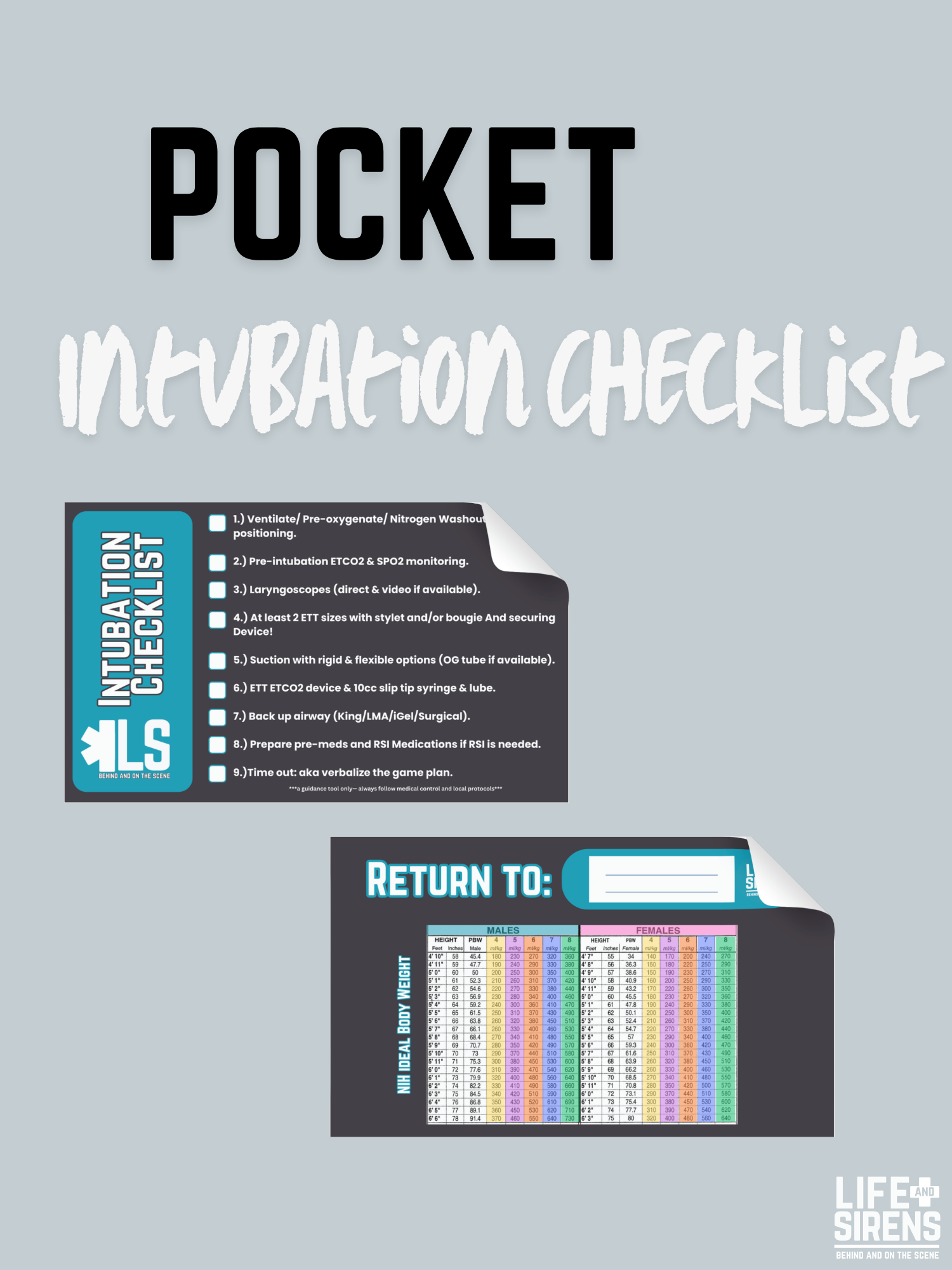
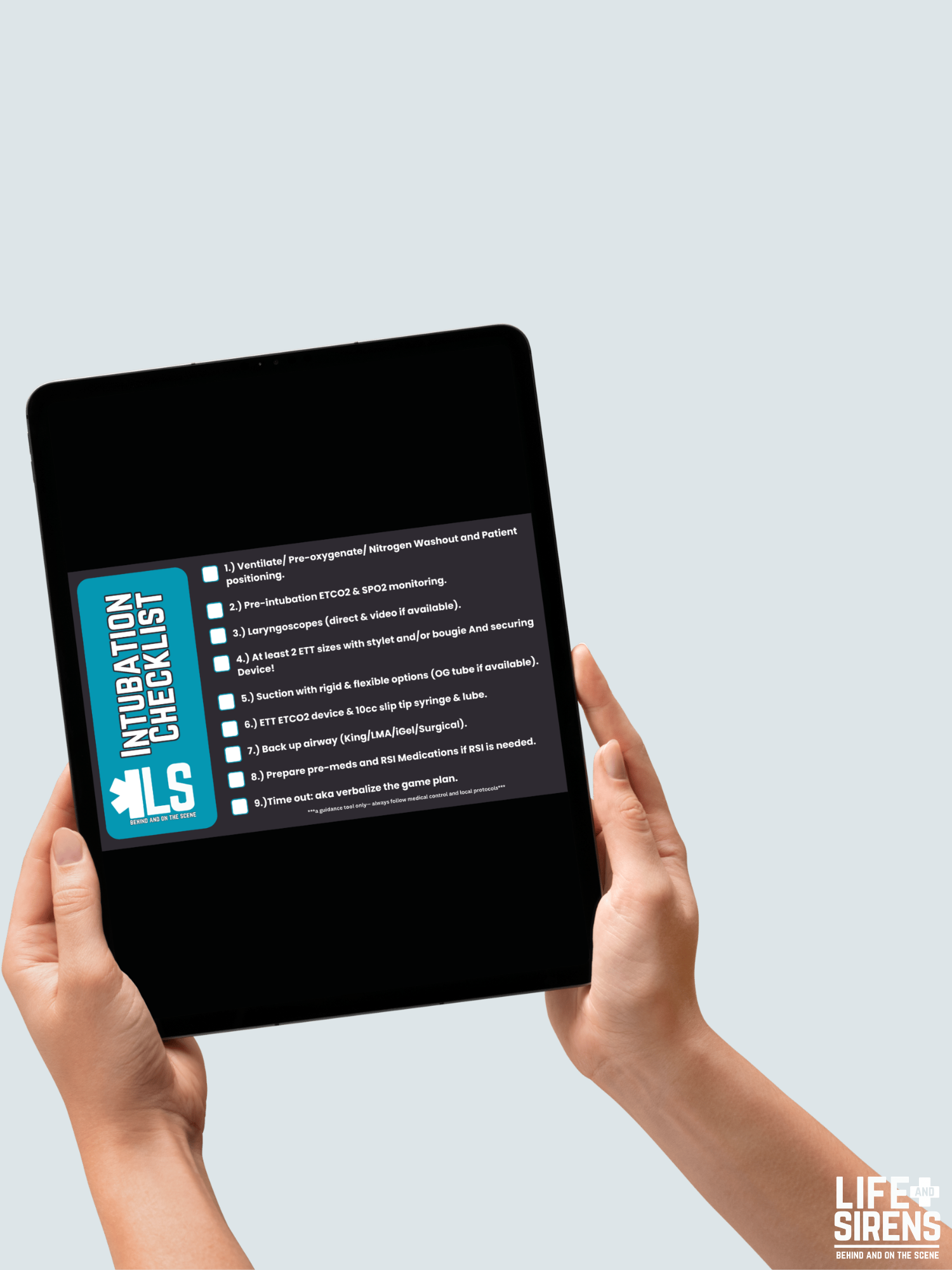

Airway management is not the time to rely on memory.
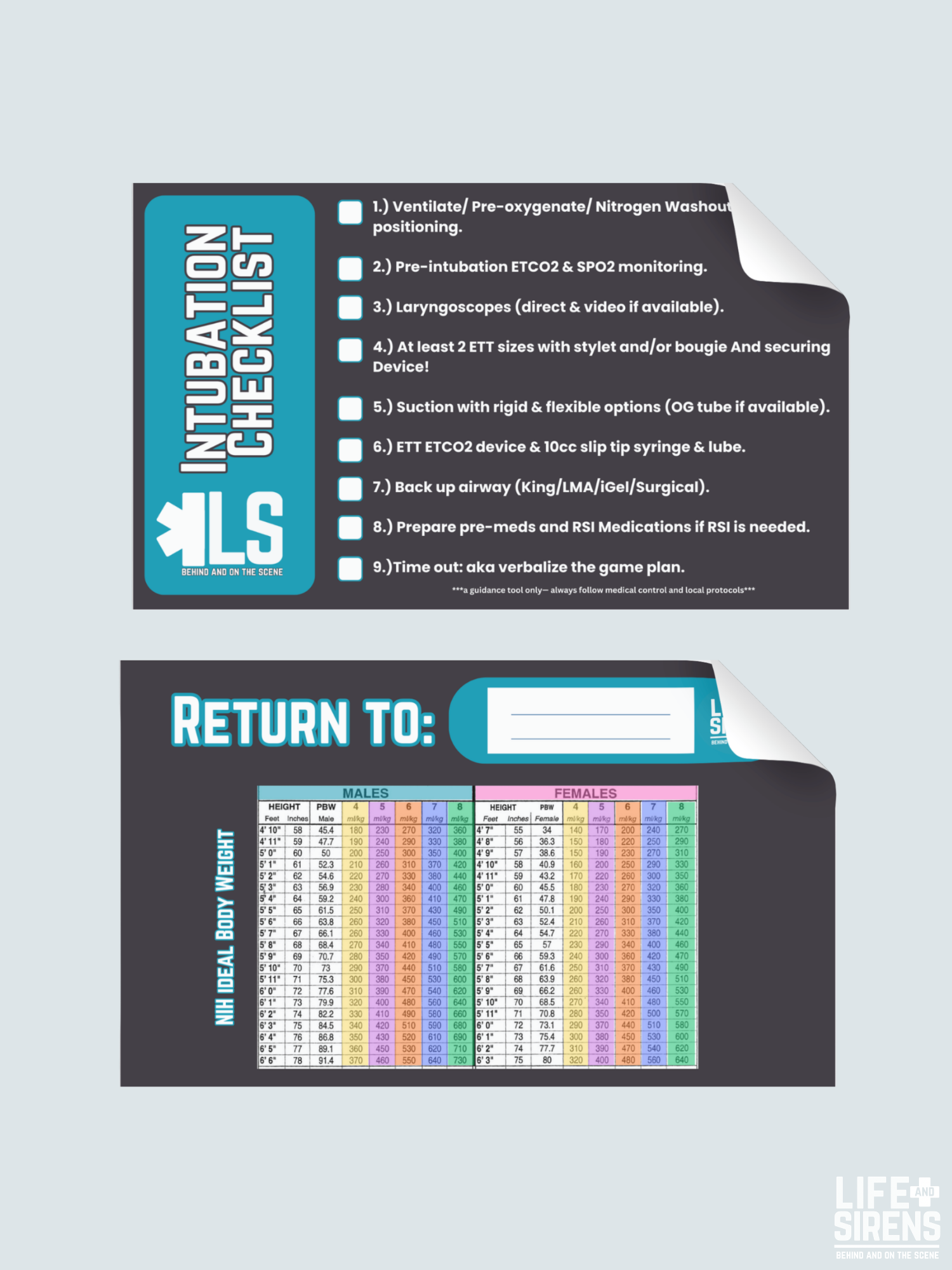
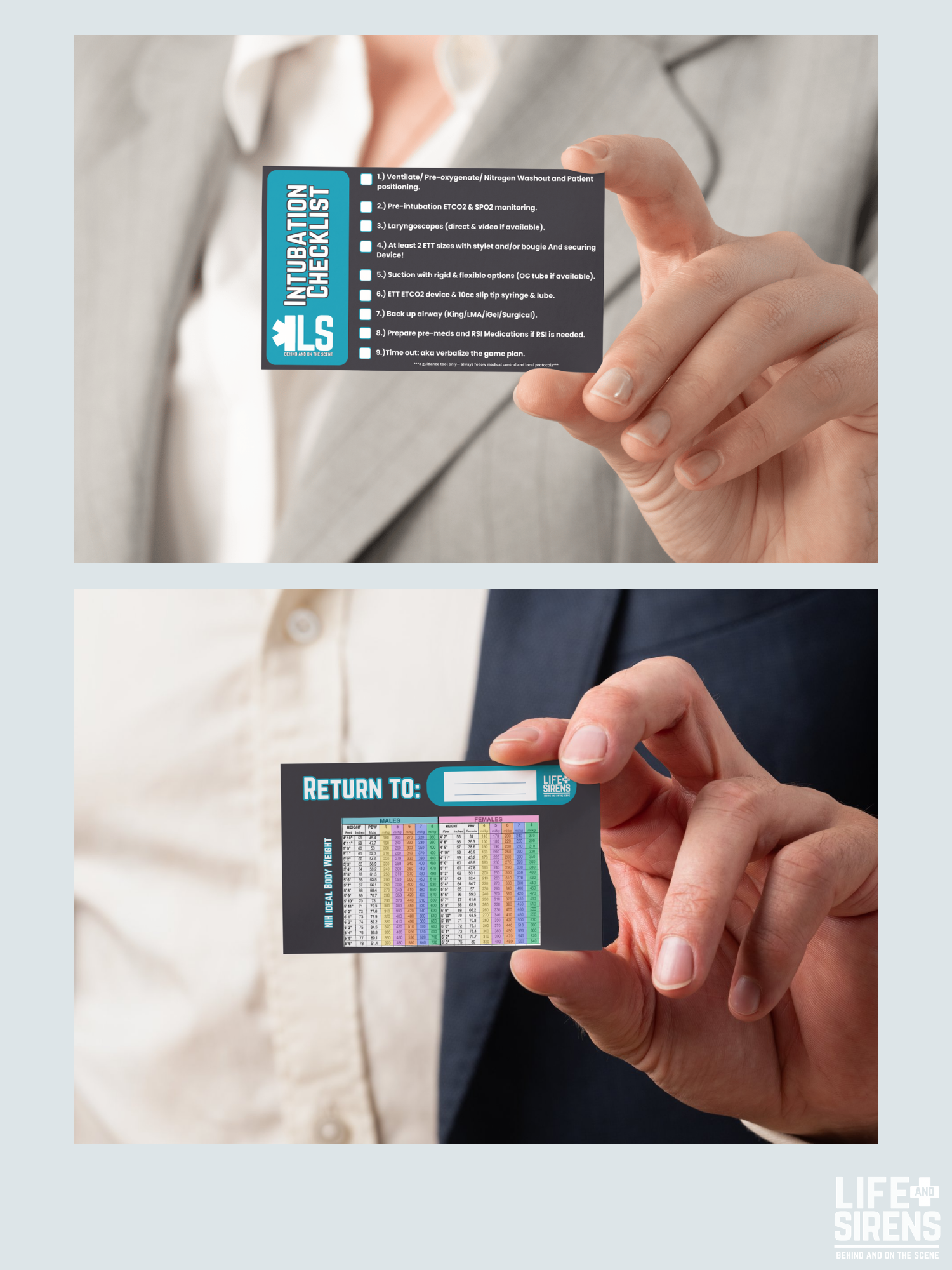
The Life & Sirens Pocket Intubation Checklist is a streamlined, field-ready guide designed to reinforce safe, structured airway preparation before intubation.
Built for EMS providers who want consistency, clarity, and control when it matters most.
The checklist reinforces:
Pre-oxygenation & positioning
Pre-intubation ETCO₂ & SpO₂ monitoring
Laryngoscope readiness (direct & video)
Multiple ETT sizes + bougie
Suction readiness (rigid & flexible)
ETCO₂ confirmation tools
Backup airway plans
Medication preparation (including RSI if needed)
Verbal “time out” before attempt
📄 Format: PDF download
📱 Use: Digital or print-friendly
⚠️ Disclaimer:
This resource is for educational and informational purposes only and is not intended to replace local protocols, medical direction, or clinical judgment. Always follow your agency’s policies and medical oversight.

Printable | Digital Download | EMS Medication Administration Guide
Push it… but how fast?
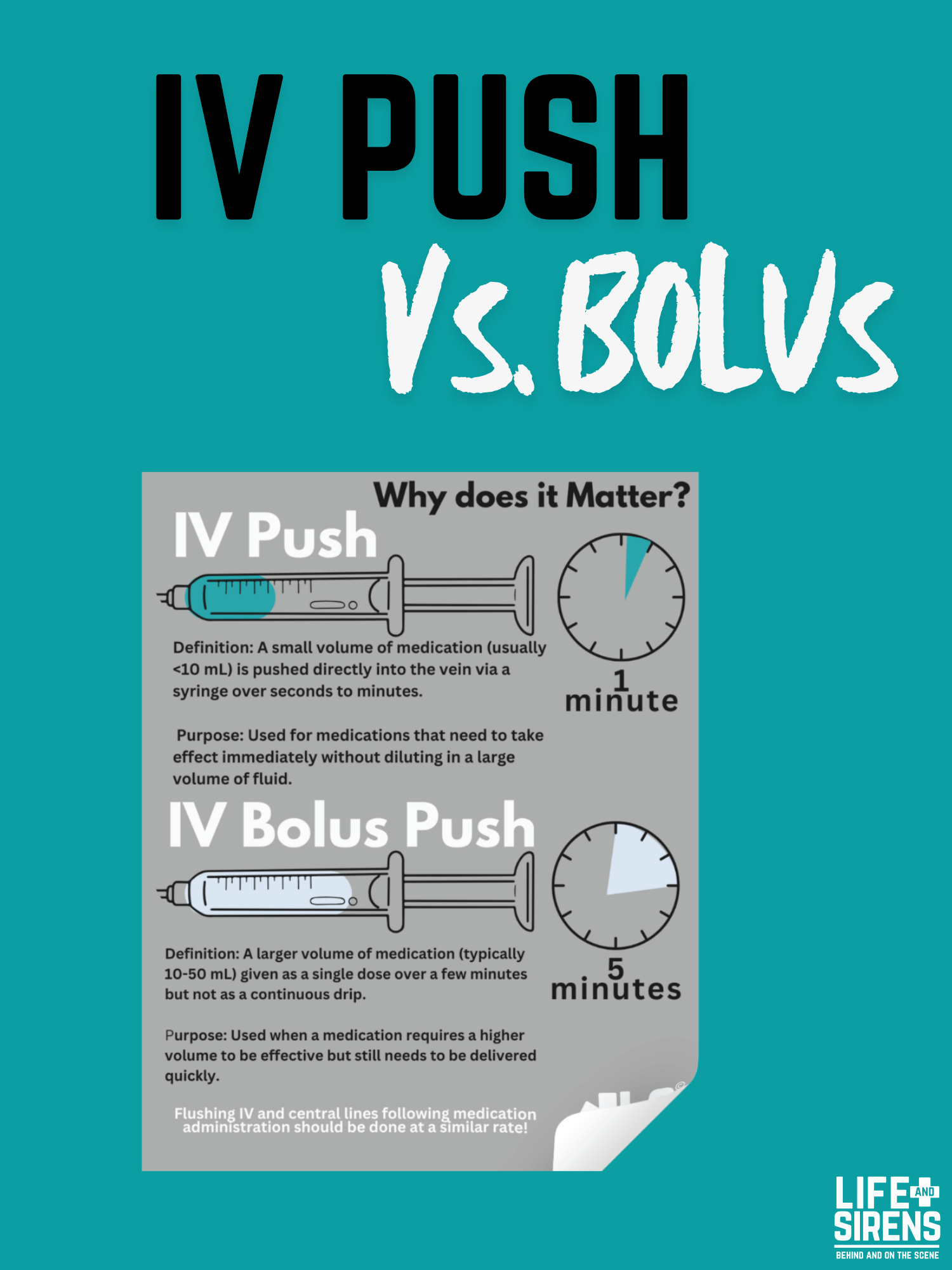
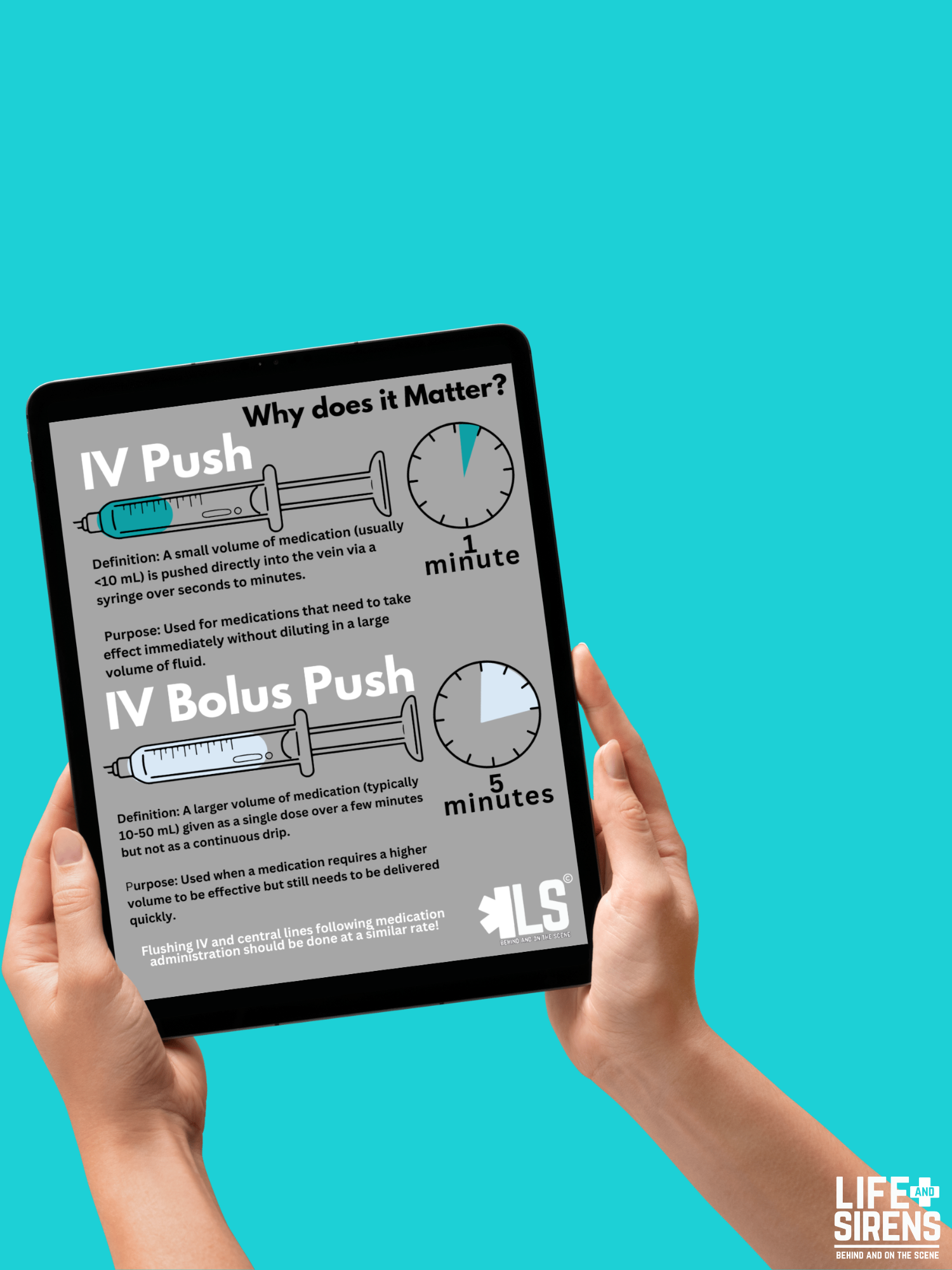
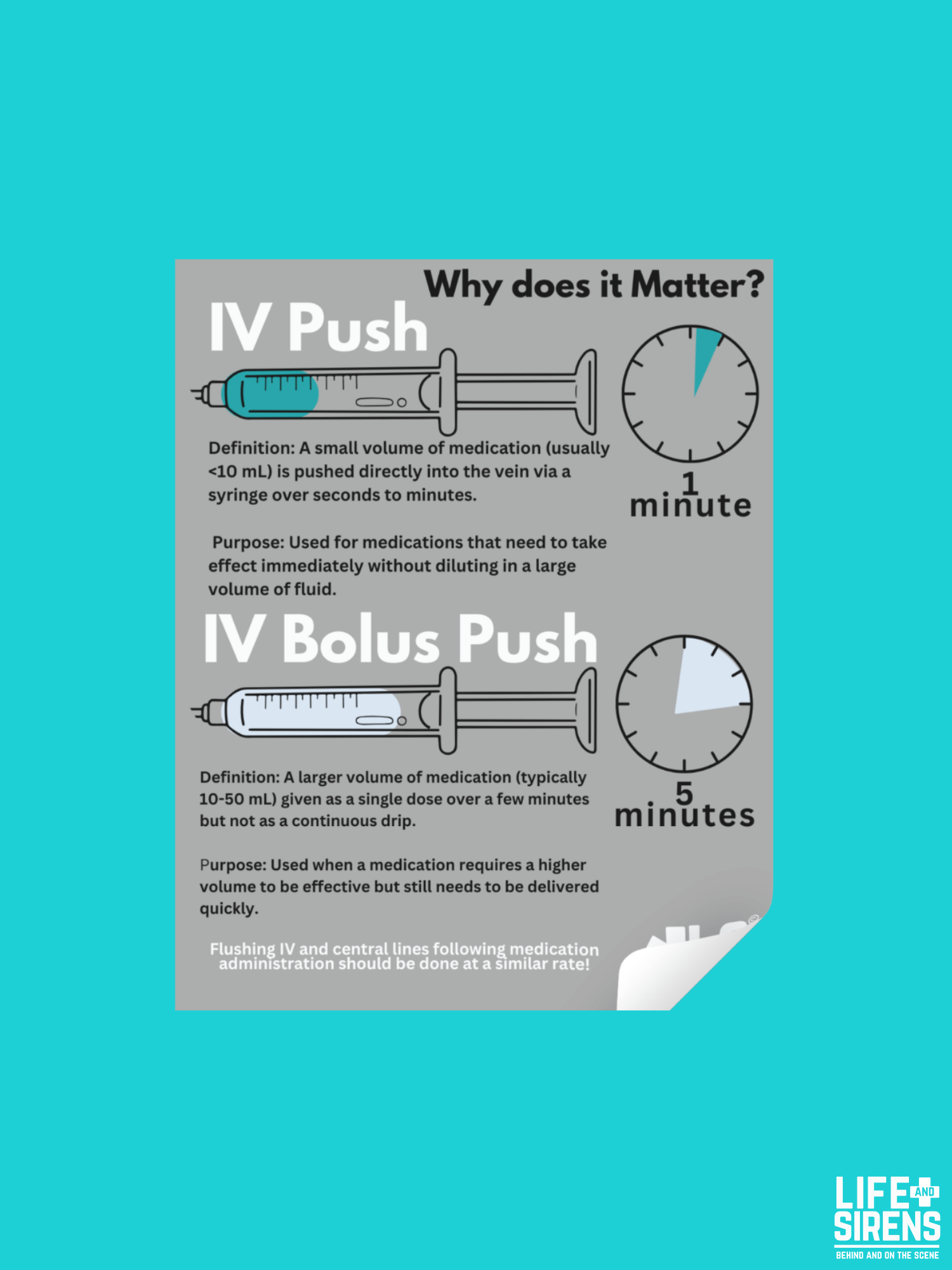
The Life & Sirens IV Push vs. IV Bolus Cheatsheet is a clean, visual reference designed to clarify one of the most commonly confused medication concepts in EMS.
Perfect for students, new providers, and preceptors reinforcing safe medication administration practices.
1-page printable PDF
Clear side-by-side comparison of:
IV Push
IV Bolus Push
Definitions
Typical volume ranges
Administration timing differences
Clinical purpose for each
Important reminder about line flushing rates
1-page printable PDF
Clear side-by-side comparison of:
IV Push
IV Bolus Push
Definitions
Typical volume ranges
Administration timing differences
Clinical purpose for each
Important reminder about line flushing rates
📄 Format: PDF download
📱 Use: Digital or print-friendly
⚠️ Disclaimer:
This resource is for educational and informational purposes only and is not intended to replace local protocols, medical direction, or clinical judgment. Always follow your agency’s policies and medical oversight.
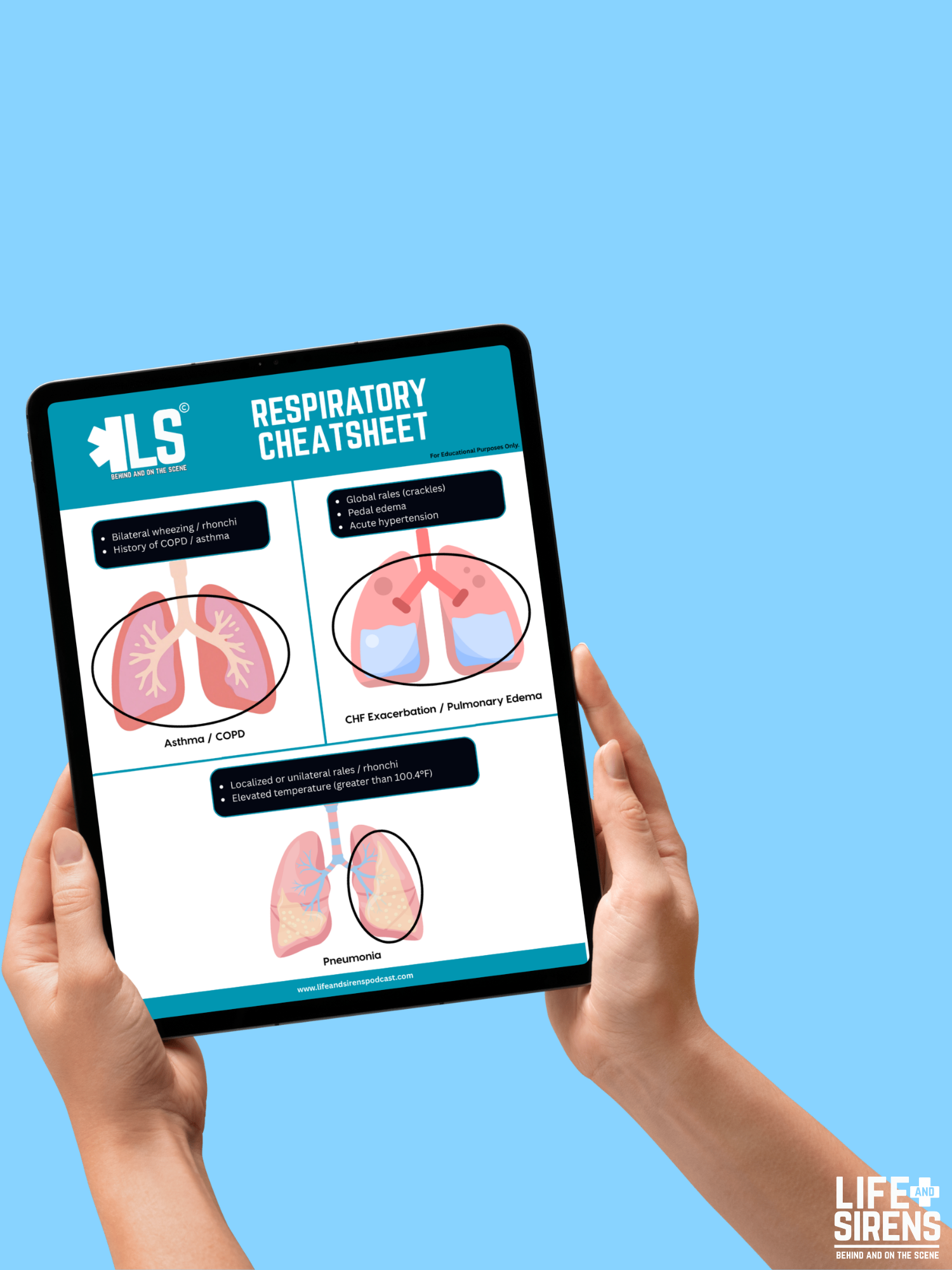
Printable | Digital Download | EMS Differential Guide
When the lungs are loud and the pressure’s high, you need clarity fast.
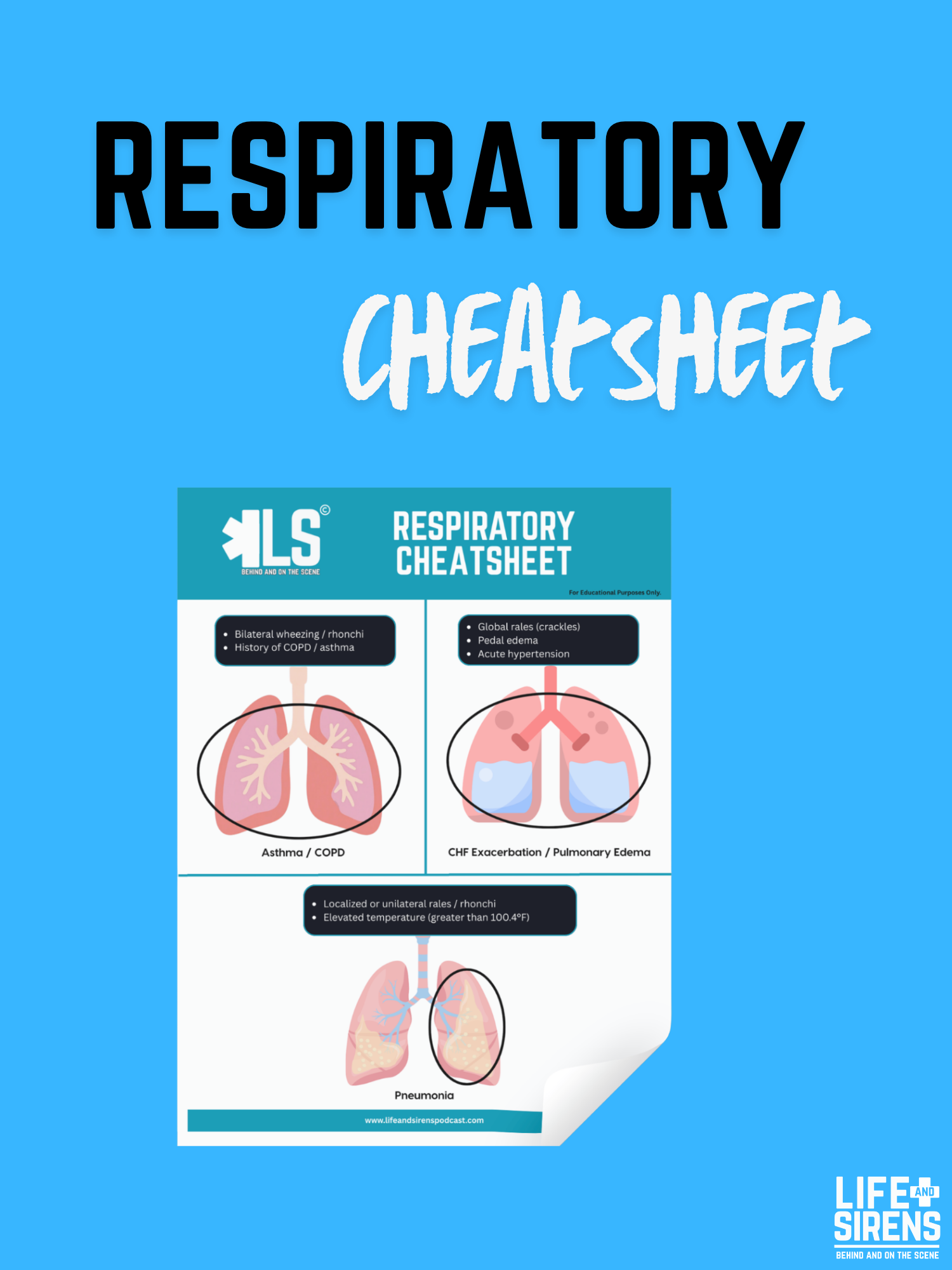
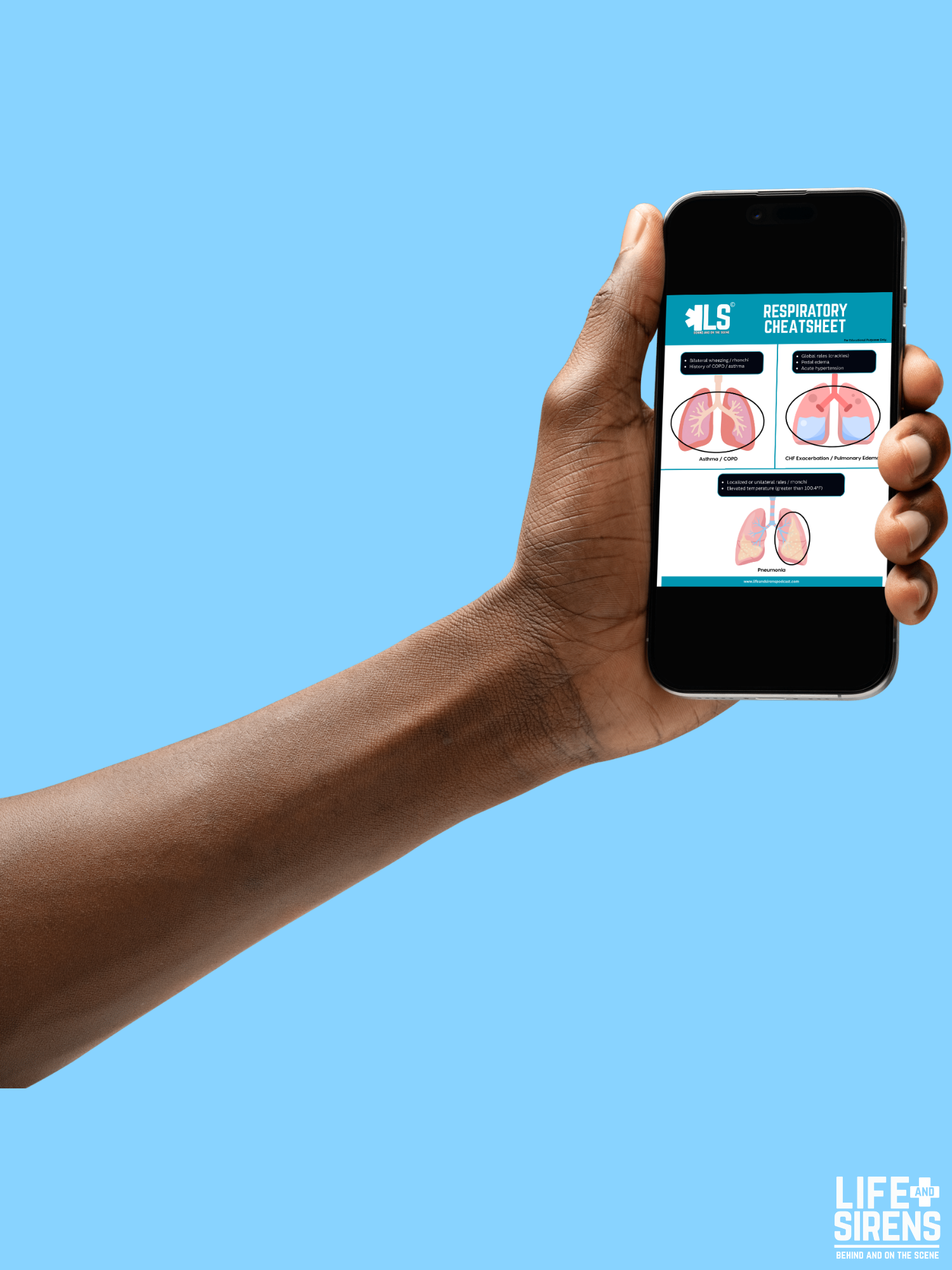
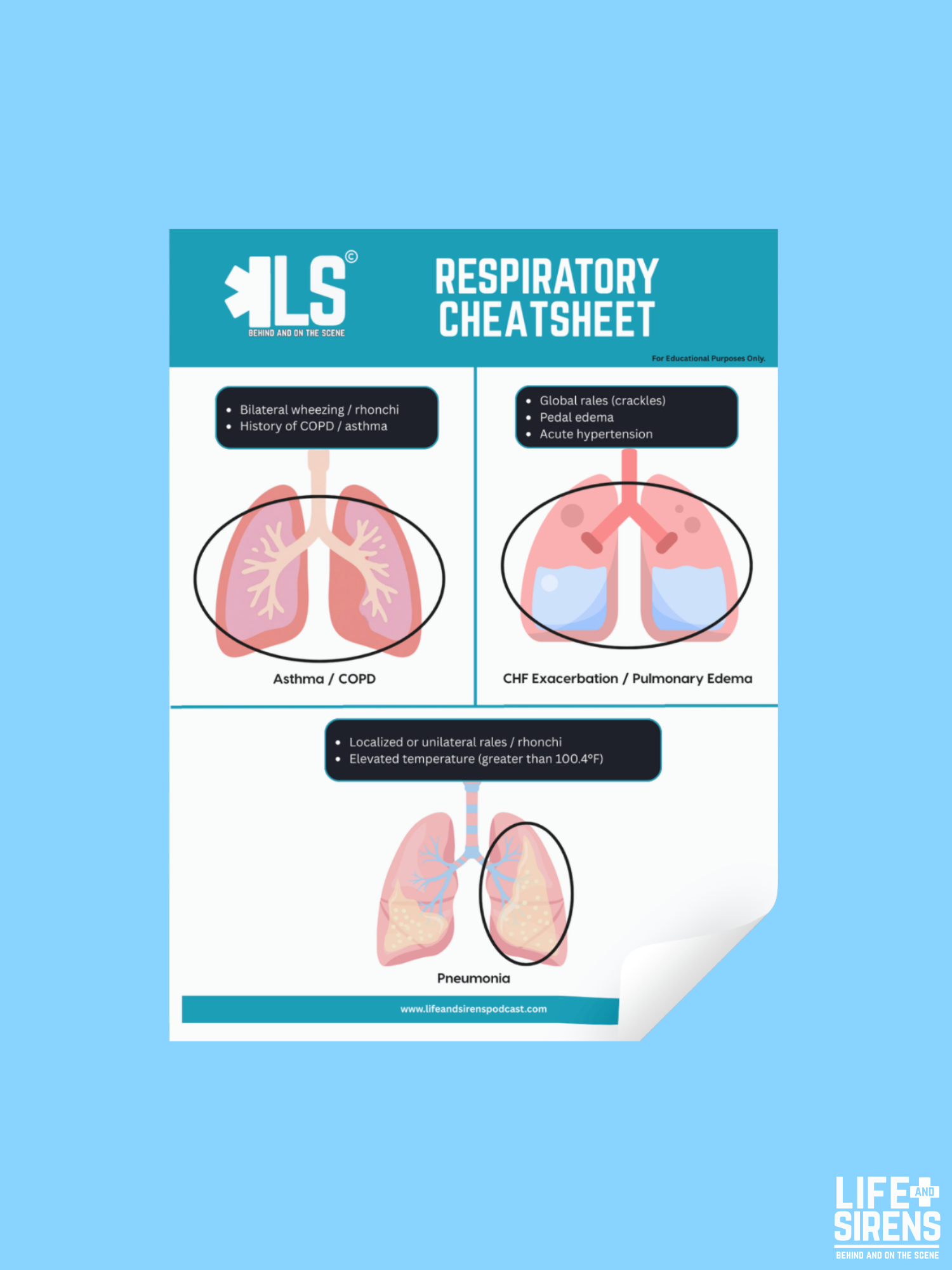
The Life & Sirens Respiratory Cheatsheet is a clean, visual EMS reference designed to help providers quickly differentiate between:
Asthma / COPD
CHF Exacerbation / Pulmonary Edema
Pneumonia
Perfect for students, new providers, preceptors, and anyone who wants a fast-glance reminder during respiratory calls.
2-page PDF download
Page 1: Educational Use Disclaimer
Page 2: Full-page Respiratory Differential Cheatsheet
Clear side-by-side comparison layout
Visual lung graphics for pattern recognition
Key assessment findings including:
Bilateral wheezing / rhonchi
History of COPD / asthma
Global rales (crackles)
Pedal edema
Acute hypertension
Localized/unilateral rales
Fever > 100.4°F
Digital download (PDF)
Printable 8.5” x 11”
Instant access after purchase
For educational and reference use only
📄 Format: PDF download
📱 Use: Digital or print-friendly
⚠️ Disclaimer:
This resource is for educational and informational purposes only and is not intended to replace local protocols, medical direction, or clinical judgment. Always follow your agency’s policies and medical oversight.
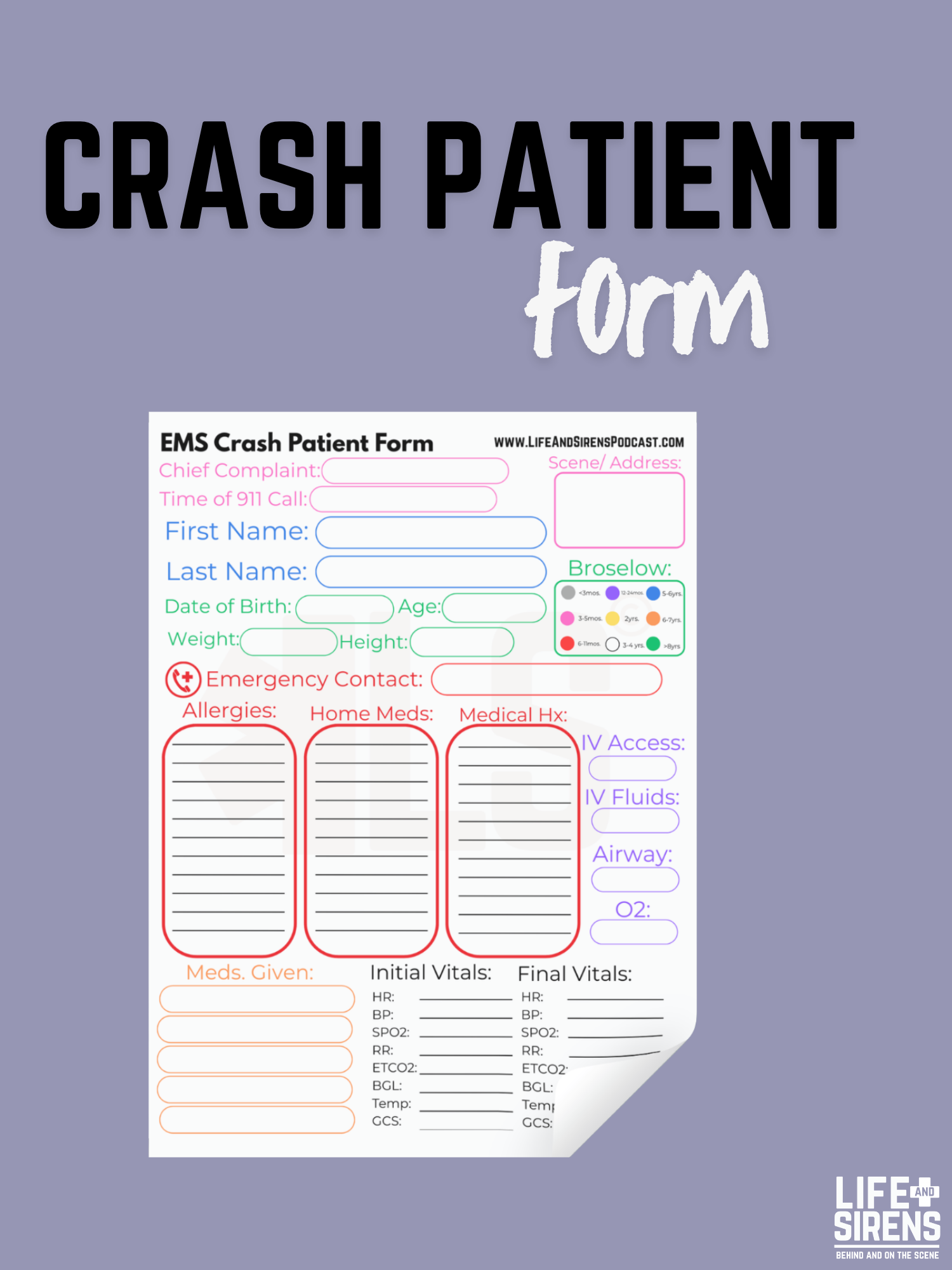
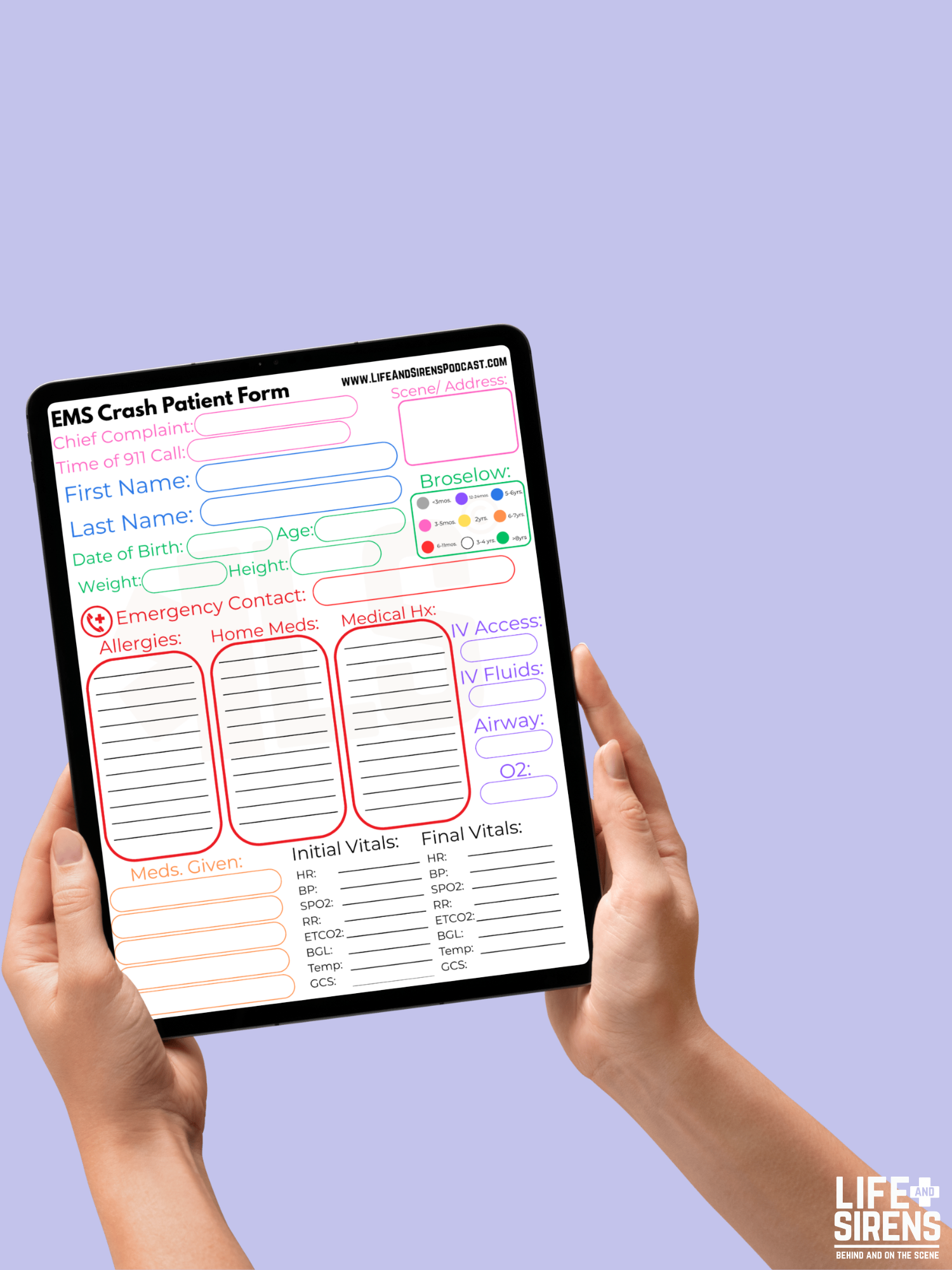

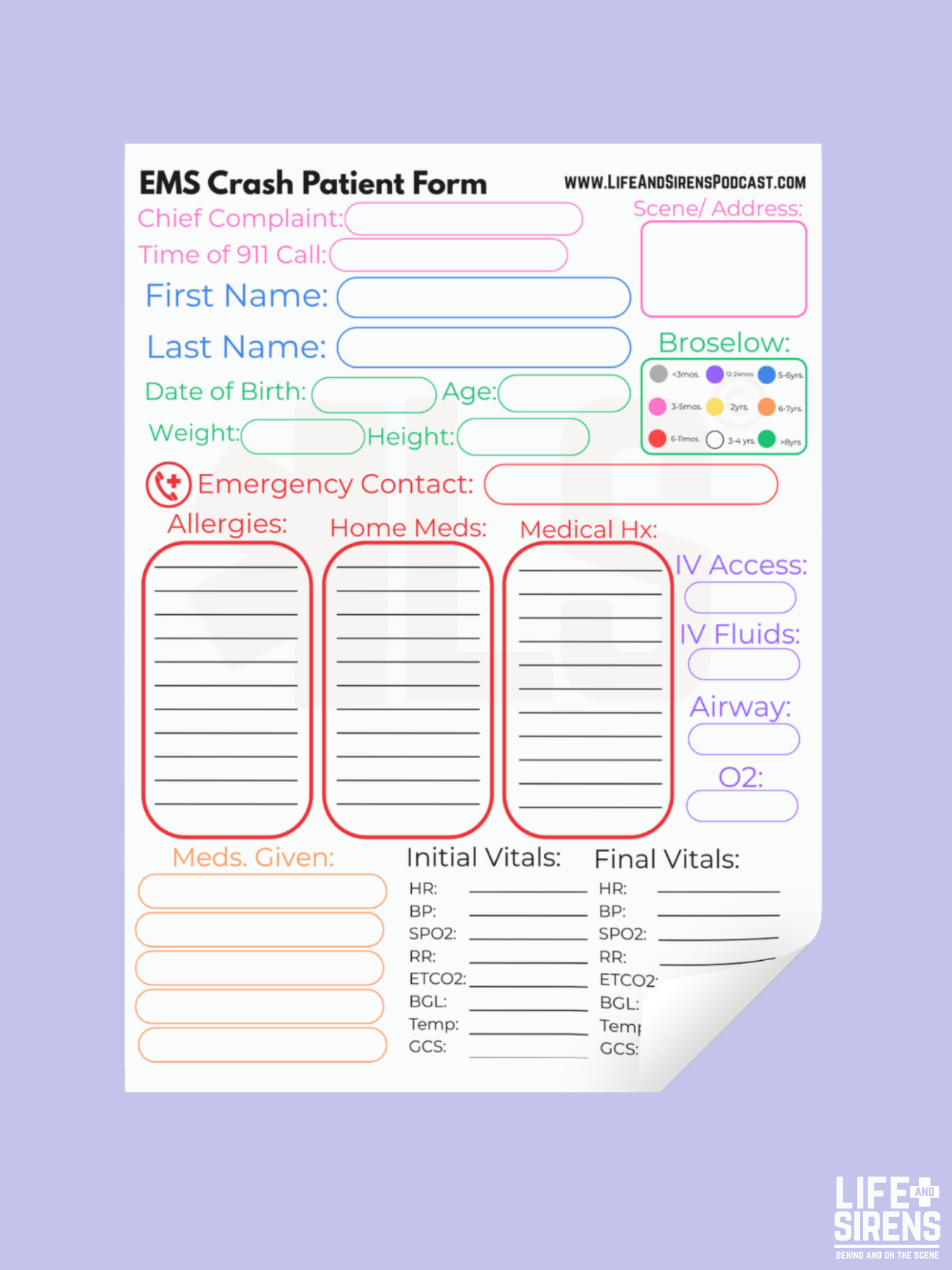
When the tones drop and everything moves fast, your documentation shouldn’t slow you down.
The Life & Sirens EMS Crash Patient Form is a streamlined, field-ready worksheet designed to help providers quickly capture critical patient information during high-acuity calls.
Perfect for chaotic scenes, pediatric calls, and critical transports where organization matters most.
1-page printable EMS crash patient form (PDF)
Clean, color-coded layout for quick scanning
Sections for:
Chief Complaint
Time of 911 Call
Scene/Address
Patient Demographics
Allergies, Home Meds, Medical History
Broselow reference checkboxes
IV Access / Fluids / Airway / O2
Medications Given
Initial & Final Vitals (HR, BP, SpO2, RR, ETCO2, BGL, Temp, GCS)
Digital download (PDF)
Print as full-page (8.5” x 11”)
Instant download after purchase
For educational and reference use
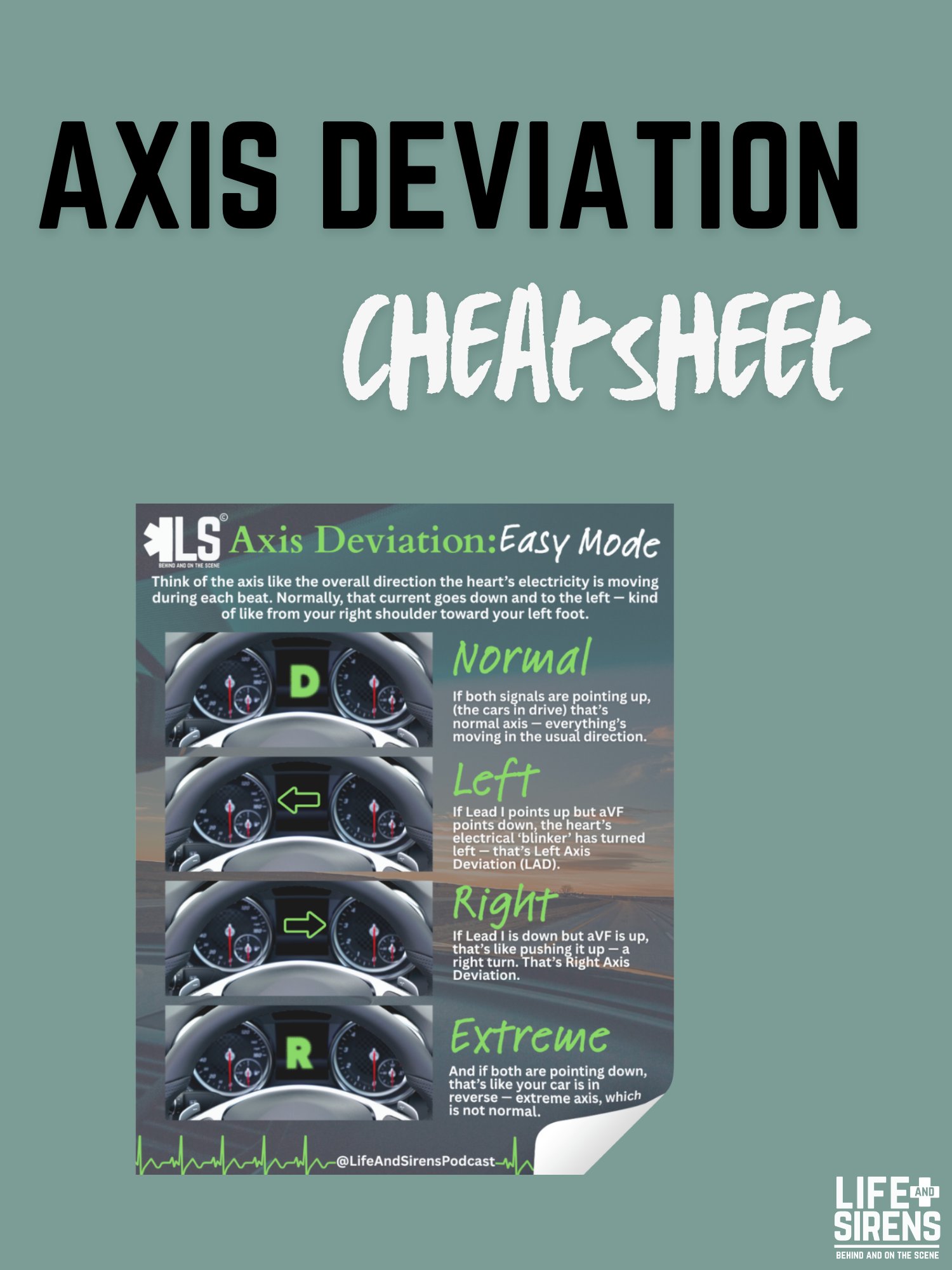
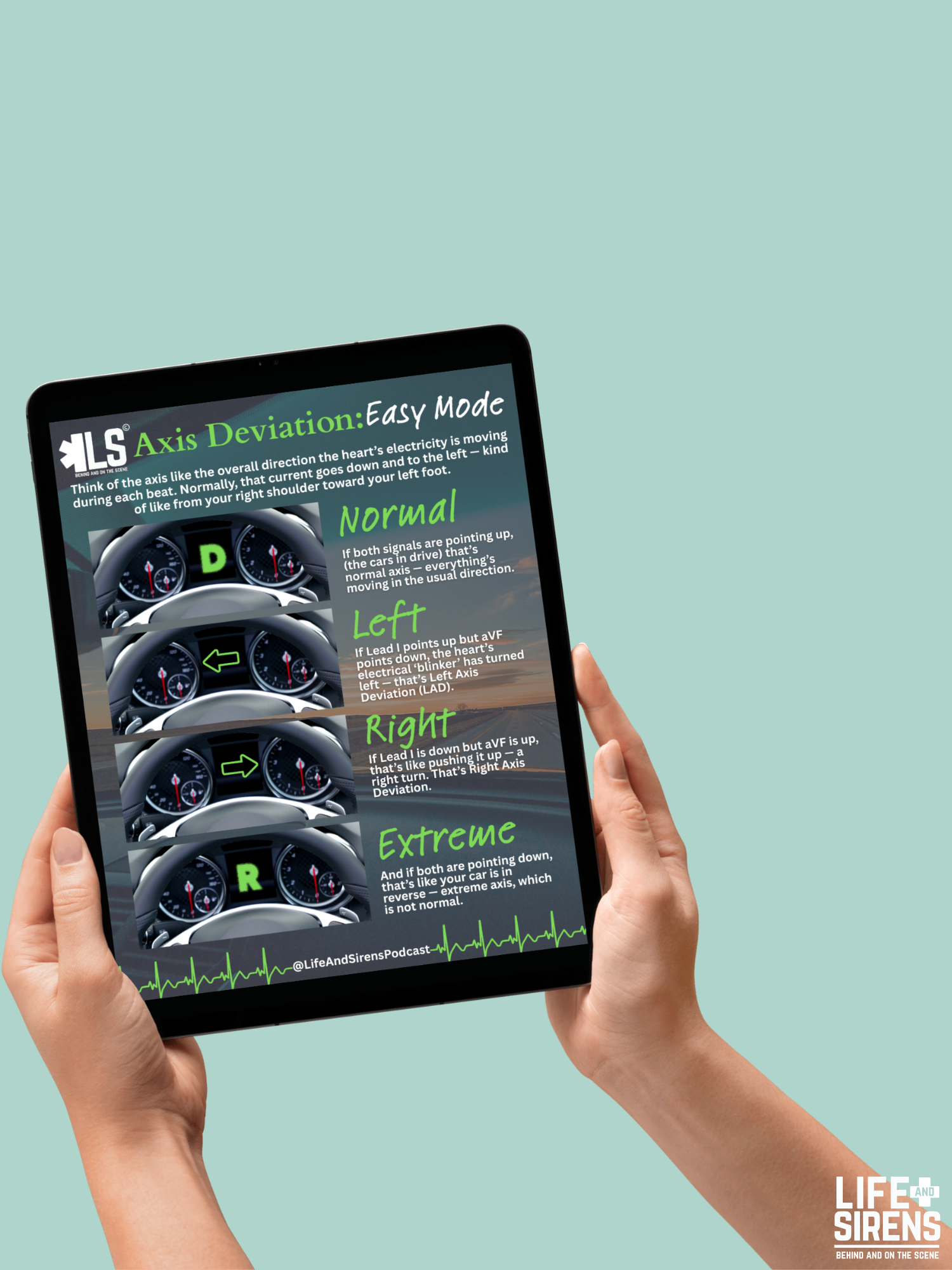

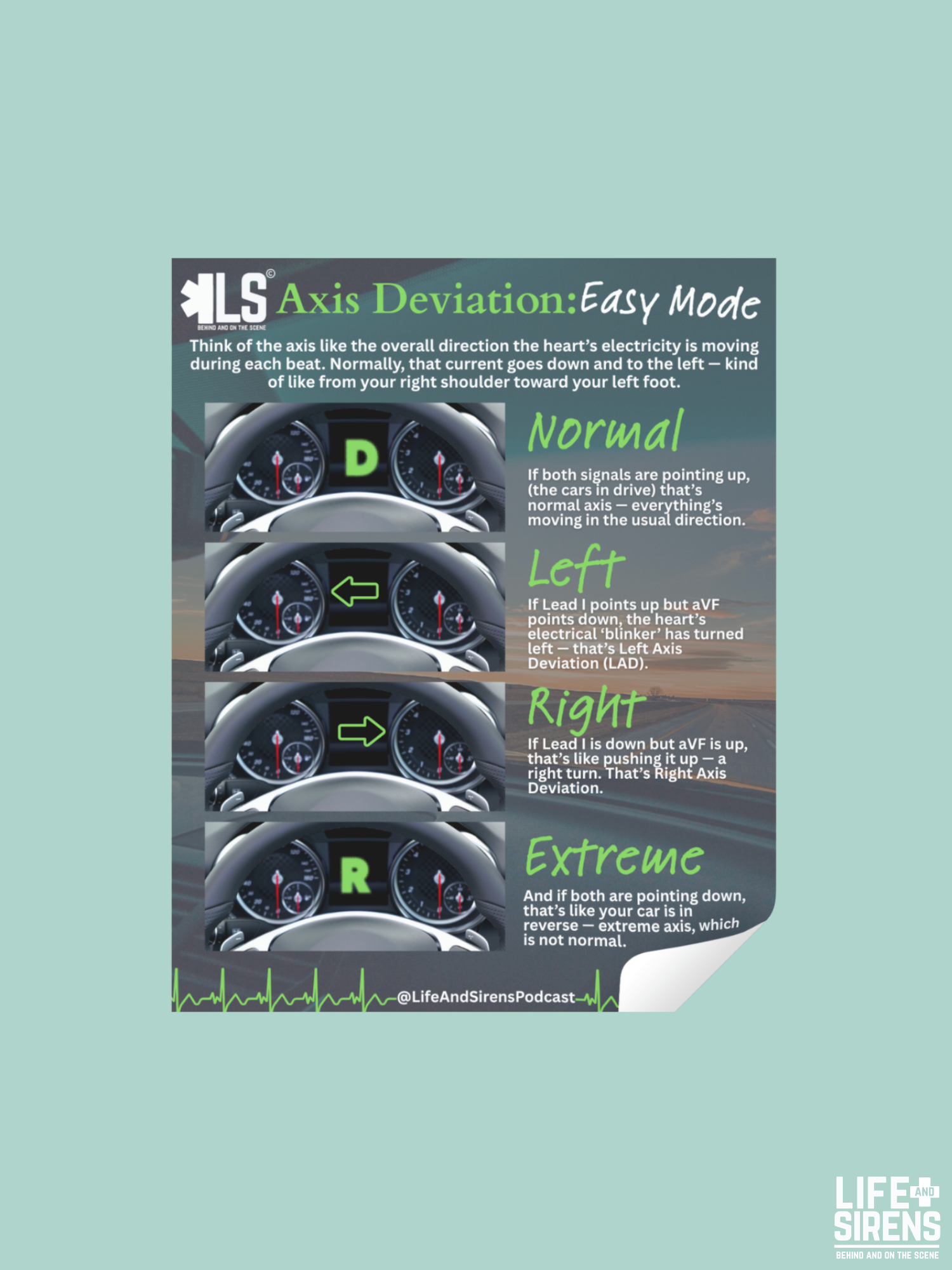
Because electrical “blinker” jokes make cardiology hurt less.
This EMS-focused Axis Deviation Cheatsheet simplifies one of the most intimidating ECG concepts into an easy, visual, and memorable format. Using a practical Lead I and aVF approach, this guide breaks axis down into four clear categories — normal, left, right, and extreme — without overcomplicating it.
Perfect for providers who want to quickly determine axis in the field without pulling out a protractor.
Simple explanation of cardiac axis in plain language
Visual Lead I + aVF method
Clear identification of:
Normal Axis
Left Axis Deviation (LAD)
Right Axis Deviation (RAD)
Extreme Axis
Easy-to-remember analogies for fast recall
Clean, high-contrast layout optimized for learning and review
📄 Format: PDF download
📱 Use: Digital or print-friendly
⚠️ Disclaimer:
This resource is for educational and informational purposes only and is not intended to replace local protocols, medical direction, or clinical judgment. Always follow your agency’s policies and medical oversight.
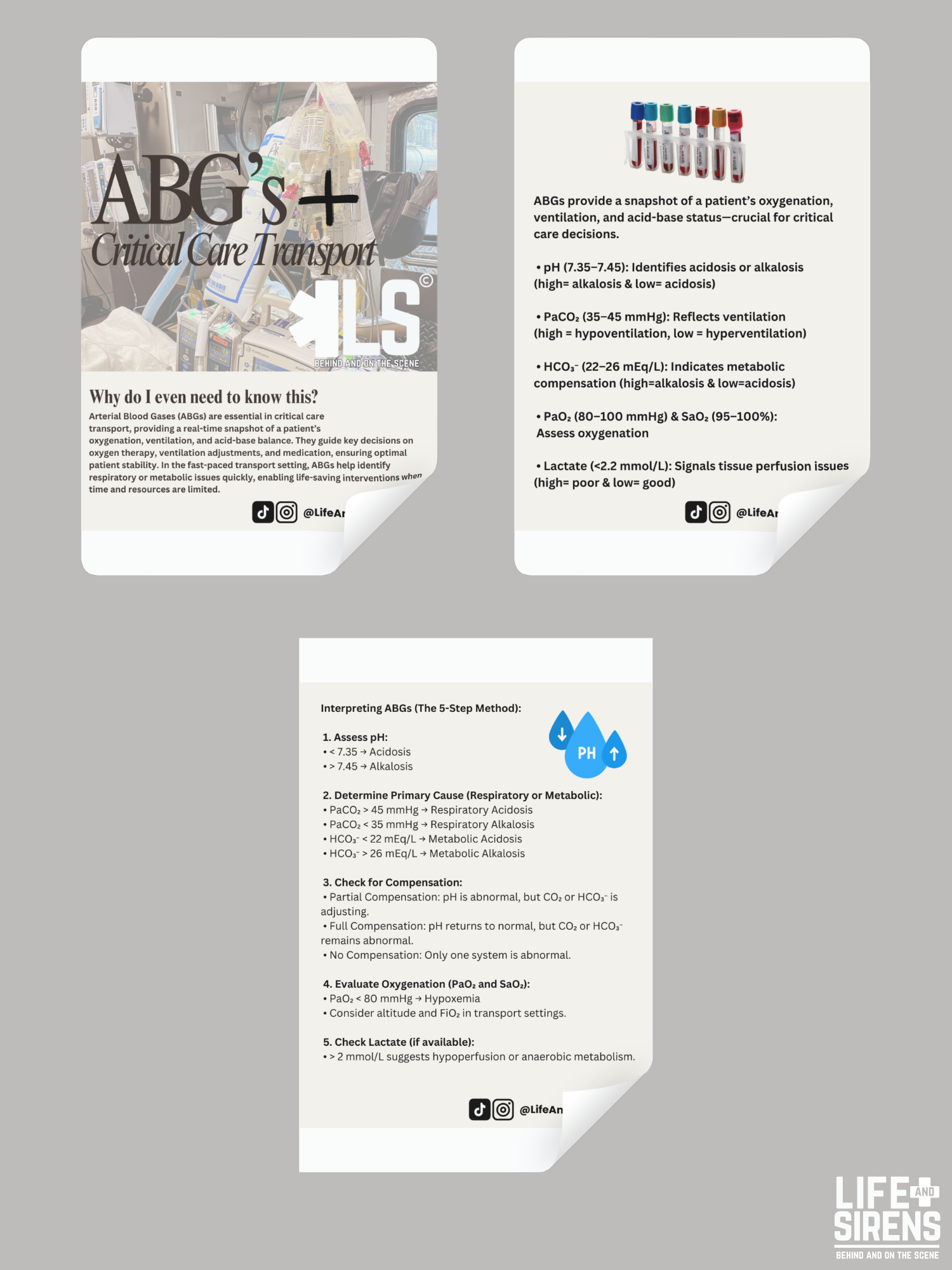
Because “it’s metabolic” isn’t a full answer.
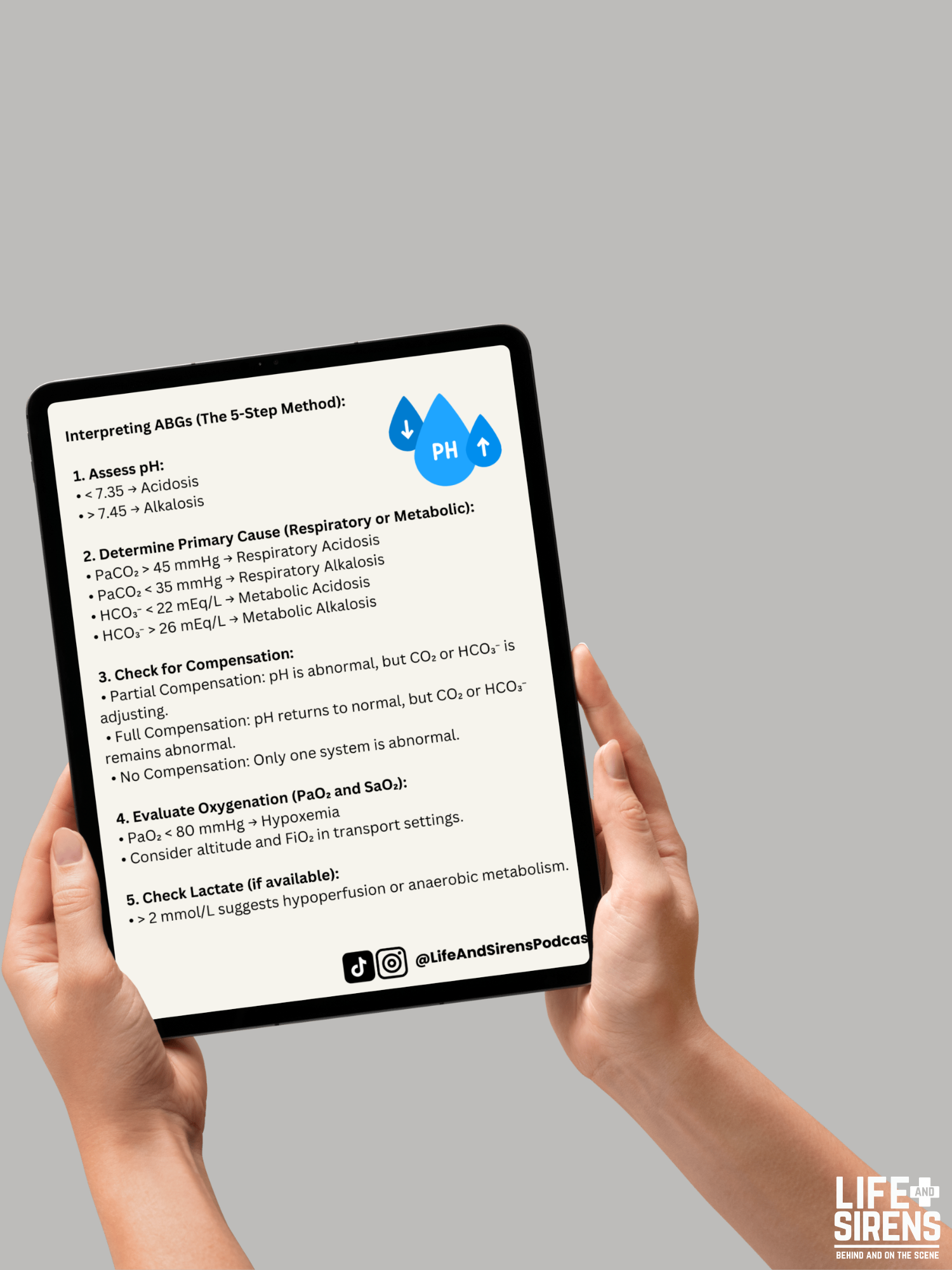
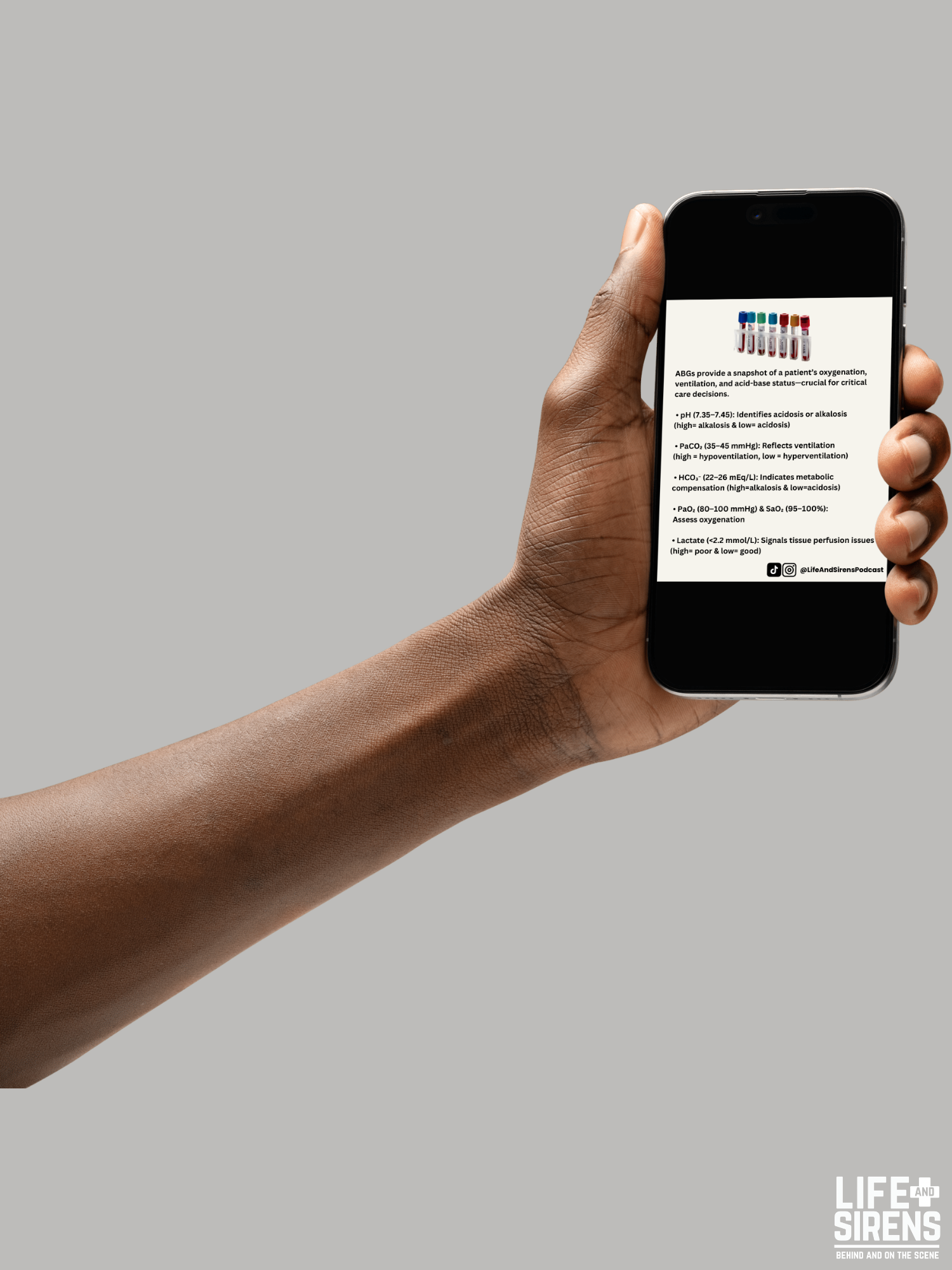
This EMS-focused ABG Cheatsheet simplifies arterial blood gas interpretation specifically for critical care and transport providers. Designed for fast-paced environments, this guide walks you through oxygenation, ventilation, acid-base balance, and lactate interpretation using a structured, step-by-step approach.
Whether you're adjusting a vent mid-transport or trying to decode a concerning pH at 2 AM, this resource keeps the process clear and organized.
Quick-reference normal ranges for:
pH
PaCO₂
HCO₃⁻
PaO₂ & SaO₂
Lactate
Simple breakdown of:
Respiratory vs. Metabolic disorders
Acidosis vs. Alkalosis
Compensation (partial, full, none)
A structured 5-Step ABG Interpretation Method
Transport-specific pearls:
Oxygenation considerations
Ventilation adjustments
Hypoxemia recognition
Lactate and perfusion insights
📄 Format: PDF download
📱 Use: Digital or print-friendly
⚠️ Disclaimer:
This resource is for educational and informational purposes only and is not intended to replace local protocols, medical direction, or clinical judgment. Always follow your agency’s policies and medical oversight.
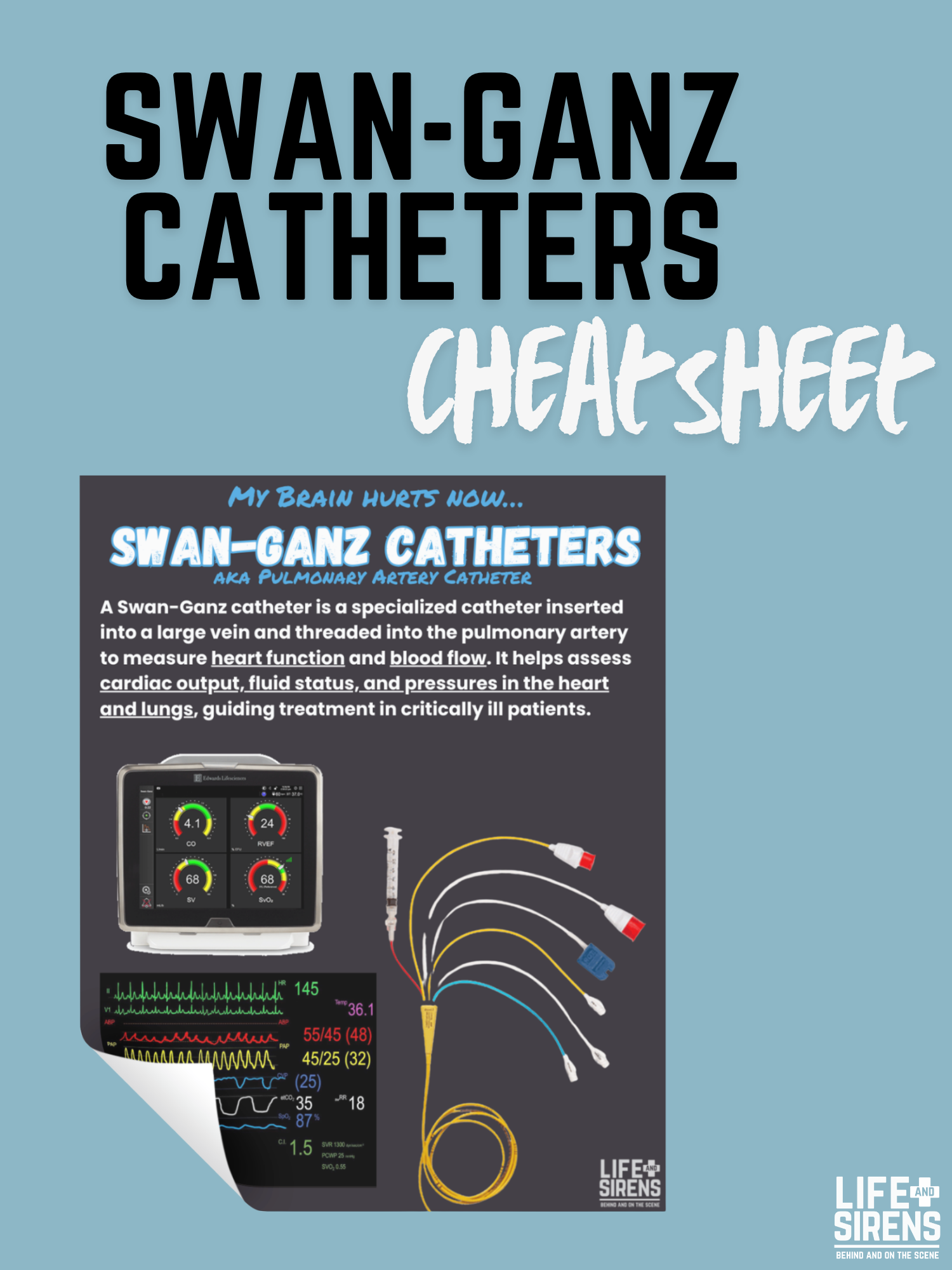
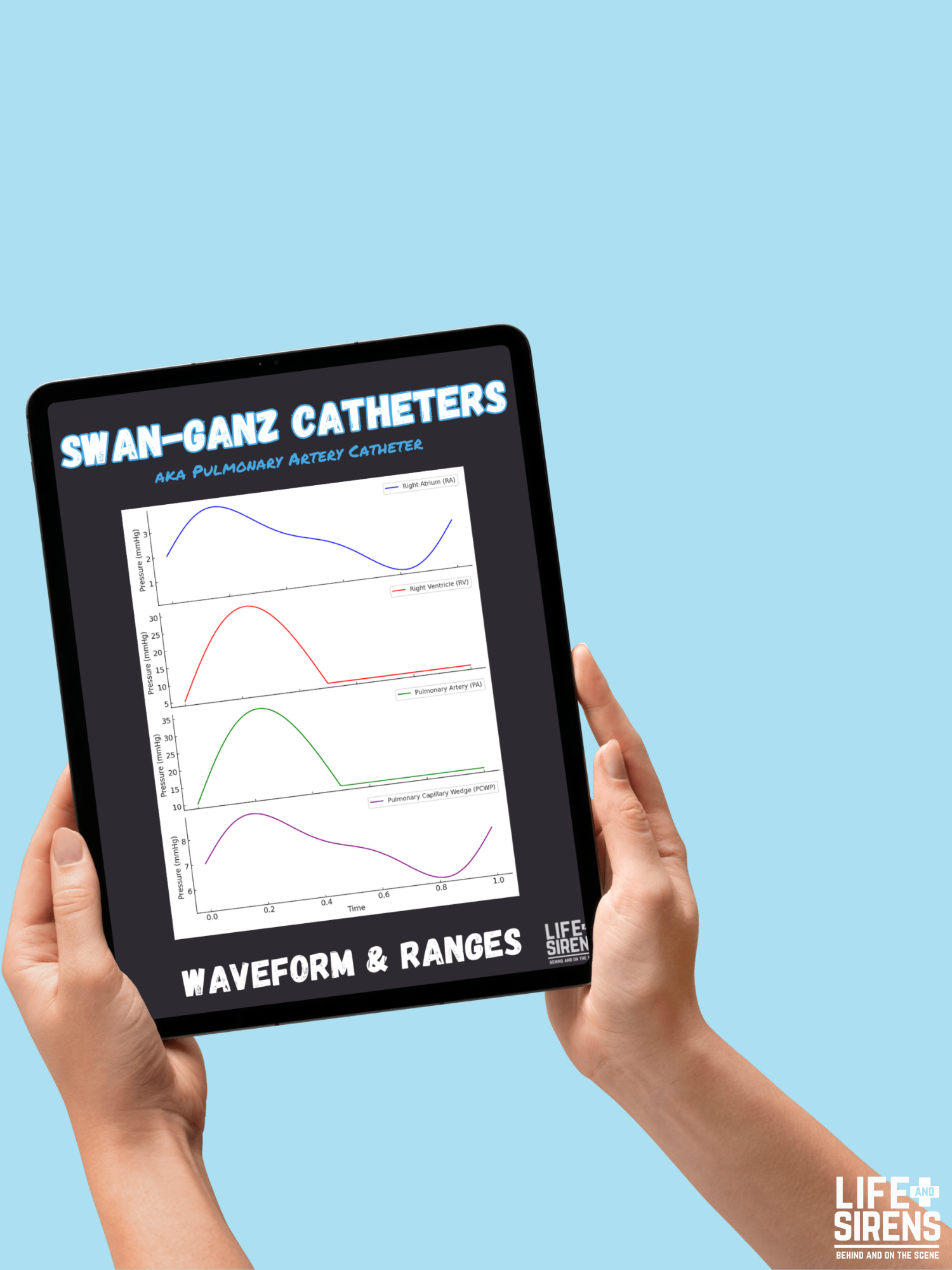
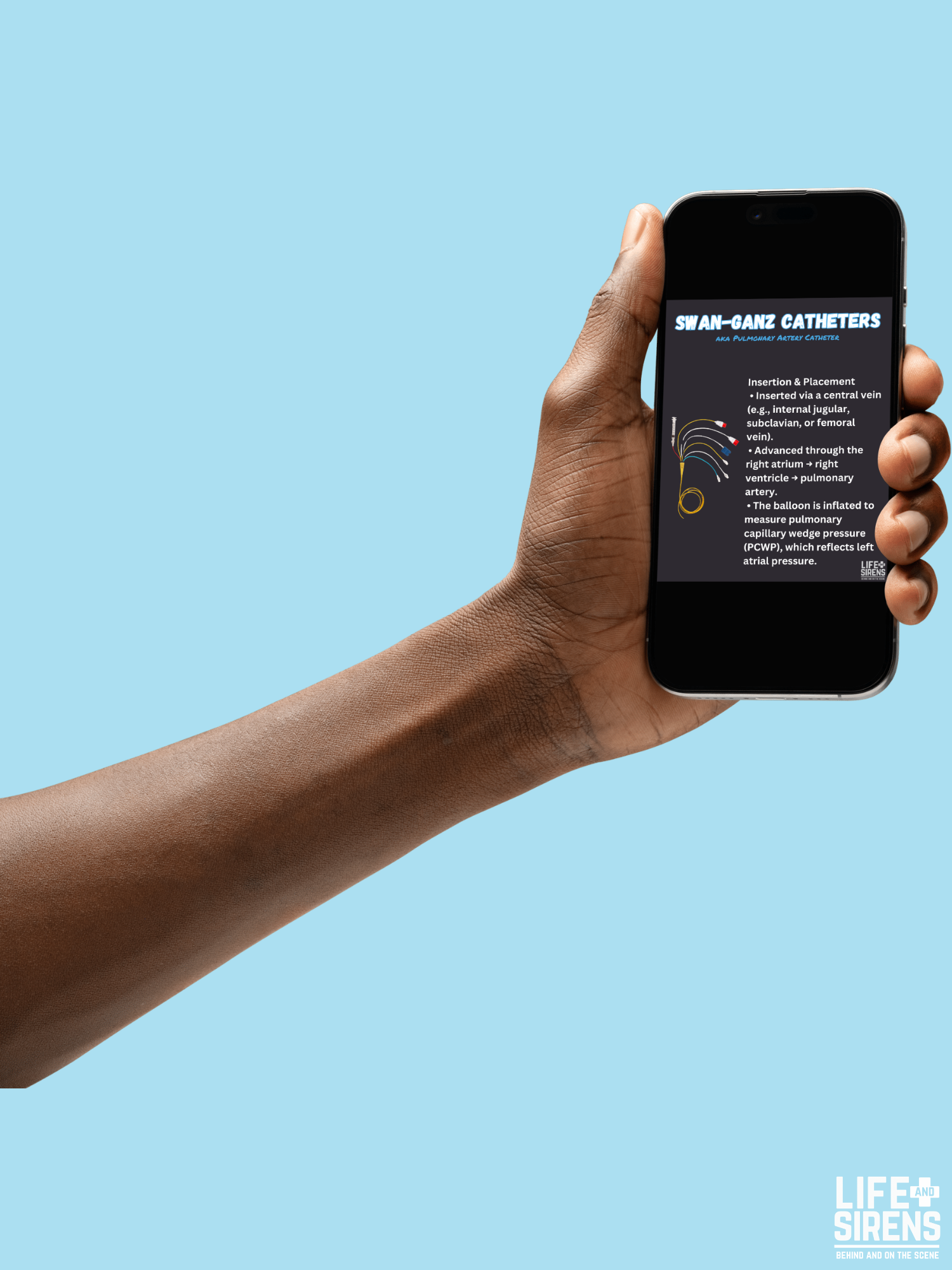
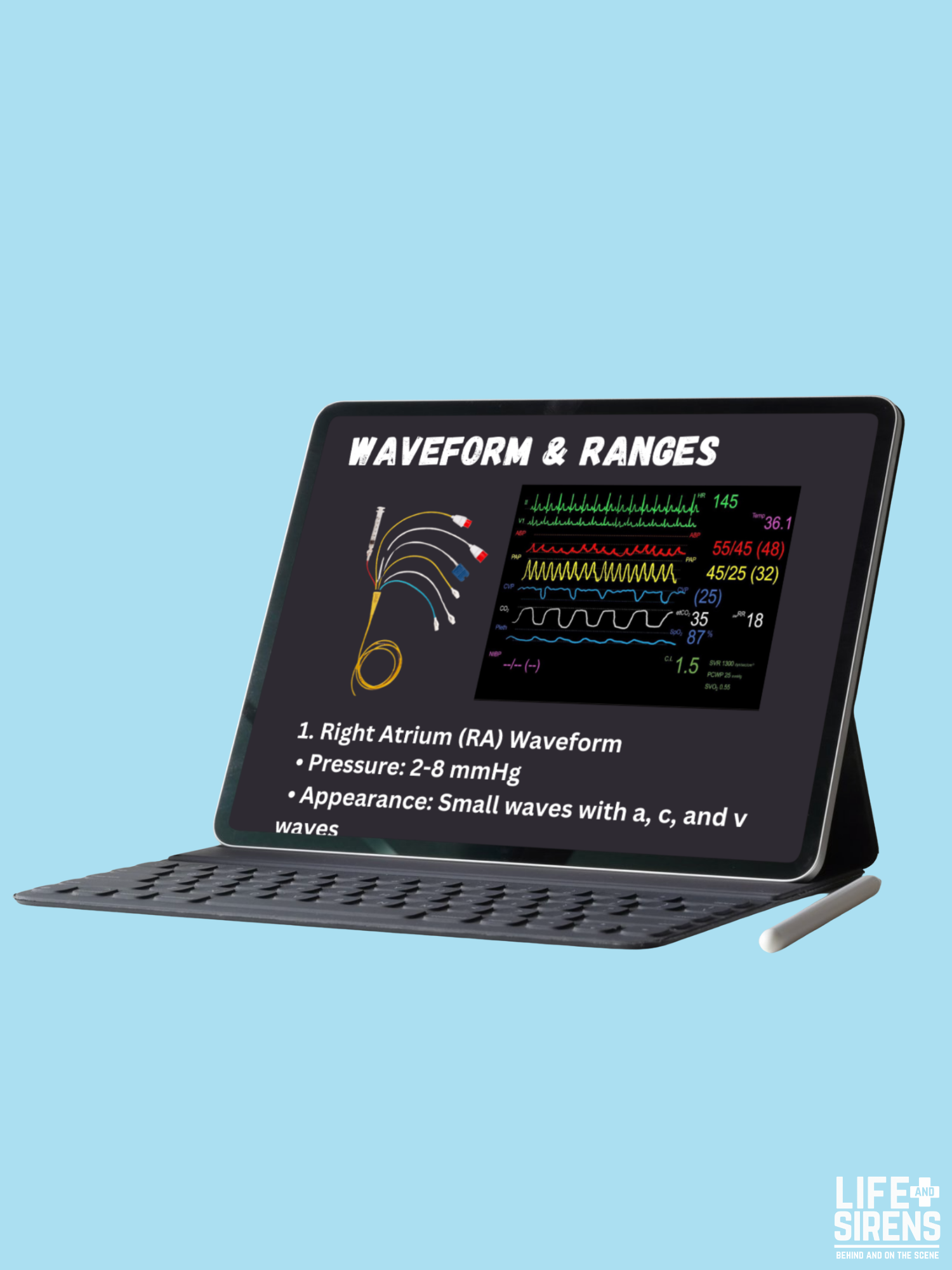
Because sometimes the ICU hands you numbers and expects you to just… understand them.
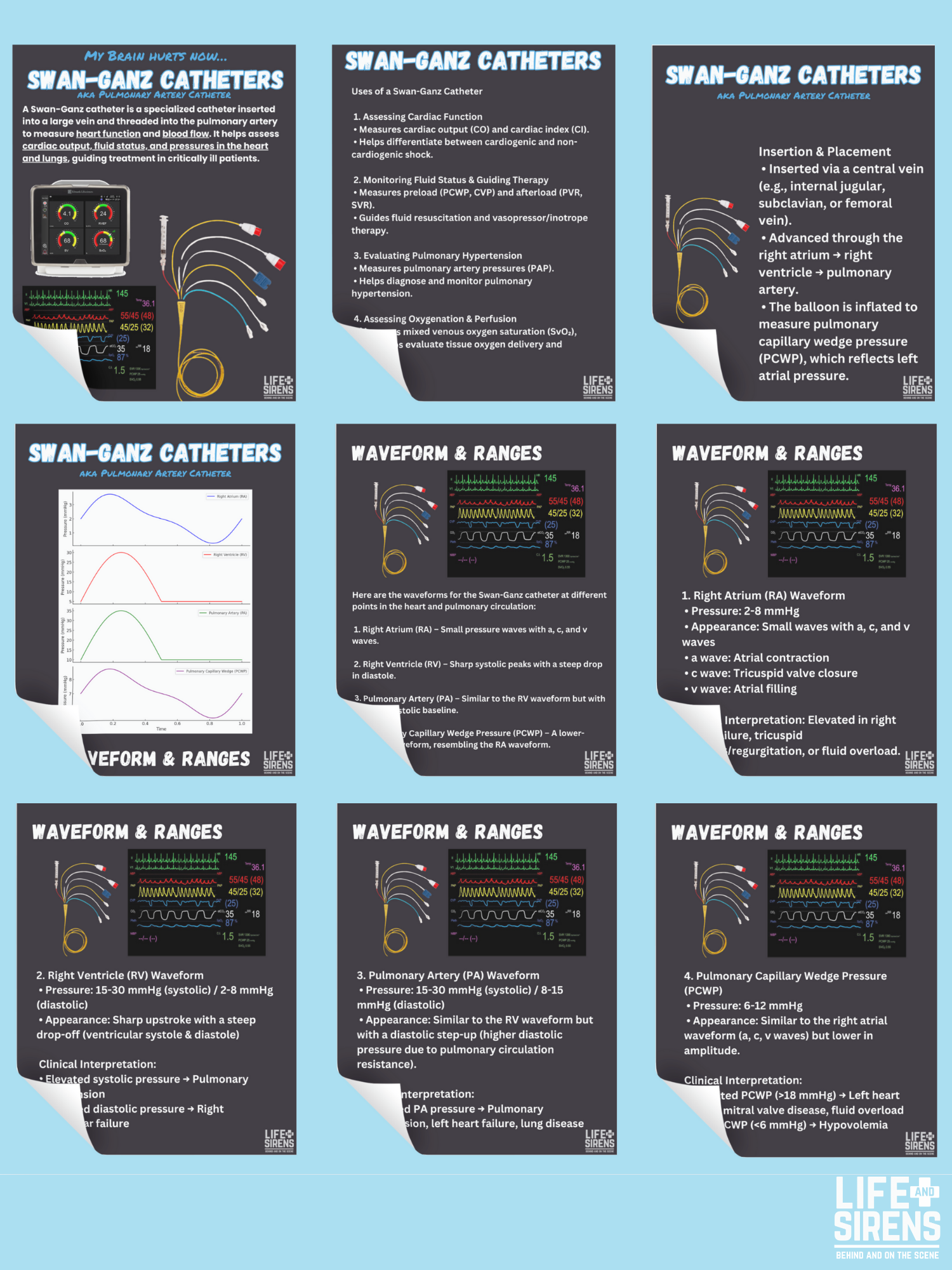
This EMS-focused Swan-Ganz Catheter Cheatsheet breaks down pulmonary artery catheter concepts into a clear, digestible format designed for providers who want to actually understand what those waveforms and pressures mean.
From cardiac output to wedge pressures, this guide simplifies hemodynamic monitoring without dumbing it down.
(Yes… your brain might still hurt a little. But in a good way.)
Overview of the Swan-Ganz (Pulmonary Artery) catheter
Clear explanation of:
Cardiac Output (CO) & Cardiac Index (CI)
PCWP, CVP, PVR, SVR
SvO₂ and perfusion concepts
Step-by-step breakdown of:
Right Atrium (RA) waveform
Right Ventricle (RV) waveform
Pulmonary Artery (PA) waveform
Pulmonary Capillary Wedge Pressure (PCWP)
Normal pressure ranges for each location
Clinical interpretation pearls:
Right heart failure
Pulmonary hypertension
Left-sided heart failure
Hypovolemia vs fluid overload
📄 Format: PDF download
📱 Use: Digital or print-friendly
⚠️ Disclaimer:
This resource is for educational and informational purposes only and is not intended to replace local protocols, medical direction, or clinical judgment. Always follow your agency’s policies and medical oversight.
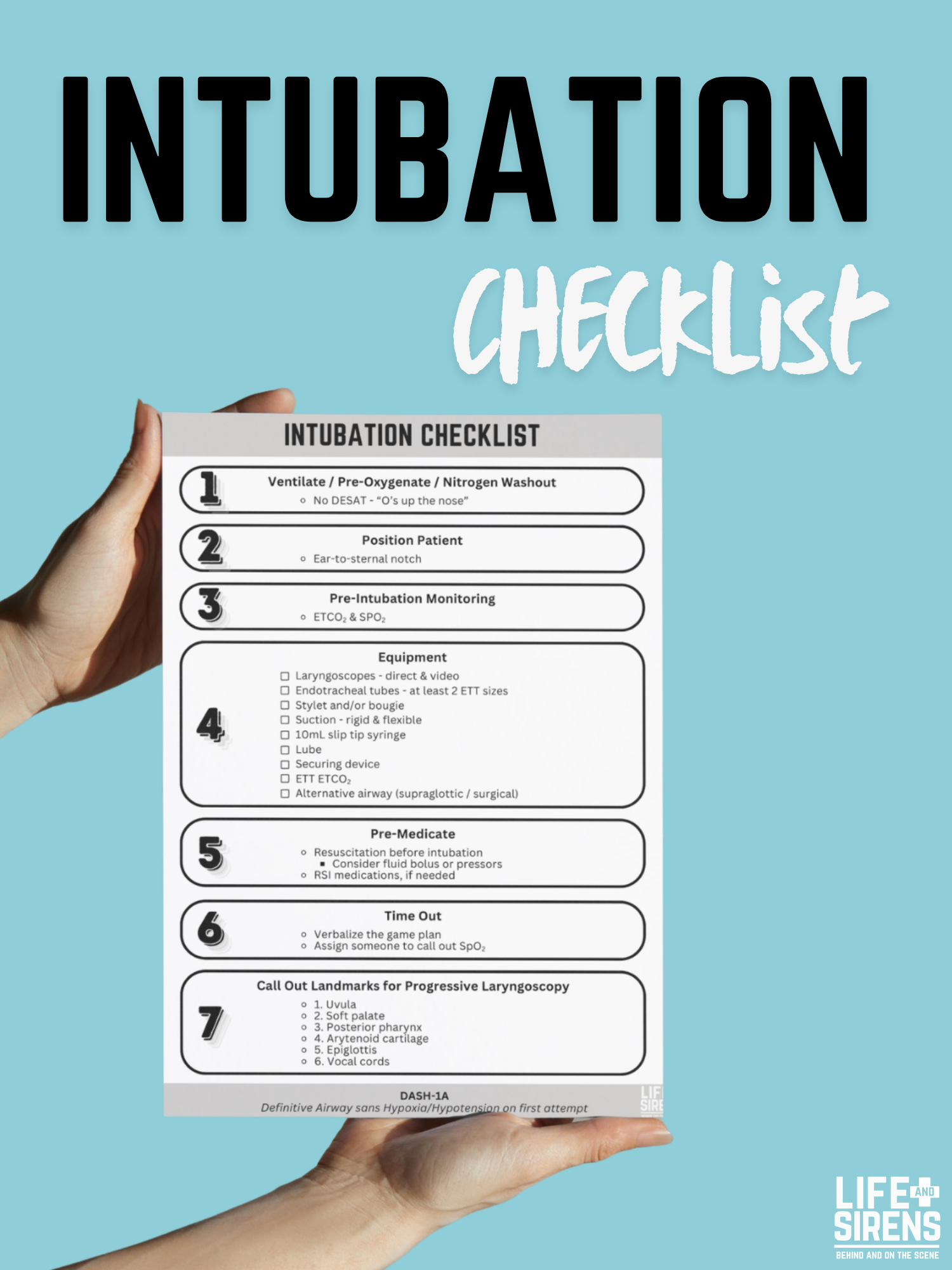
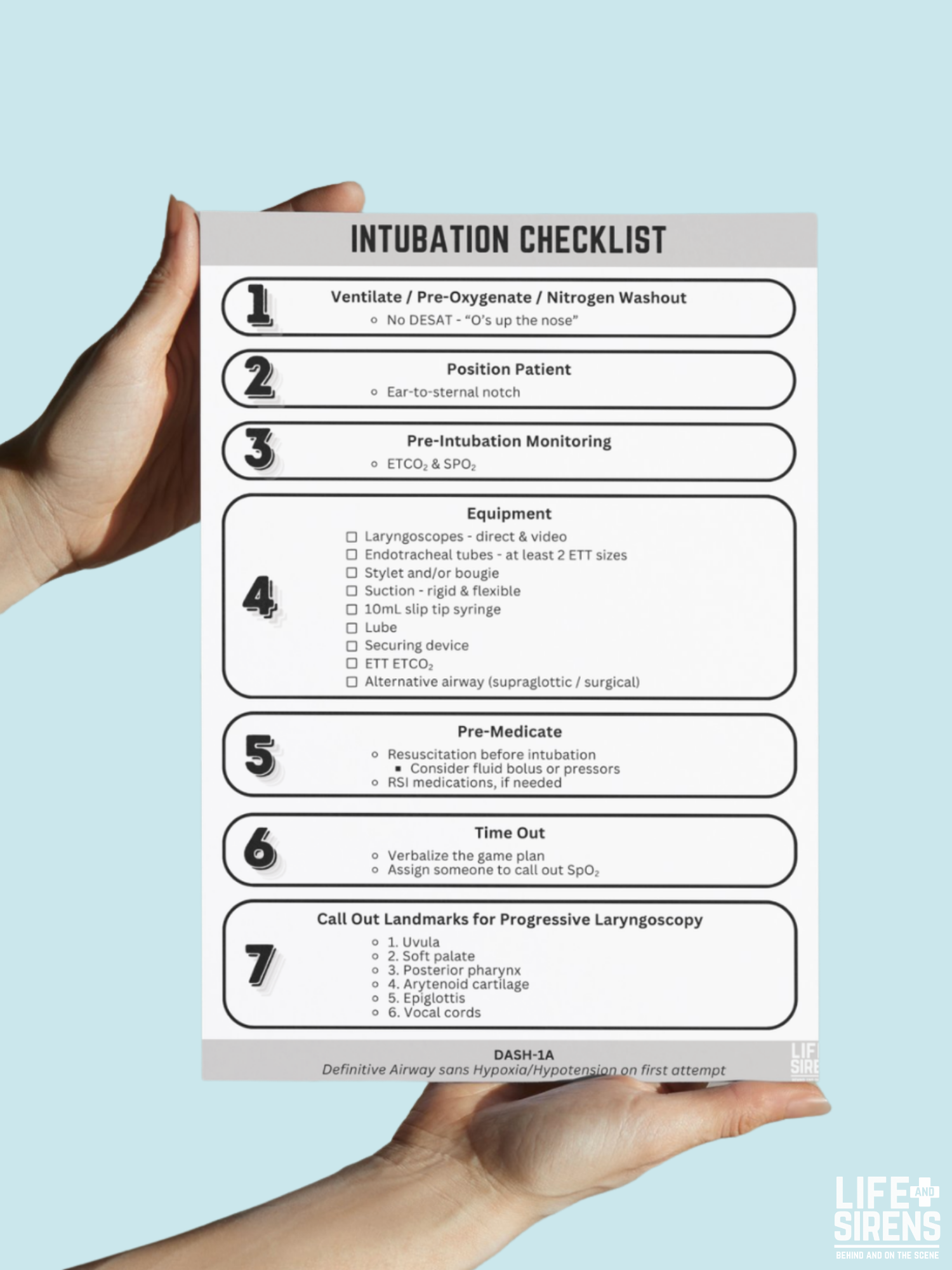
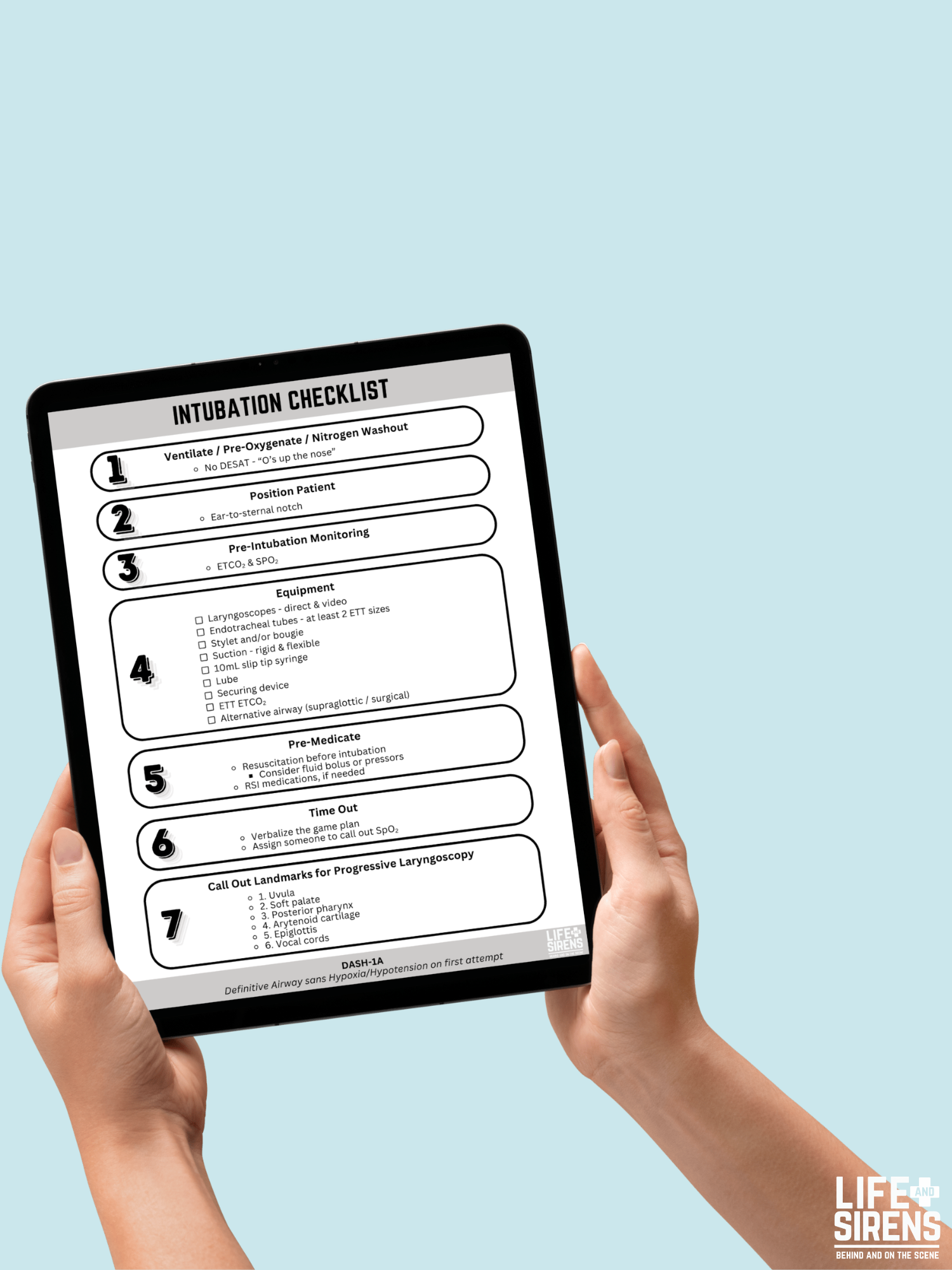

This downloadable Intubation Checklist was created to provide a clear, structured approach to airway preparation in high-stress situations. Built with prehospital providers in mind, it emphasizes equipment readiness, physiologic optimization, and team communication before the first attempt.
The checklist includes key considerations such as pre-oxygenation strategies, monitoring, medication preparation, backup airway planning, and progressive laryngoscopy landmarks — all in a clean, easy-to-follow format.
Ideal for:
EMS providers and students
Airway refreshers and skills labs
Training nights or simulation scenarios
Personal reference or station resources
📄 Format: PDF download
📱 Use: Digital or print-friendly
⚠️ Disclaimer:
This resource is for educational and informational purposes only and is not intended to replace local protocols, medical direction, or clinical judgment. Always follow your agency’s policies and medical oversight.
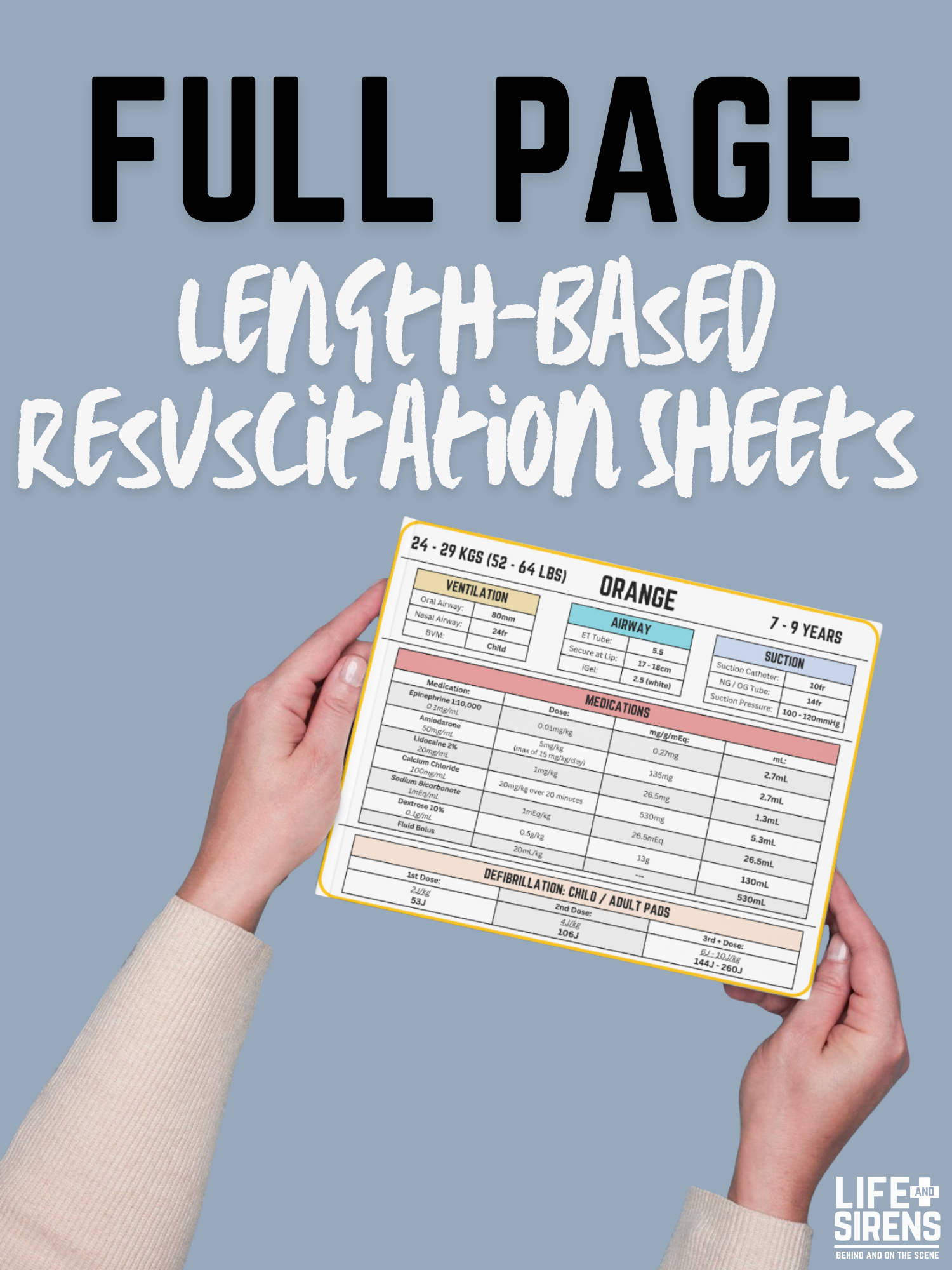
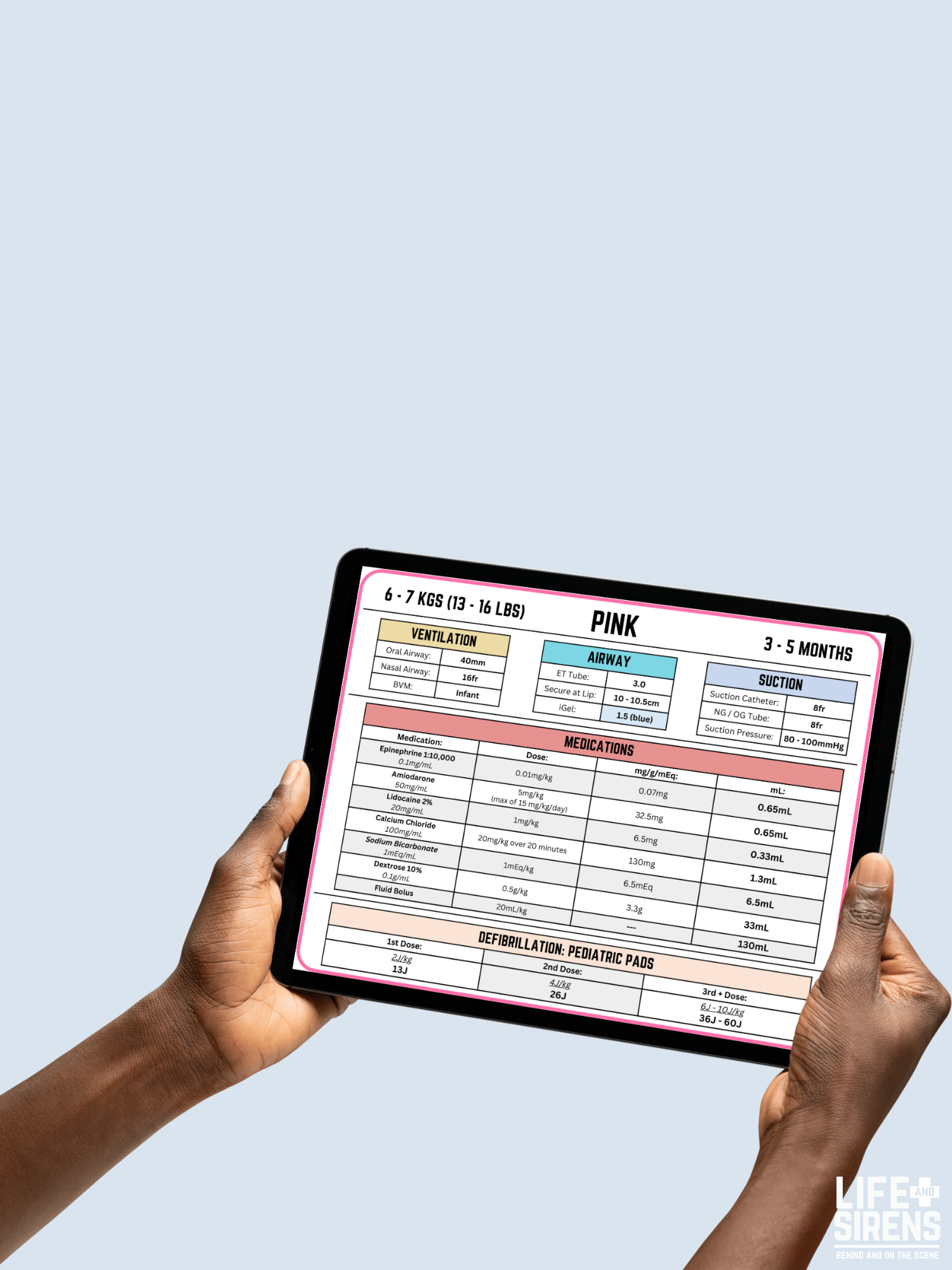
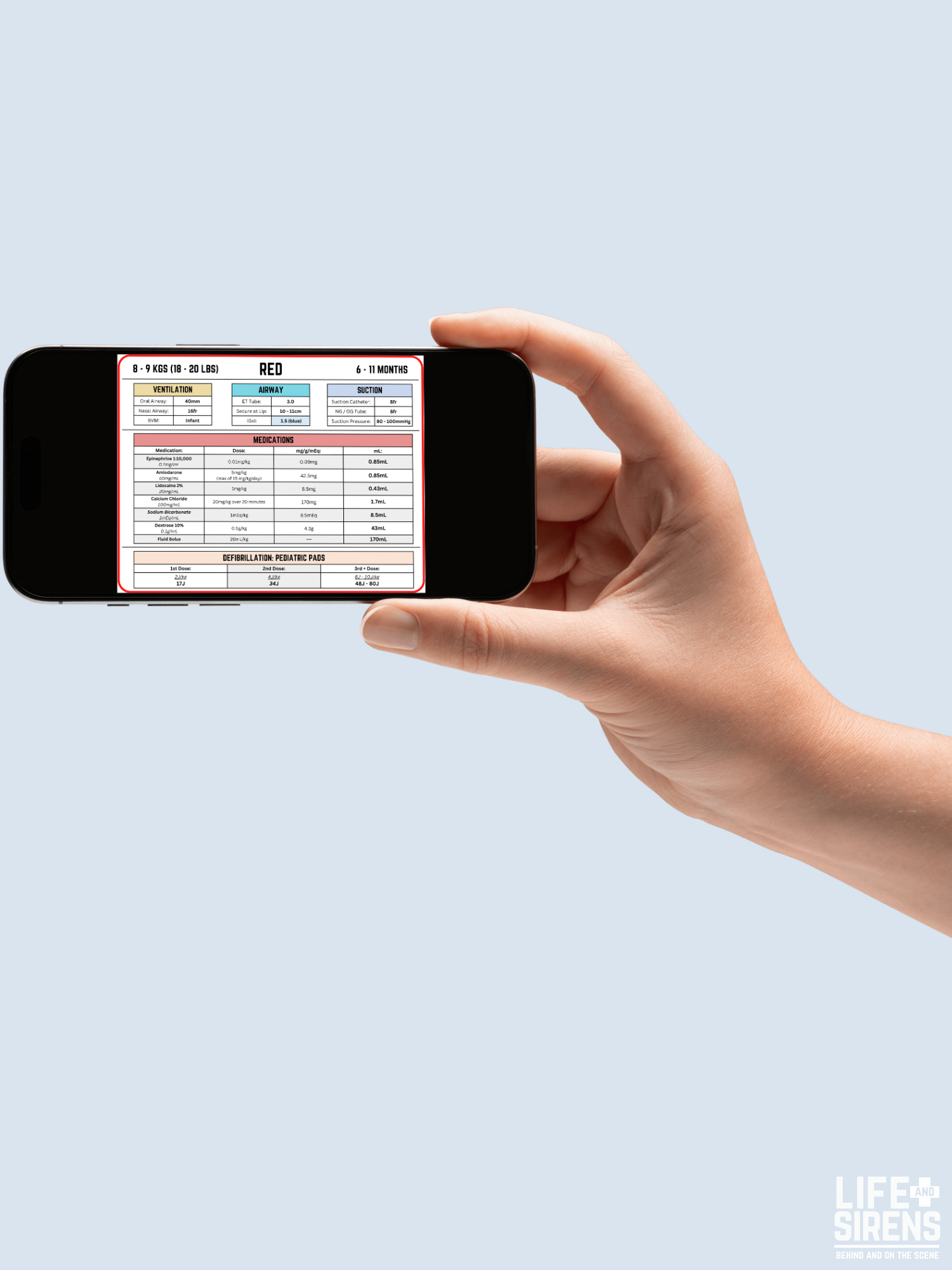
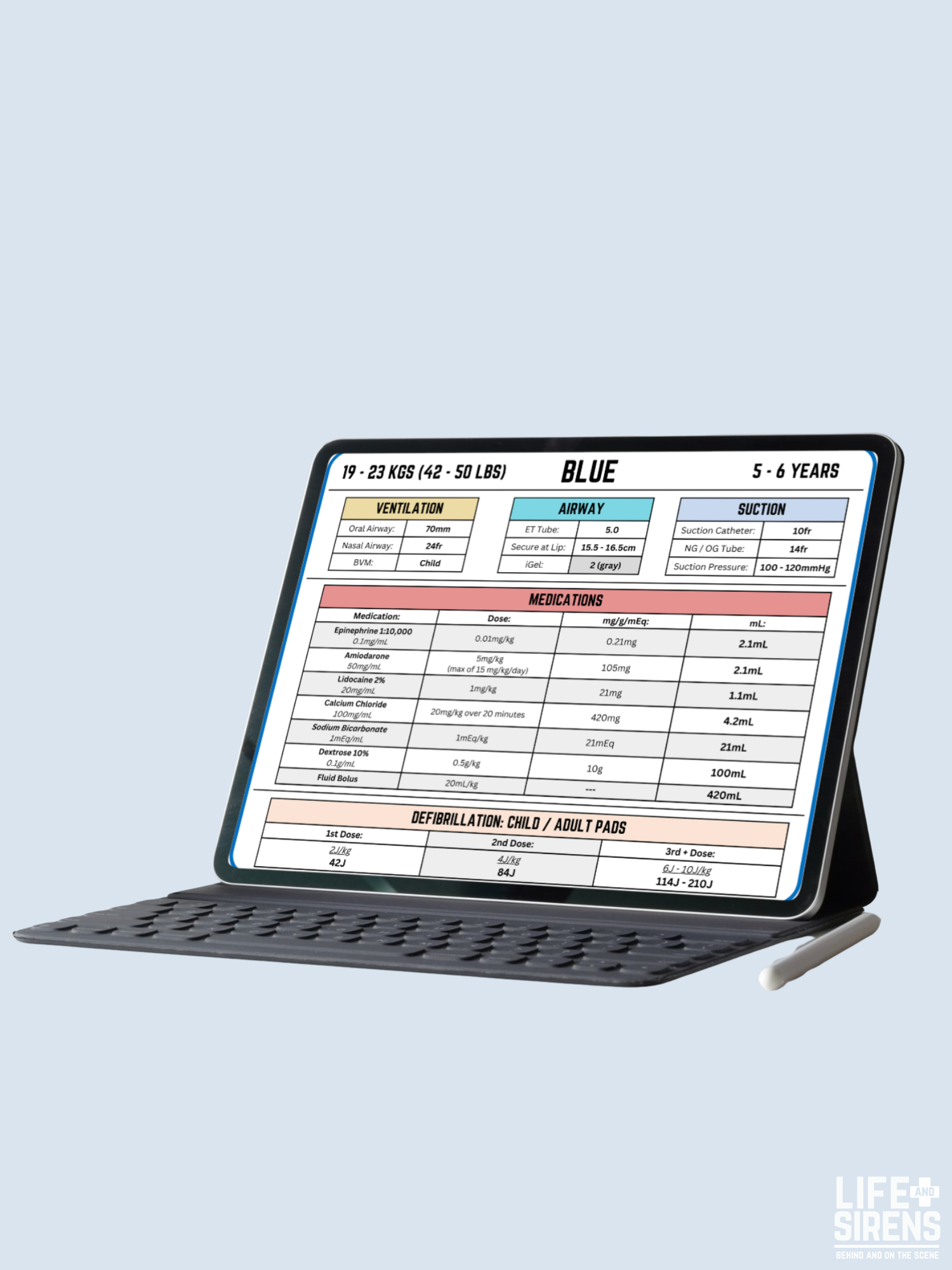
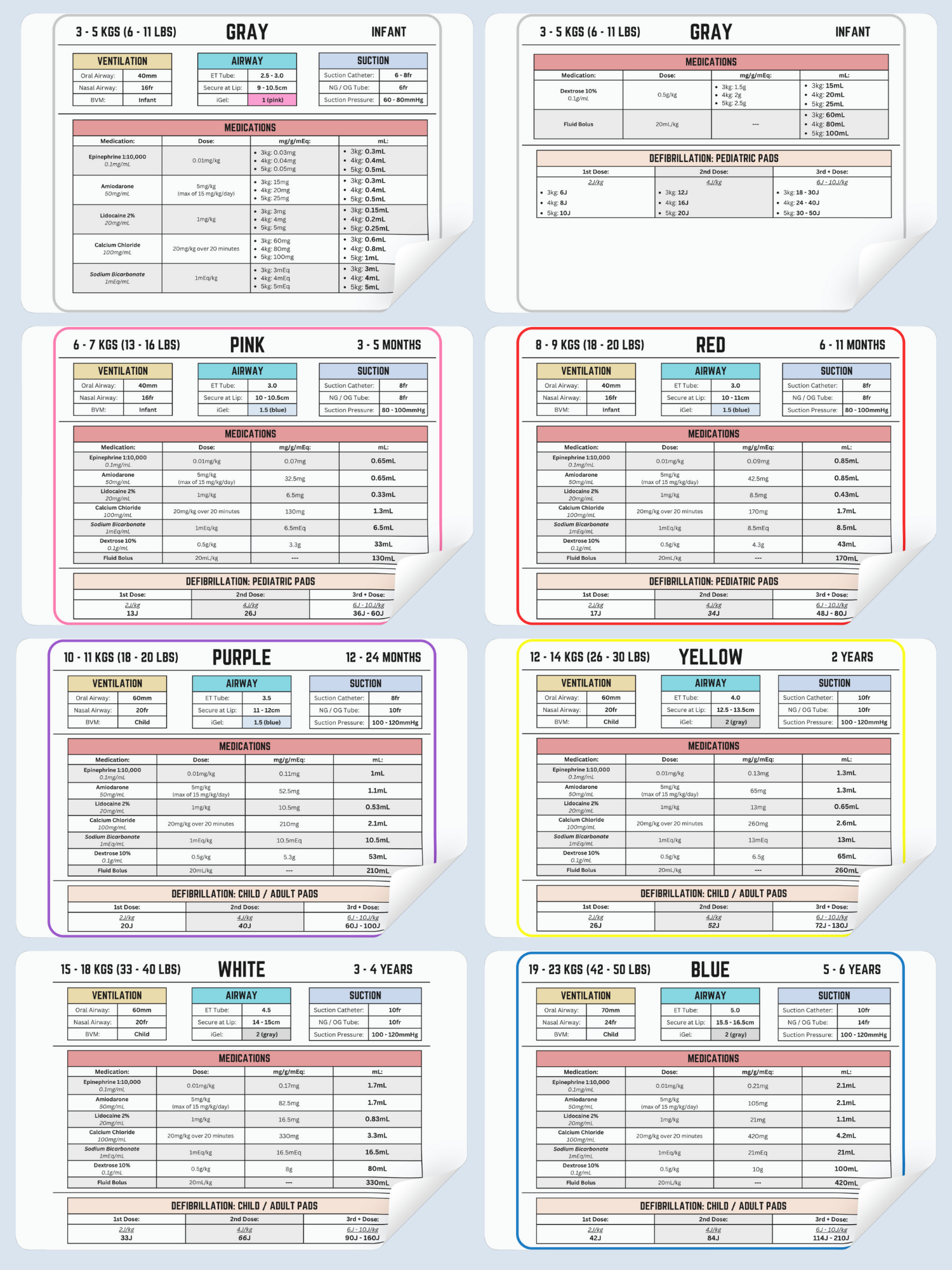

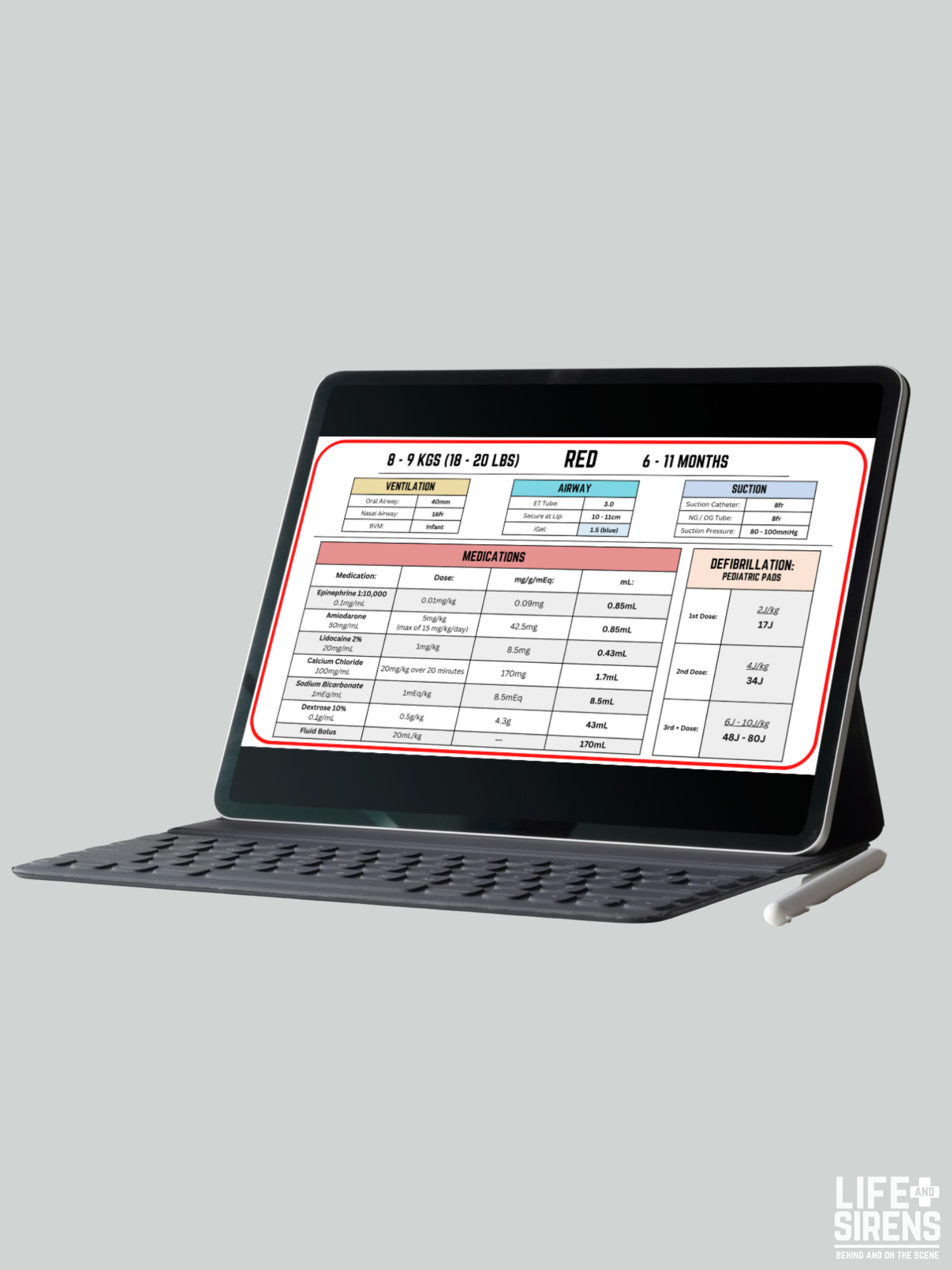
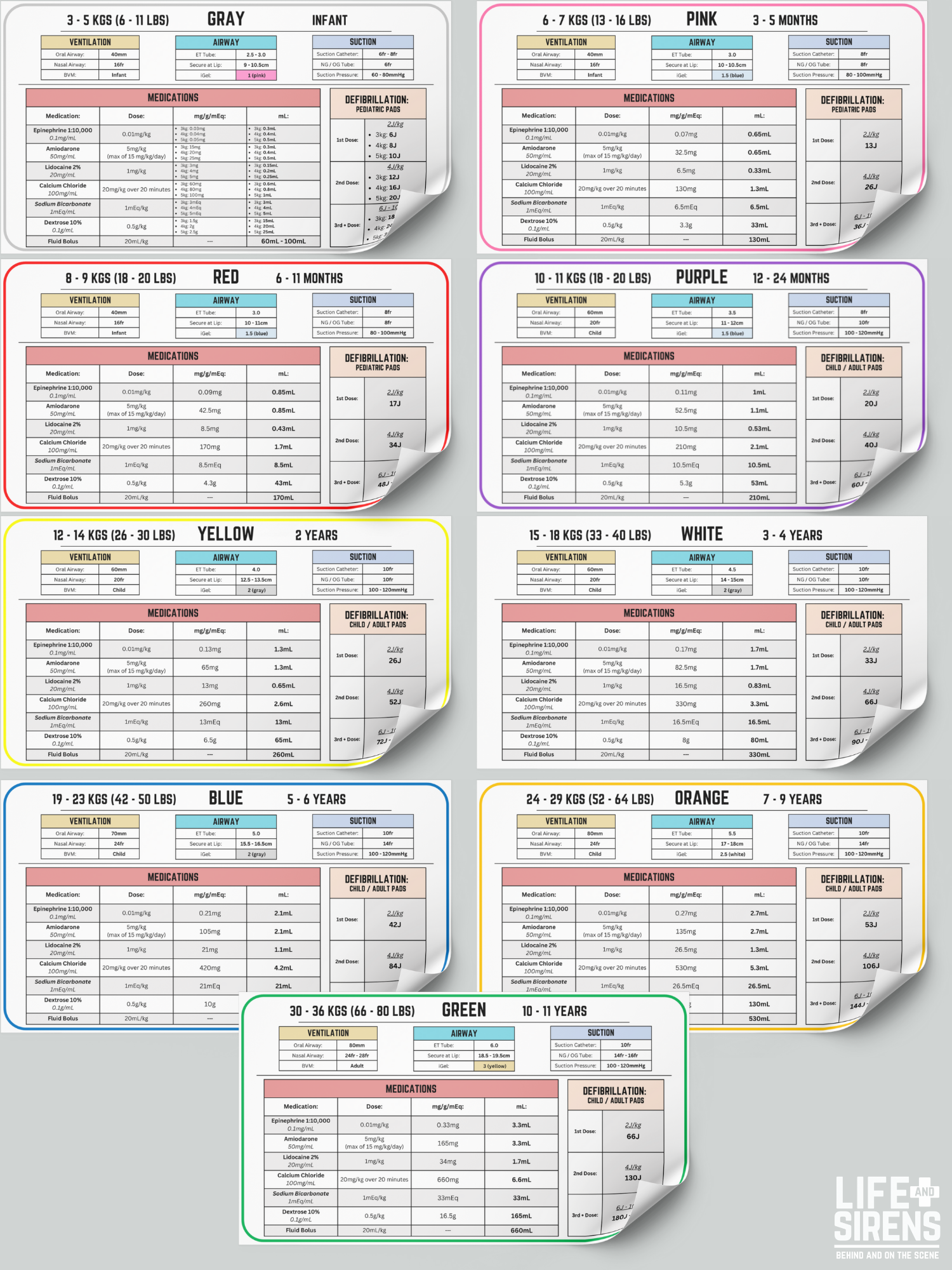
These Length-Based Resuscitation Sheets (Full Page) provide a structured, color-coded pediatric reference for airway management, medication dosing, defibrillation energy, and equipment sizing based on patient length and estimated weight.
Designed with EMS providers and educators in mind, the full-page format allows for easy readability during training sessions, simulation labs, and station reference use. This version is ideal for clipboards, binders, education boards, or digital viewing on tablets.
The layout prioritizes clarity, organization, and rapid cross-checking to support confident decision-making during pediatric emergencies.
Length- and weight-based pediatric categories
Airway equipment sizing (ETT, iGel, BVM, suction)
Medication dosing with concentrations and volumes
Defibrillation energy by weight
Ventilation and suction parameters
📄 Format: PDF digital download
🖨 Designed for: Full-page printing or tablet viewing
⚠️ Disclaimer:
This resource is for educational and informational purposes only and is not intended to replace local protocols, medical direction, or clinical judgment. Always follow your agency’s policies and medical oversight.
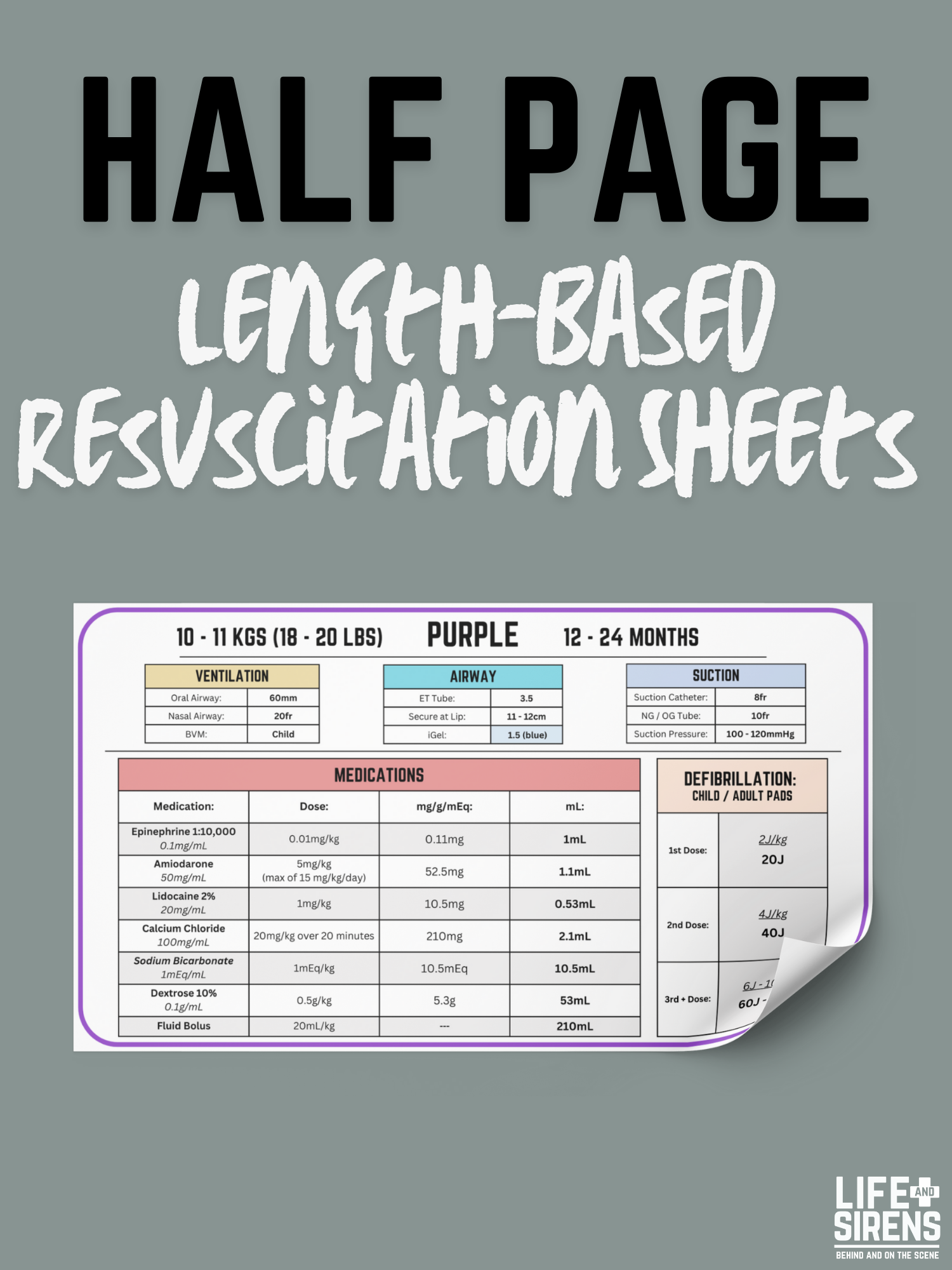
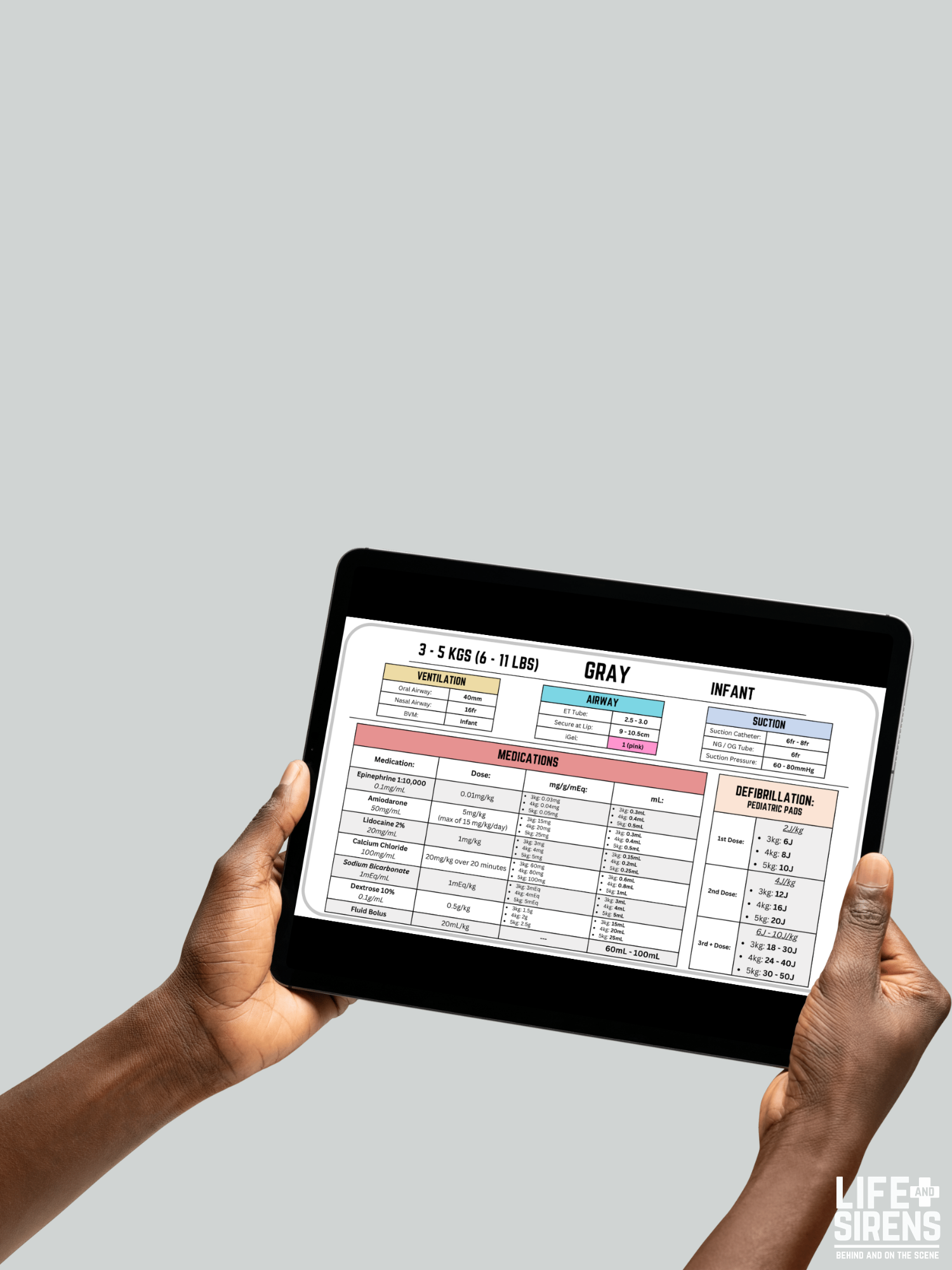
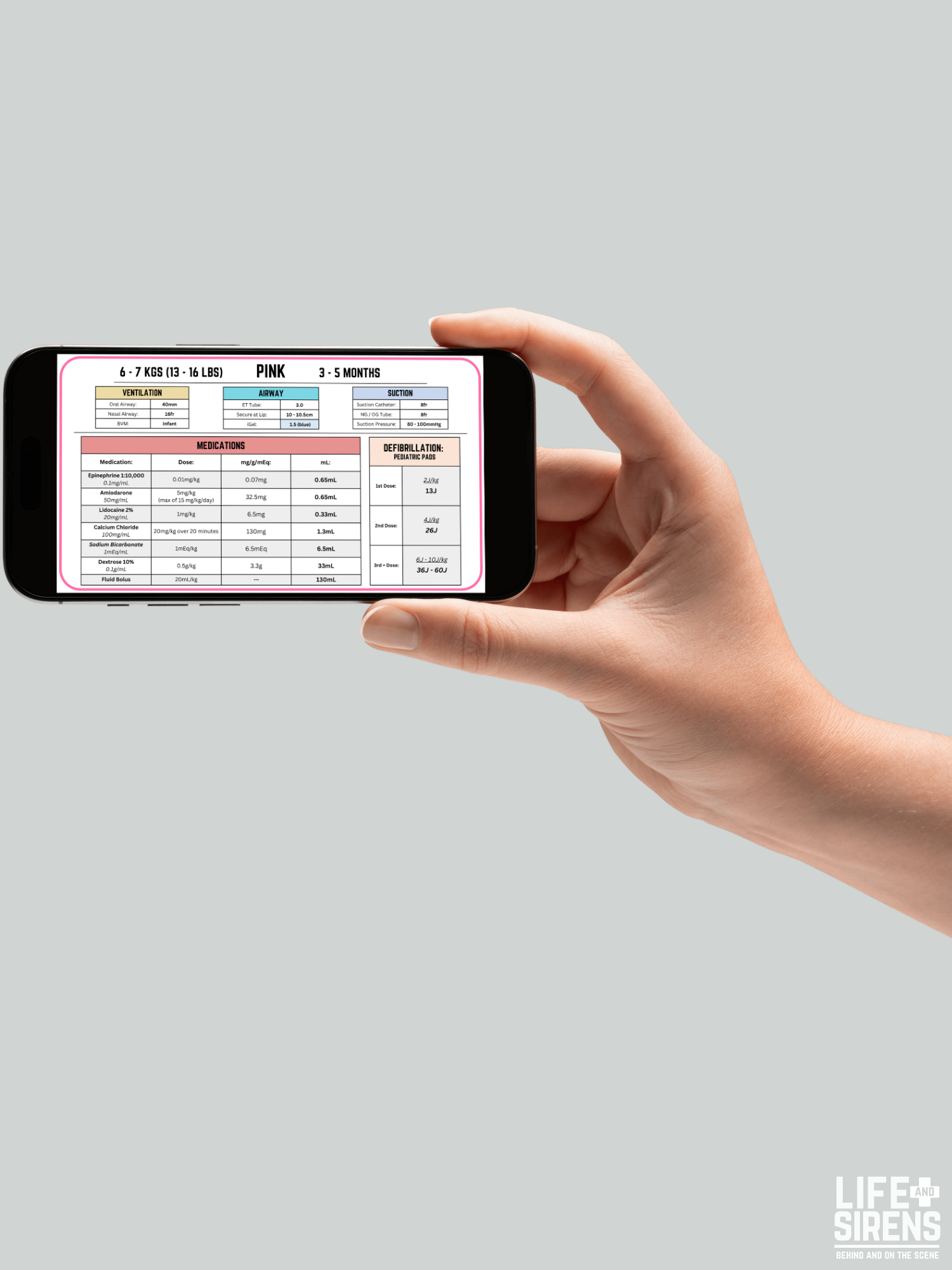
Pediatric calls don’t allow time to flip pages or scroll endlessly.
The Length-Based Resuscitation Sheets — Half Page are designed for rapid reference in real EMS environments, providing clear, structured pediatric resuscitation information in a space-saving format that fits easily into pouches, pediatric kits, and uniform organizers.
This half-sheet version contains the same critical length- and weight-based information as the full-page sheets, but in a portable format built for field use. Whether you’re prepping on scene, organizing a bag, or reviewing before transport, these sheets are designed to support confident, organized decision-making when pediatric stress levels are high.
Length- and weight-based pediatric categories
Airway equipment sizing (ETT, i-Gel, BVM, suction)
Medication dosing with concentrations and volumes
Defibrillation energy by weight
Ventilation and suction parameters
Fits easily into pouches and pediatric bags
Ideal for quick reference during calls
Easier to laminate and organize
Designed for real-world EMS workflows
📄 Format: Digital PDF download
🖨 Print Size: Half sheet
This resource is for educational and informational purposes only and is not intended to replace clinical judgment, medical direction, local protocols, or formal documentation systems. Always follow your agency’s policies and medical oversight.
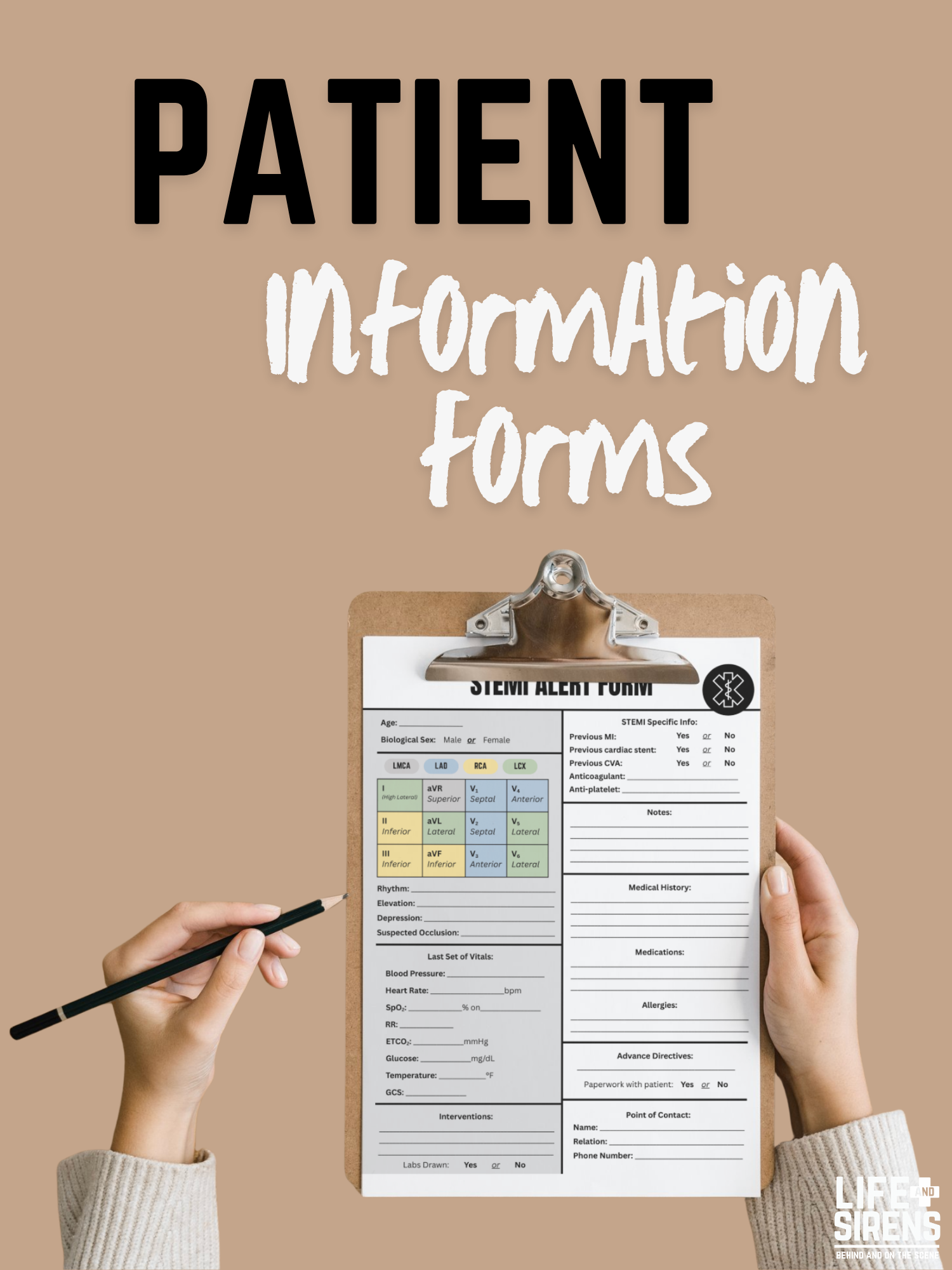
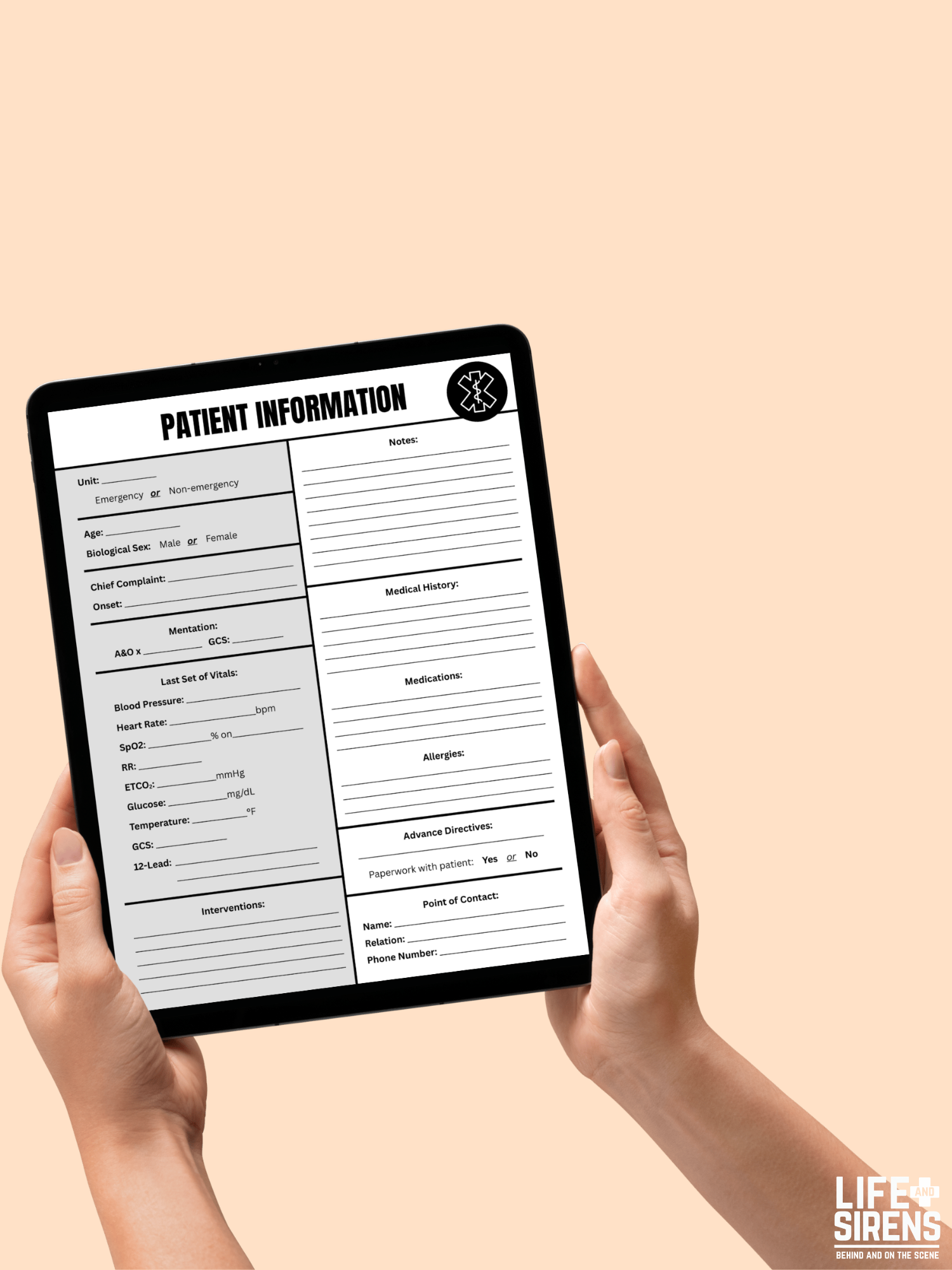

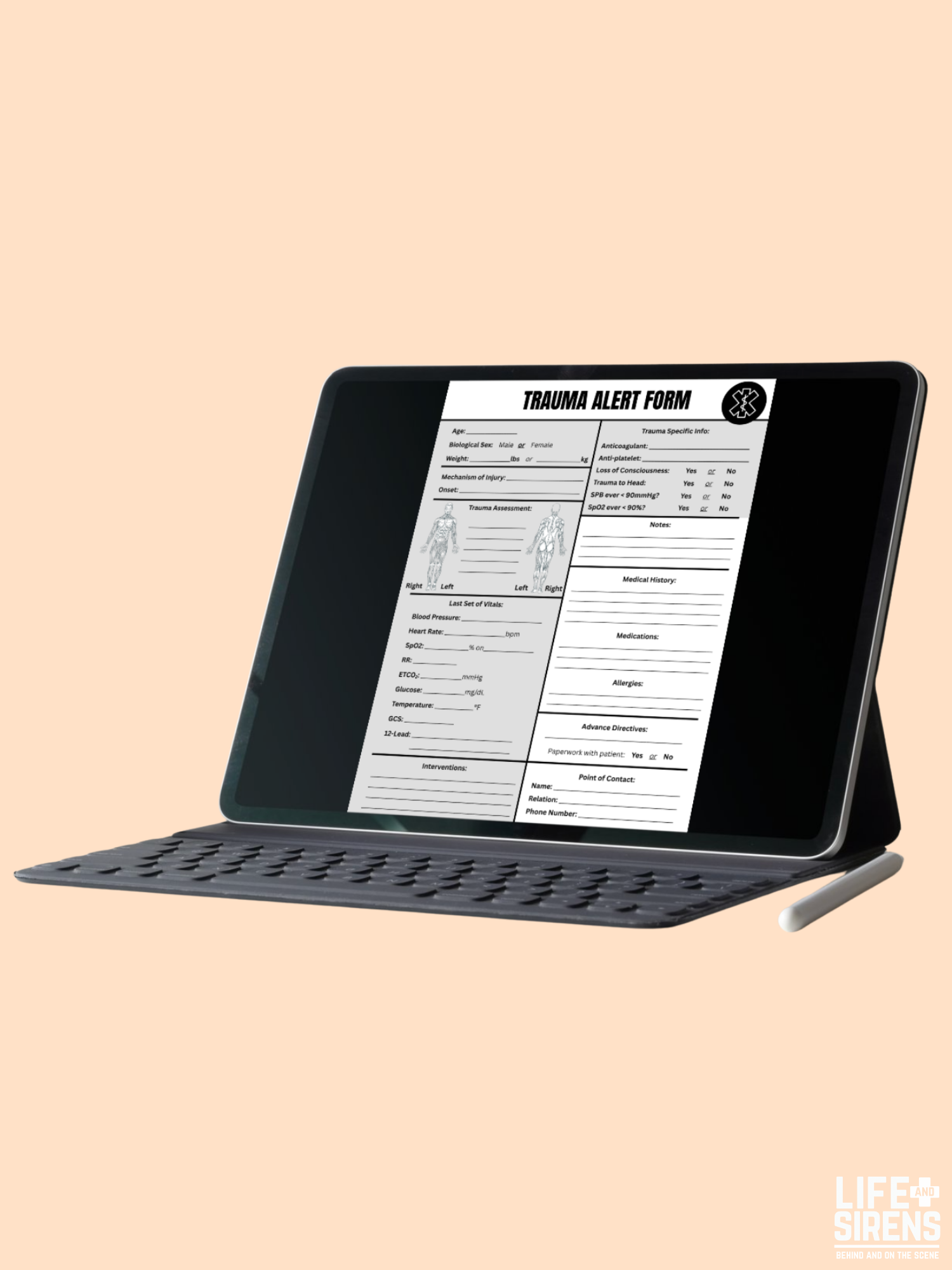
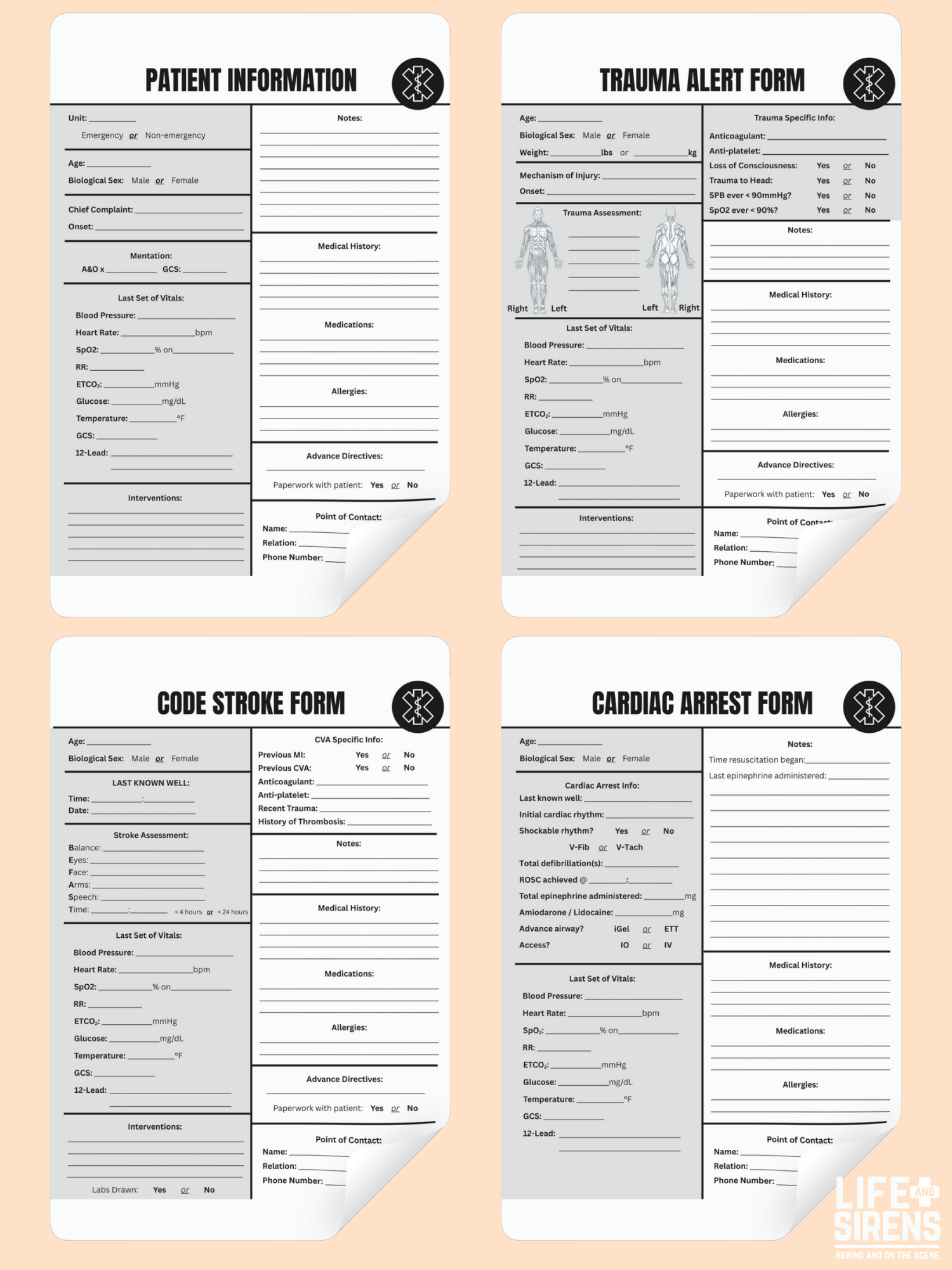
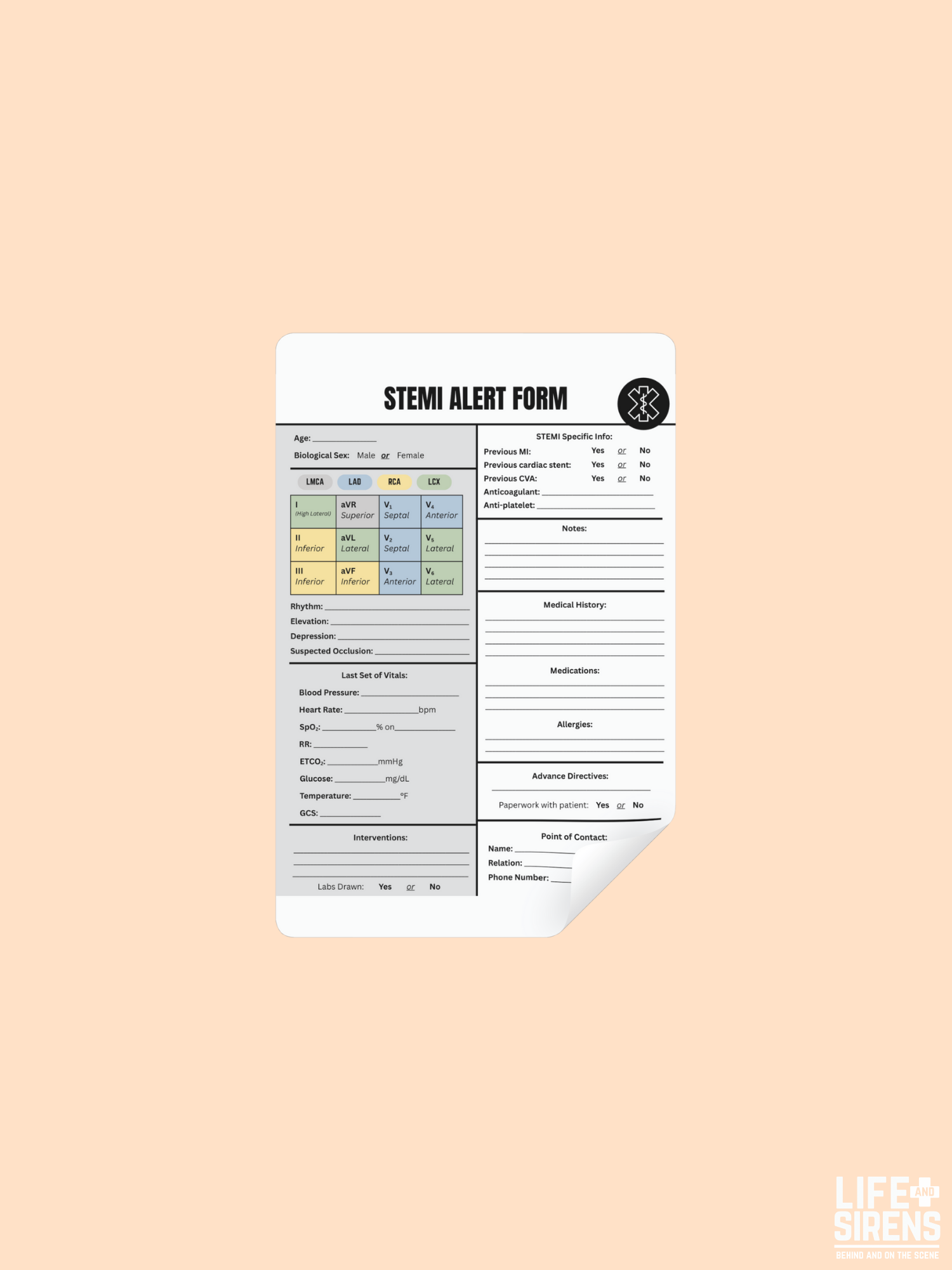
Clear documentation matters — especially during high-acuity calls, specialty alerts, and critical patient handoff.
The Life and Sirens Patient Information Forms are designed to help EMS providers capture essential patient details quickly and consistently in real-world environments. This downloadable packet includes multiple structured forms for common high-stakes scenarios, allowing providers to organize information clearly for hospital handoff, charting support, or post-call review.
Each form prioritizes clarity, flow, and practicality — built from the perspective of what information actually gets asked for when things are moving fast.
This digital pack includes printable forms for:
General Patient Information
Stroke Alert
Trauma Alert
Cardiac Arrest
STEMI Alert
Each form includes space for:
Demographics and chief complaint
Vitals and monitoring data
Interventions performed
Medical history, medications, and allergies
Advance directives and paperwork status
Point of contact information
Specialty forms also include scenario-specific fields such as:
Last Known Well (Stroke)
Anticoagulant and antiplatelet use
Mechanism of injury and trauma criteria
Cardiac arrest timeline and medication tracking
STEMI assessment and ECG findings
Structured layout for high-acuity calls
Supports cleaner handoff communication
Helps reduce missed details during stress
Useful for training, simulation, and QA review
Easy to print, laminate, or use as a reference template
📄 Format: Digital PDF download
🖨 Print Size: Full page
This resource is for educational and informational purposes only and is not intended to replace clinical judgment, medical direction, local protocols, or formal documentation systems. Always follow your agency’s policies and medical oversight.
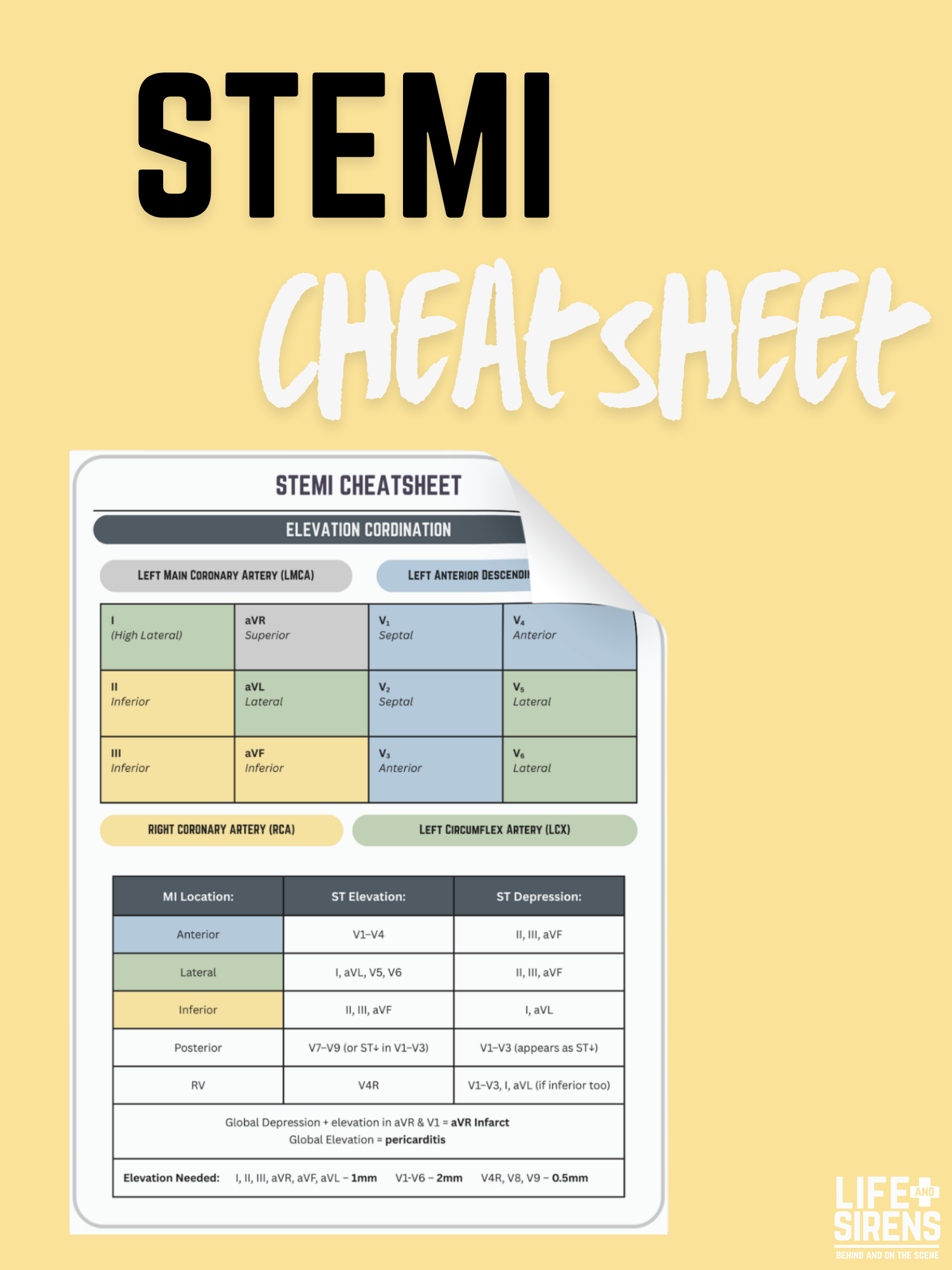



STEMI recognition is time-sensitive — and cognitive overload doesn’t help.
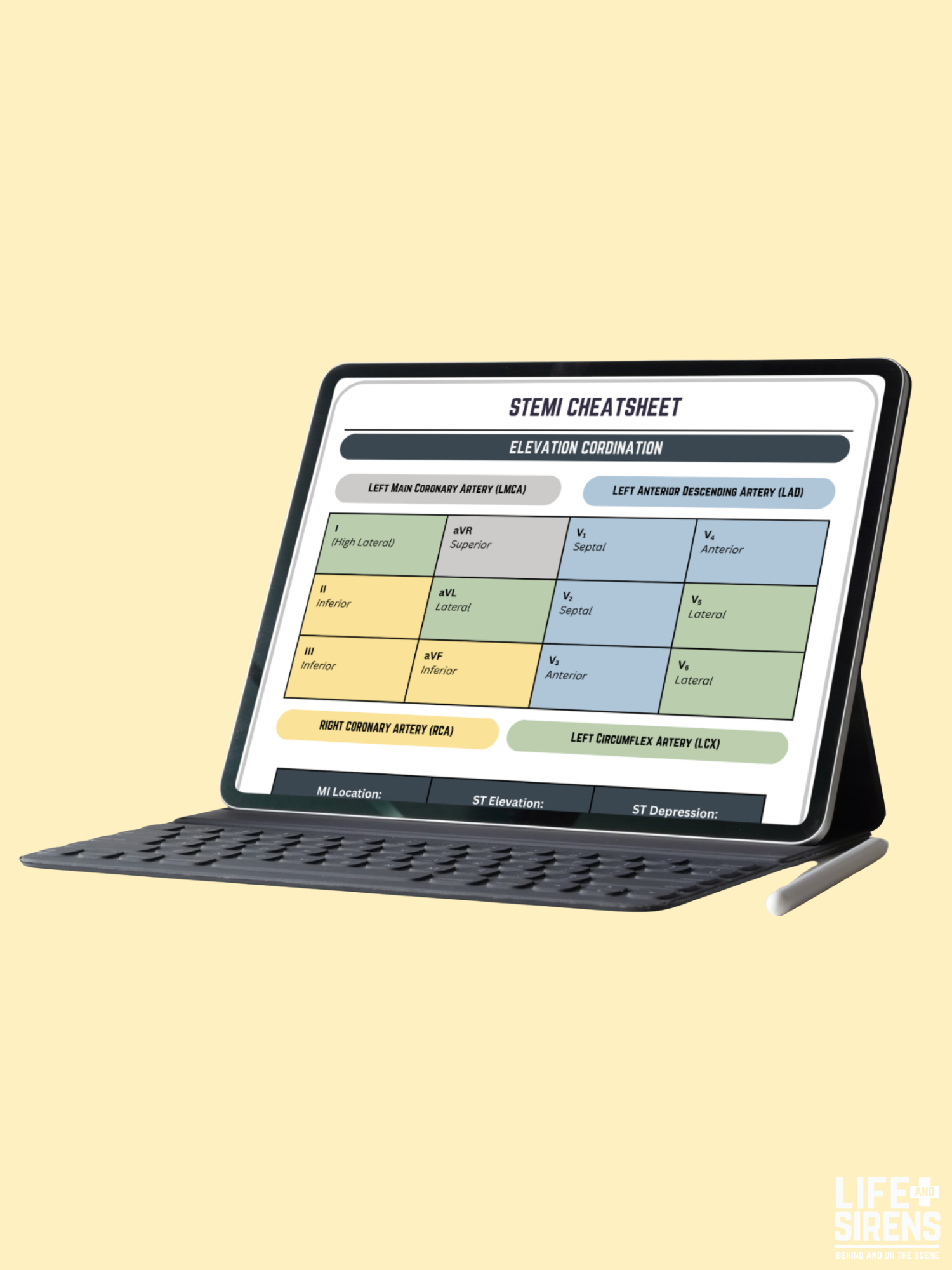
The Life & Sirens STEMI Cheatsheet is a focused, one-page reference designed to support rapid ECG interpretation and infarct localization during high-acuity cardiac calls. This resource organizes ST-elevation patterns by lead group, correlates them with myocardial regions and coronary arteries, and highlights key reciprocal changes that matter in the field.
Built for EMS providers, this cheatsheet is ideal for quick review, education, and reinforcement when seconds count and clarity matters.
ST-elevation patterns by lead group
Infarct location identification (anterior, inferior, lateral, posterior, RV)
Corresponding coronary arteries (RCA, LAD, LCX, LMCA)
Expected reciprocal ST-segment changes
Posterior and right-sided MI recognition
Special patterns (global elevation vs depression, aVR considerations)
ST-elevation measurement thresholds by lead location
Clear visual organization for fast pattern recognition
Reinforces STEMI localization without overcomplication
Supports confident activation and communication
Useful for training, refresher review, and simulations
Designed from a prehospital perspective
📄 Format: Digital PDF download
🖨 Print Size: Full page
This resource is provided for educational and informational purposes only and does not replace clinical judgment, medical direction, local protocols, or formal training. Always follow your agency’s guidelines and medical oversight.
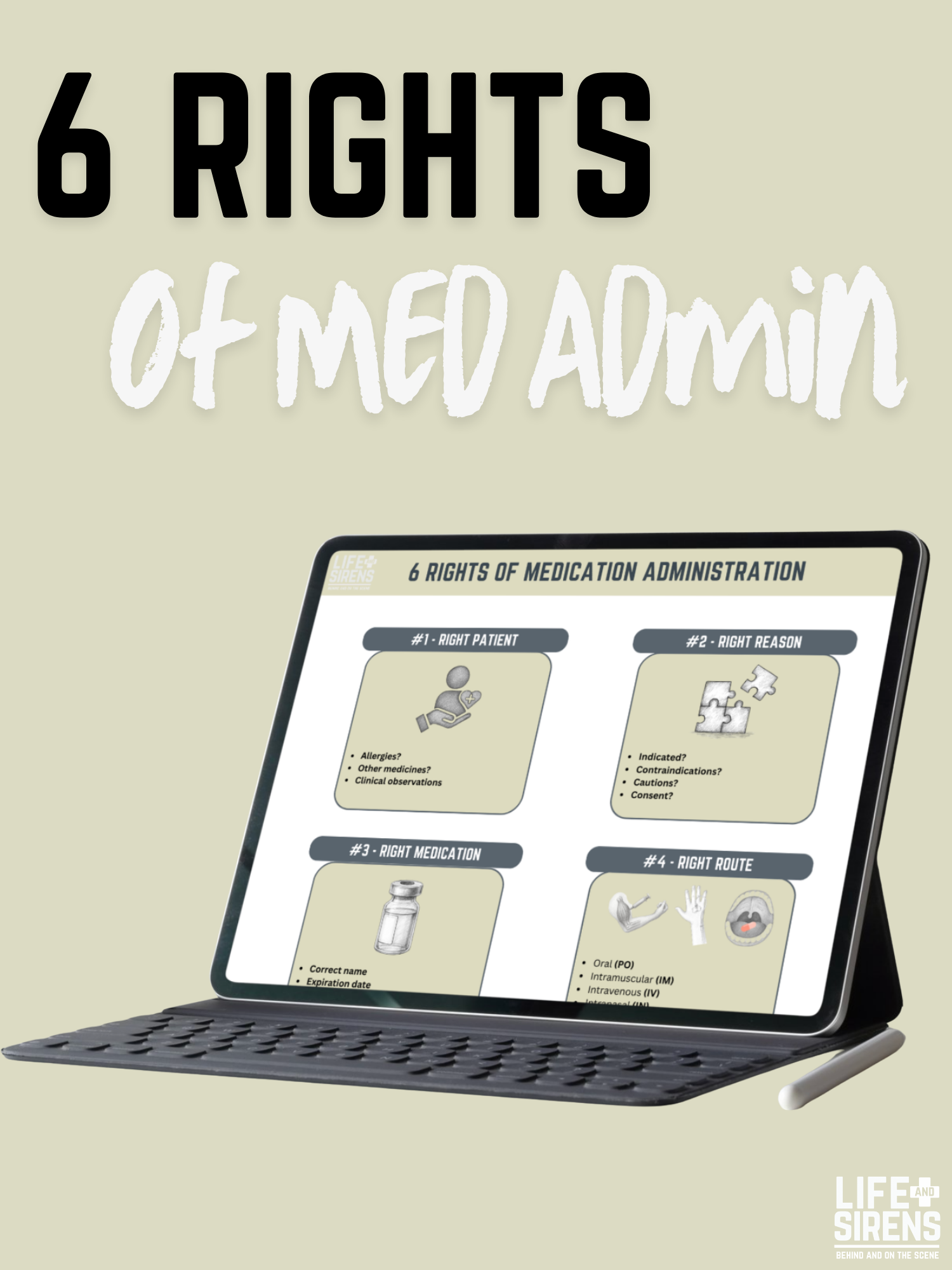
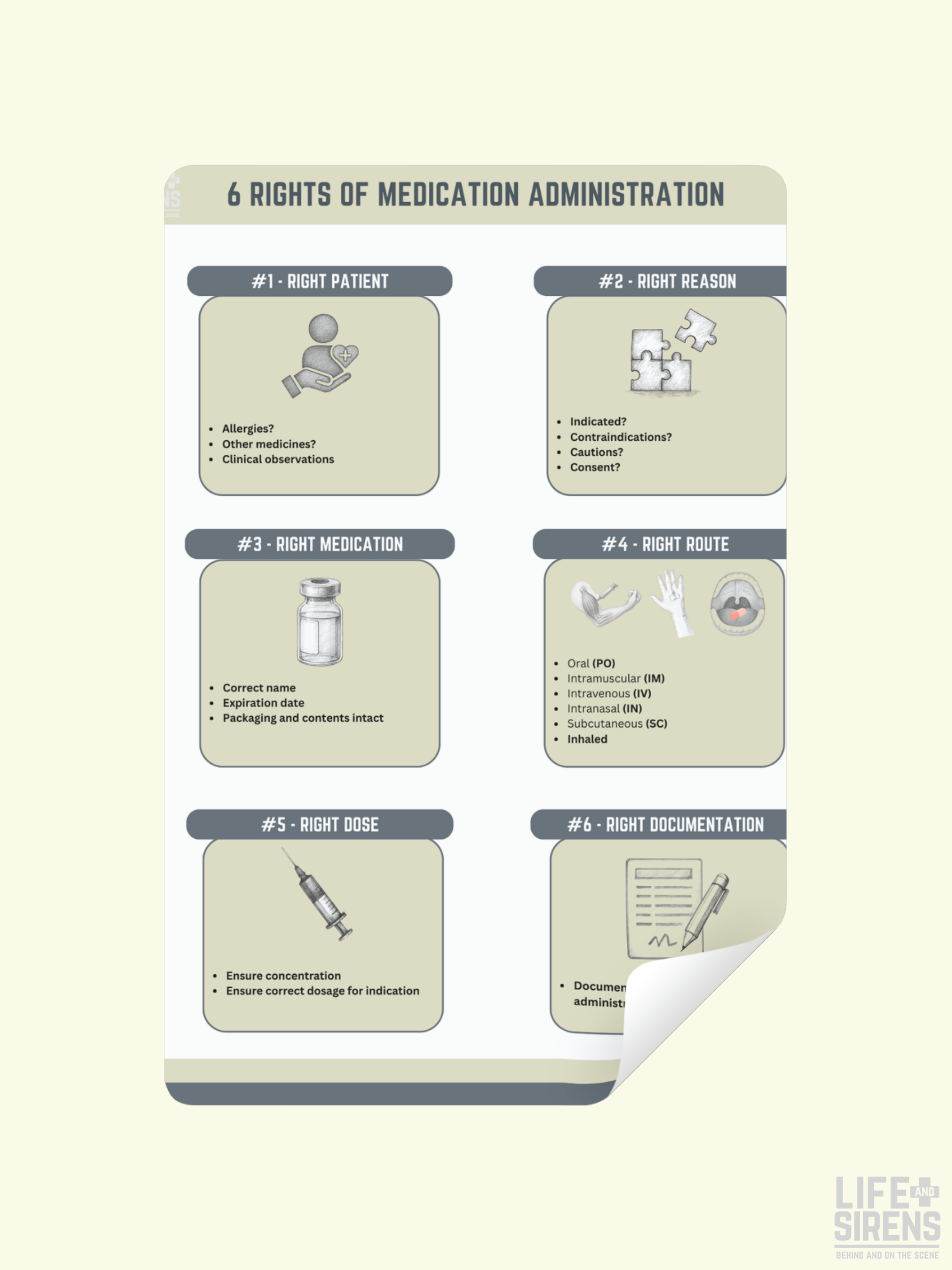


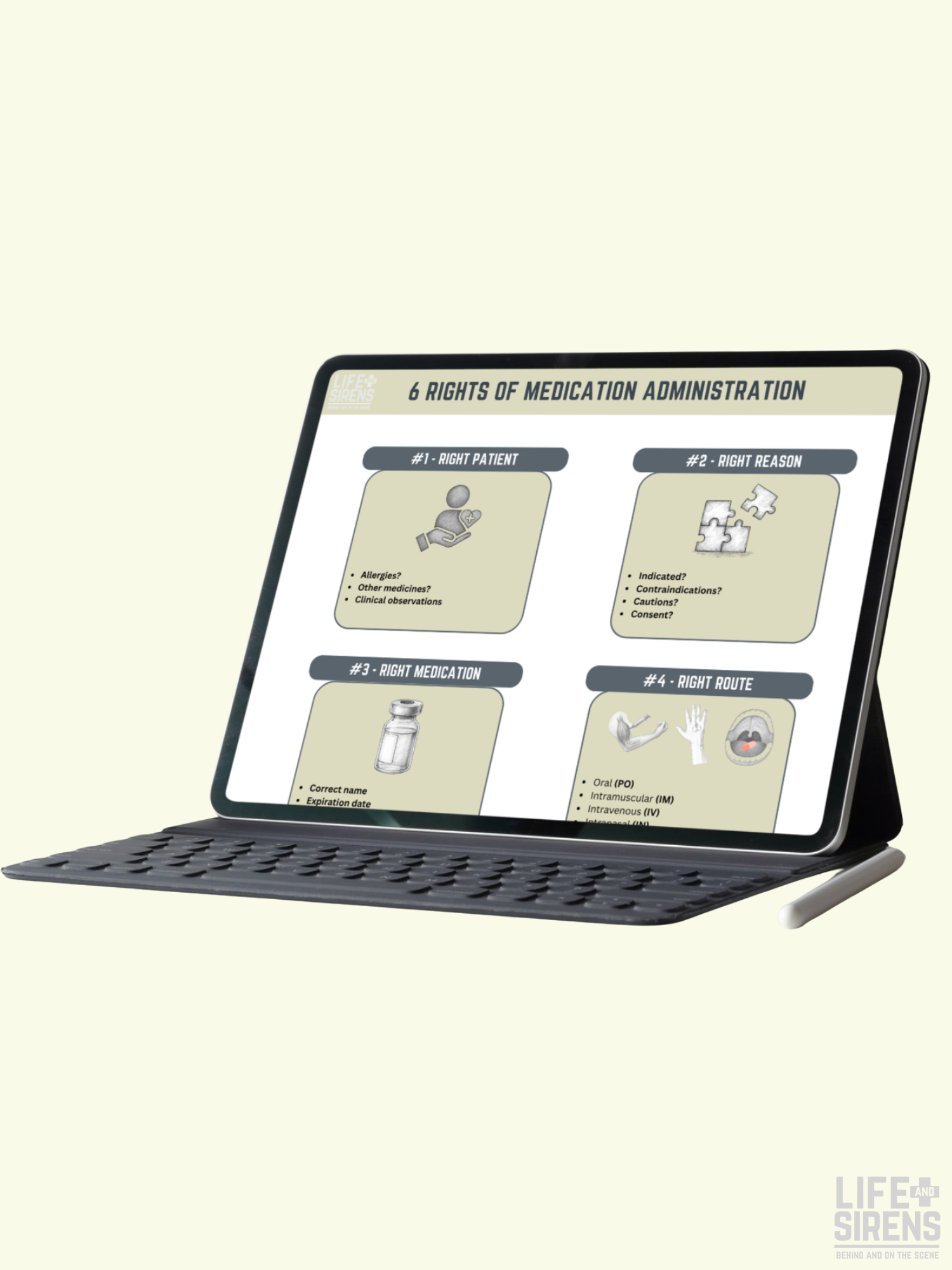
Medication errors are preventable — but only if the fundamentals stay front of mind.
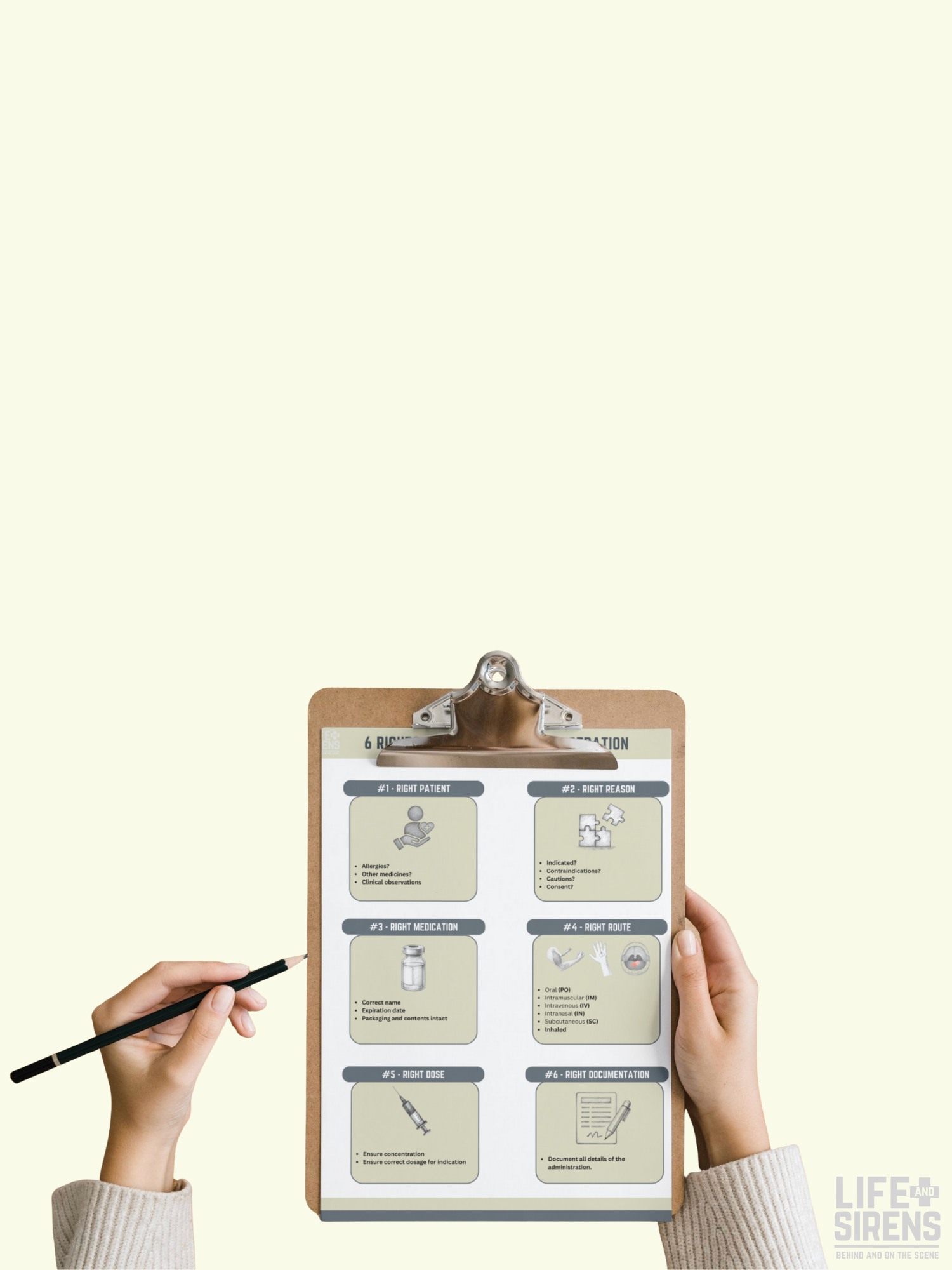
The Life and Sirens 6 Rights of Medication Administration handout is a concise, easy-to-reference tool designed to reinforce safe medication practices in high-stress EMS environments. This resource breaks down each of the six rights in a structured, practical format that supports clinical decision-making before, during, and after medication administration.
Built for real-world EMS care, this handout emphasizes verification, situational awareness, and documentation — especially when distractions, fatigue, or time pressure are present.
Right Patient – identity confirmation and safety checks
Right Reason – indication, contraindications, and consent
Right Medication – packaging, expiration, and medication verification
Right Dose – concentration and indication-appropriate dosing
Right Route – common EMS administration routes (PO, IM, IV, IN, SC, inhaled)
Right Documentation – complete and accurate recording of administration details
Reinforces medication safety fundamentals
Easy to review before or after administration
Useful for training, orientation, and refreshers
Supports consistent practice across providers
Designed with EMS workflows in mind
📄 Format: Digital PDF download
🖨 Print Size: Full page
This resource is provided for educational and informational purposes only and is not intended to replace clinical judgment, medical direction, local protocols, or formal training. Always follow your agency’s guidelines and medical oversight.
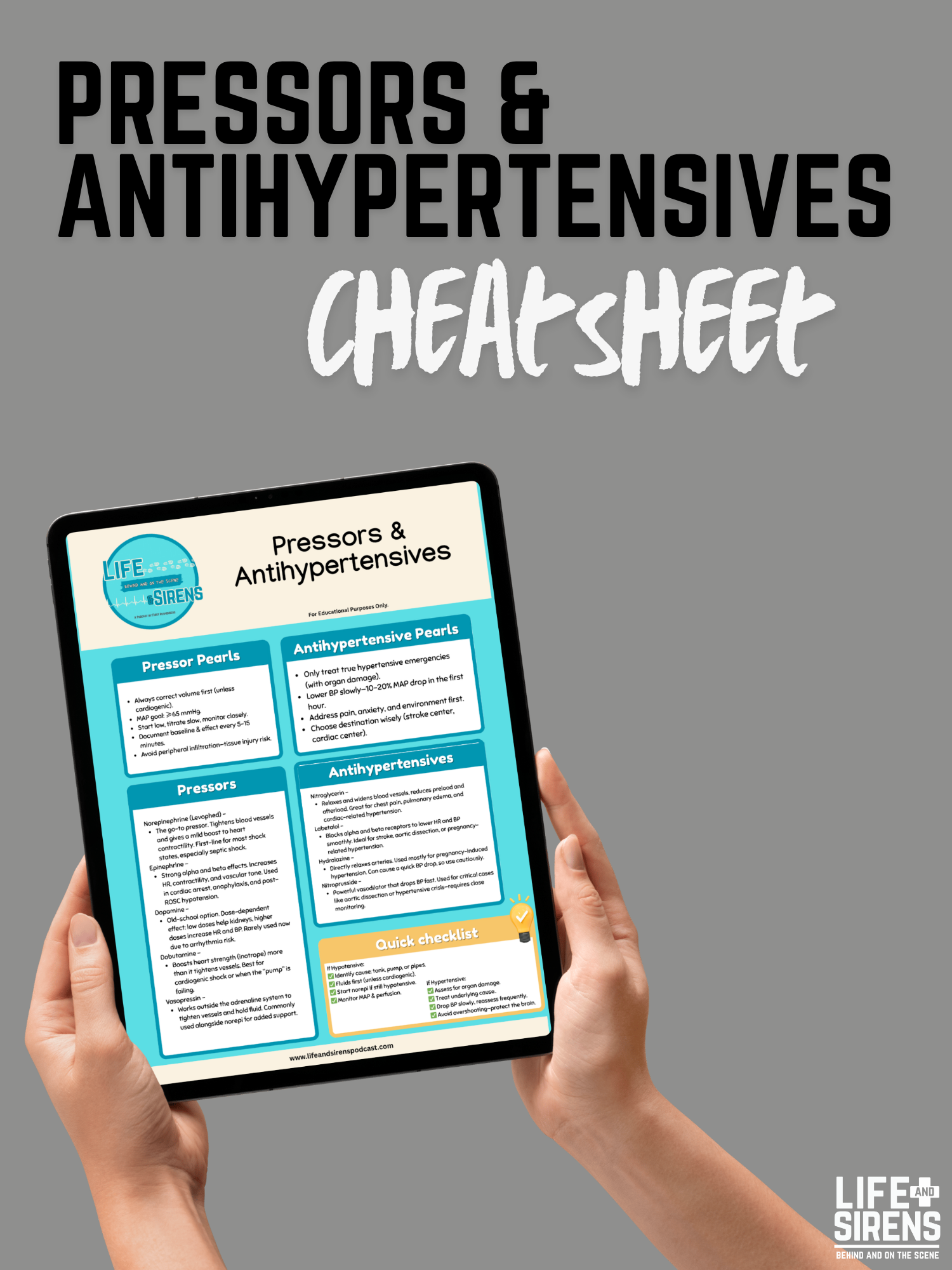
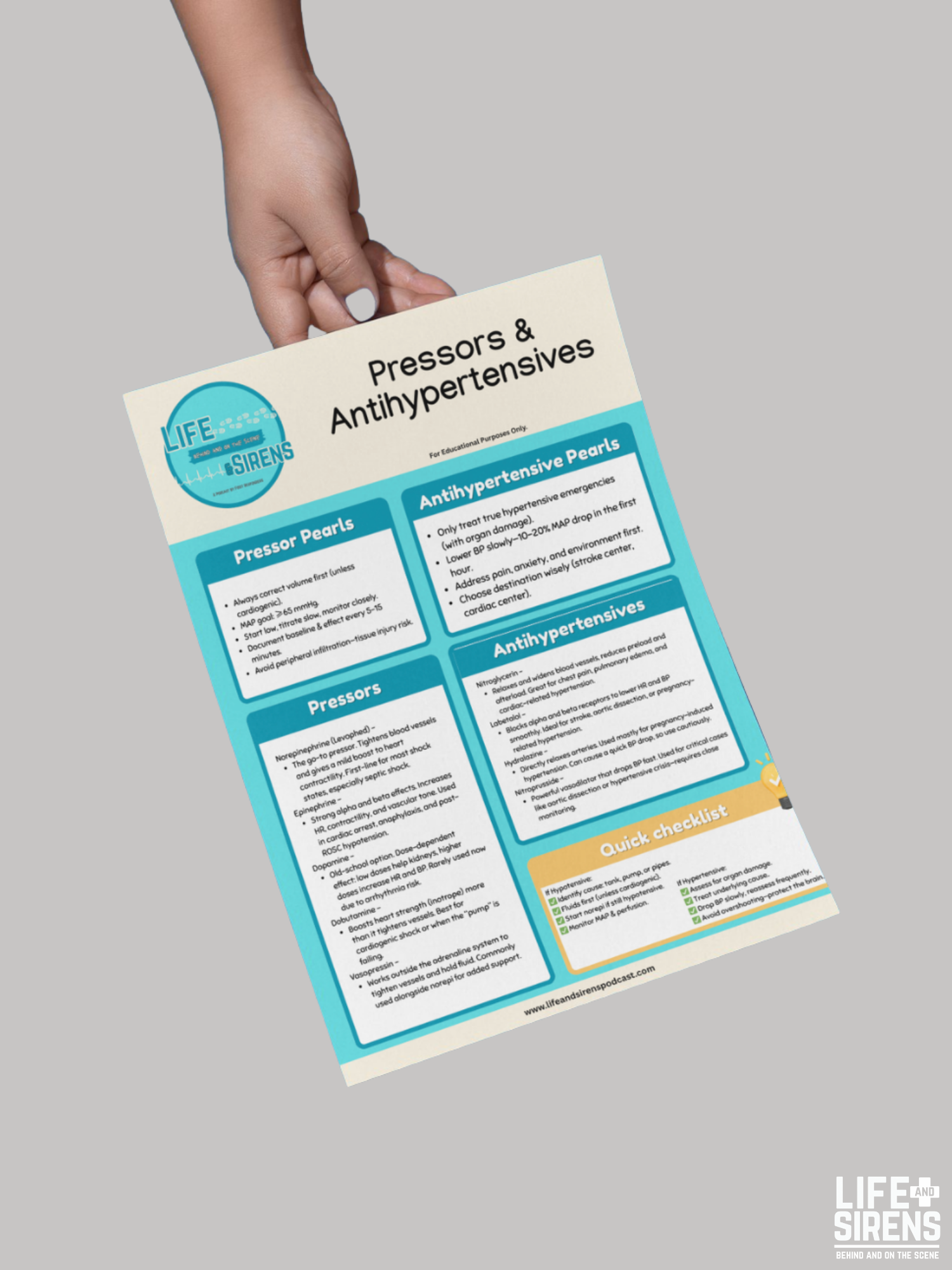
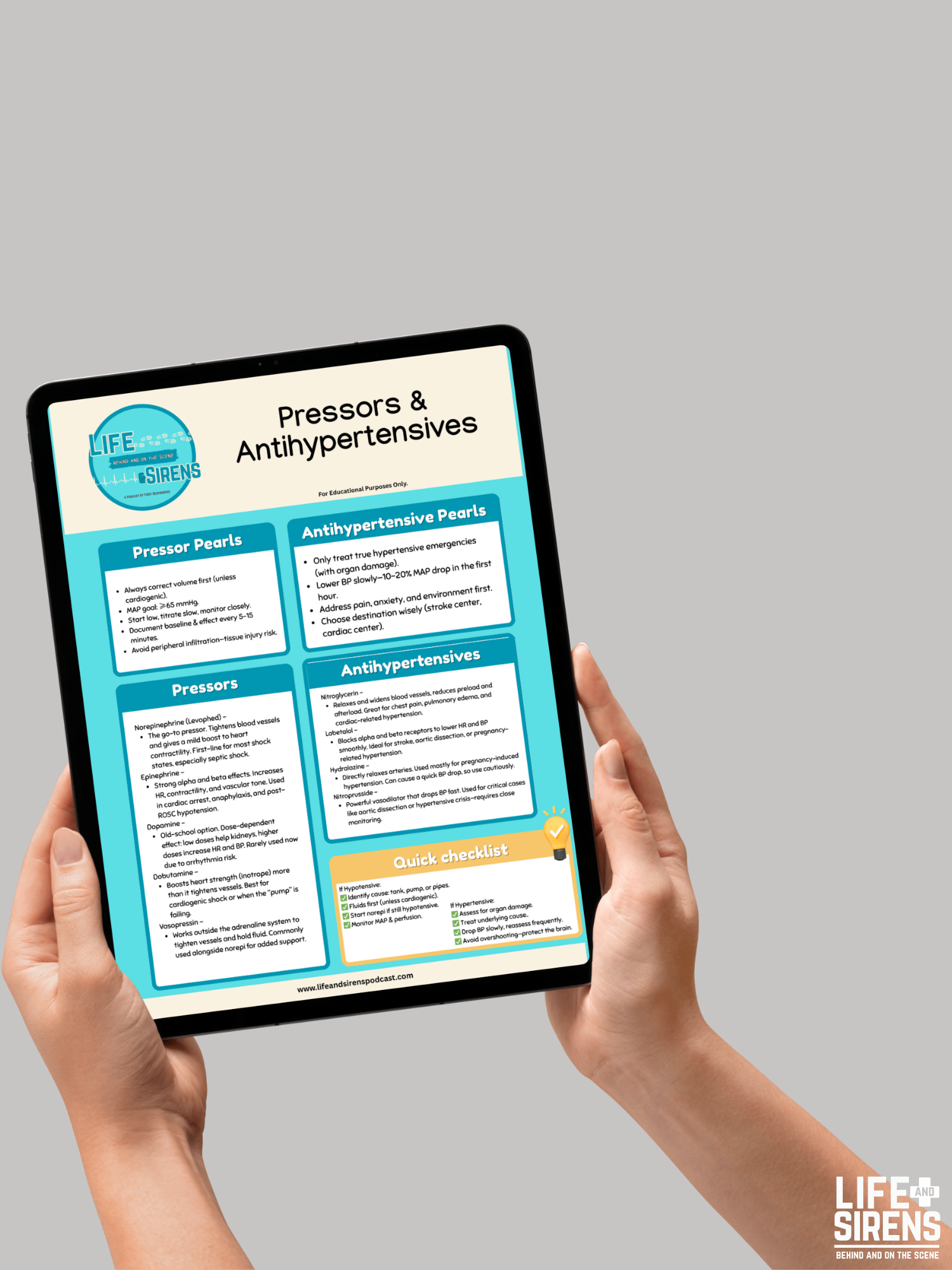
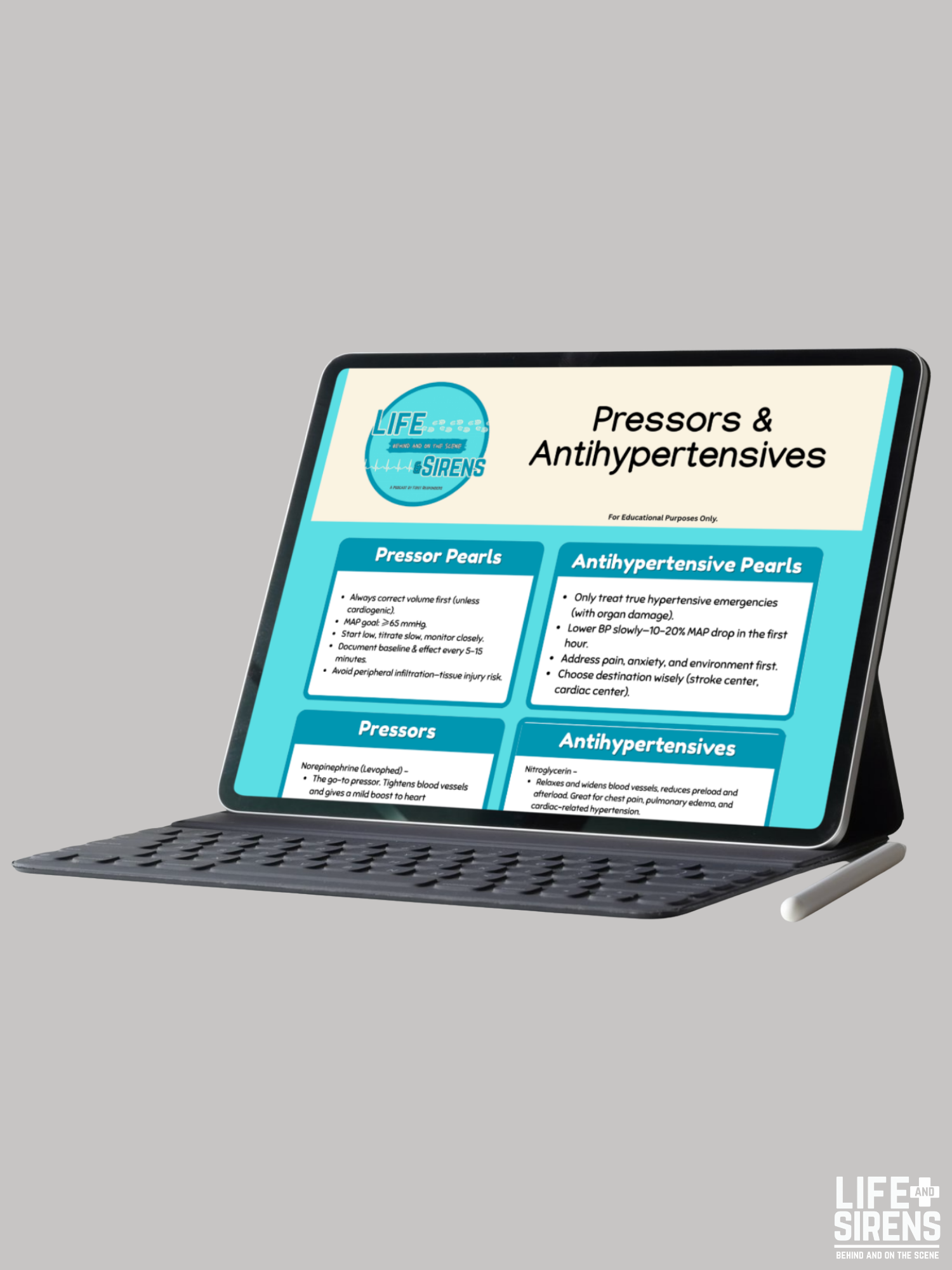
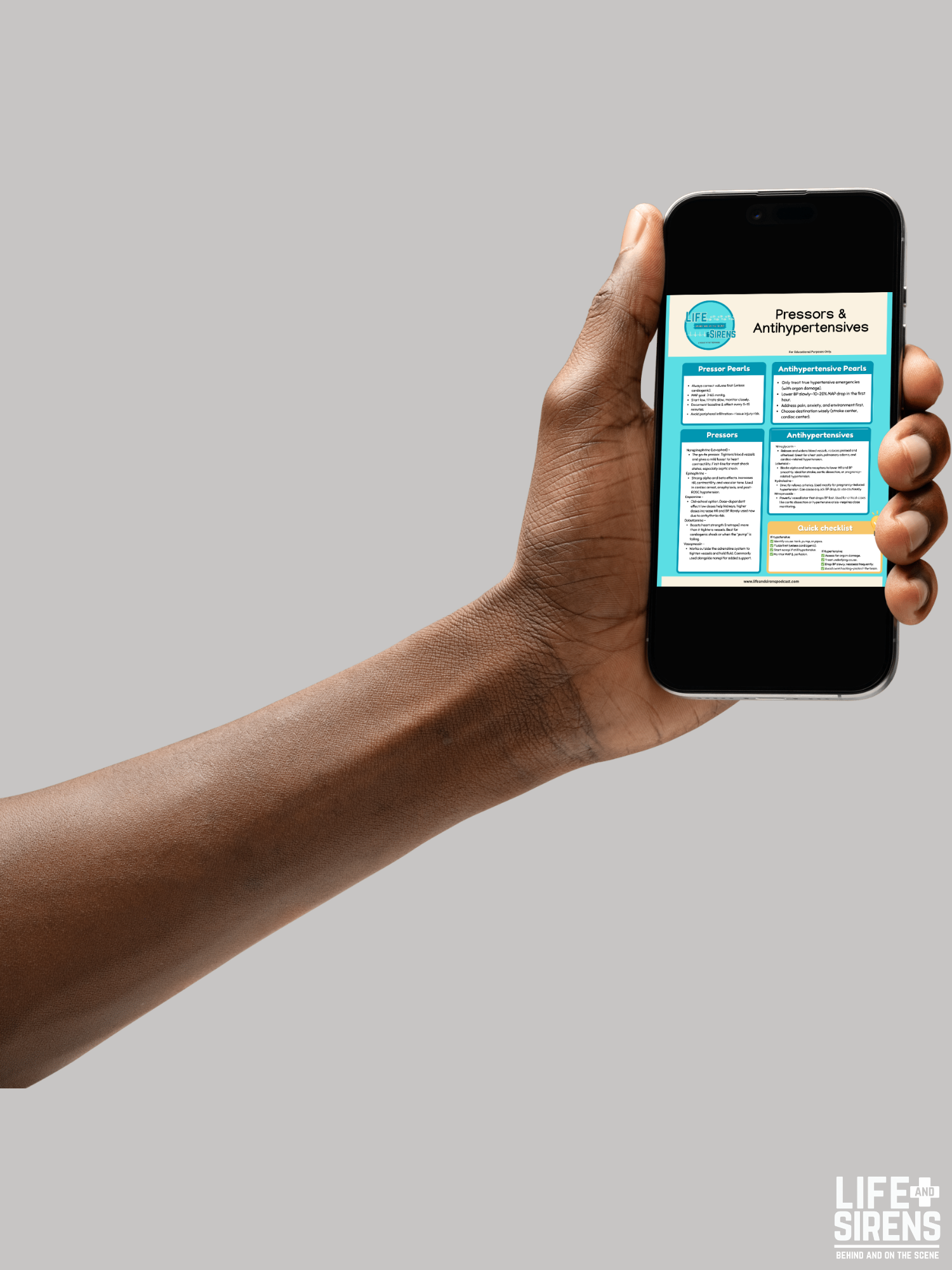
A quick-reference guide for managing blood pressure when it actually matters.
This EMS-focused Pressors & Antihypertensives Cheatsheet is designed to support rapid decision-making during hypotensive and hypertensive emergencies. It organizes commonly used vasoactive medications into a clear, easy-to-scan format—ideal for high-acuity calls, post-ROSC management, and critical care transport.
Commonly used pressor and antihypertensive medications
Quick-reference comparisons for mechanism of action
Clinical indications and considerations
MAP goals and hemodynamic pearls
Clean layout optimized for fast review under pressure
📄 Format: Digital PDF download
🖨 Print Size: Full page
This resource is provided for educational and informational purposes only and does not replace clinical judgment, medical direction, local protocols, or formal training. Always follow your agency’s guidelines and medical oversight.
No results match your search. Try removing a few filters.
We'll review your message and get back to you within 48 hours.