
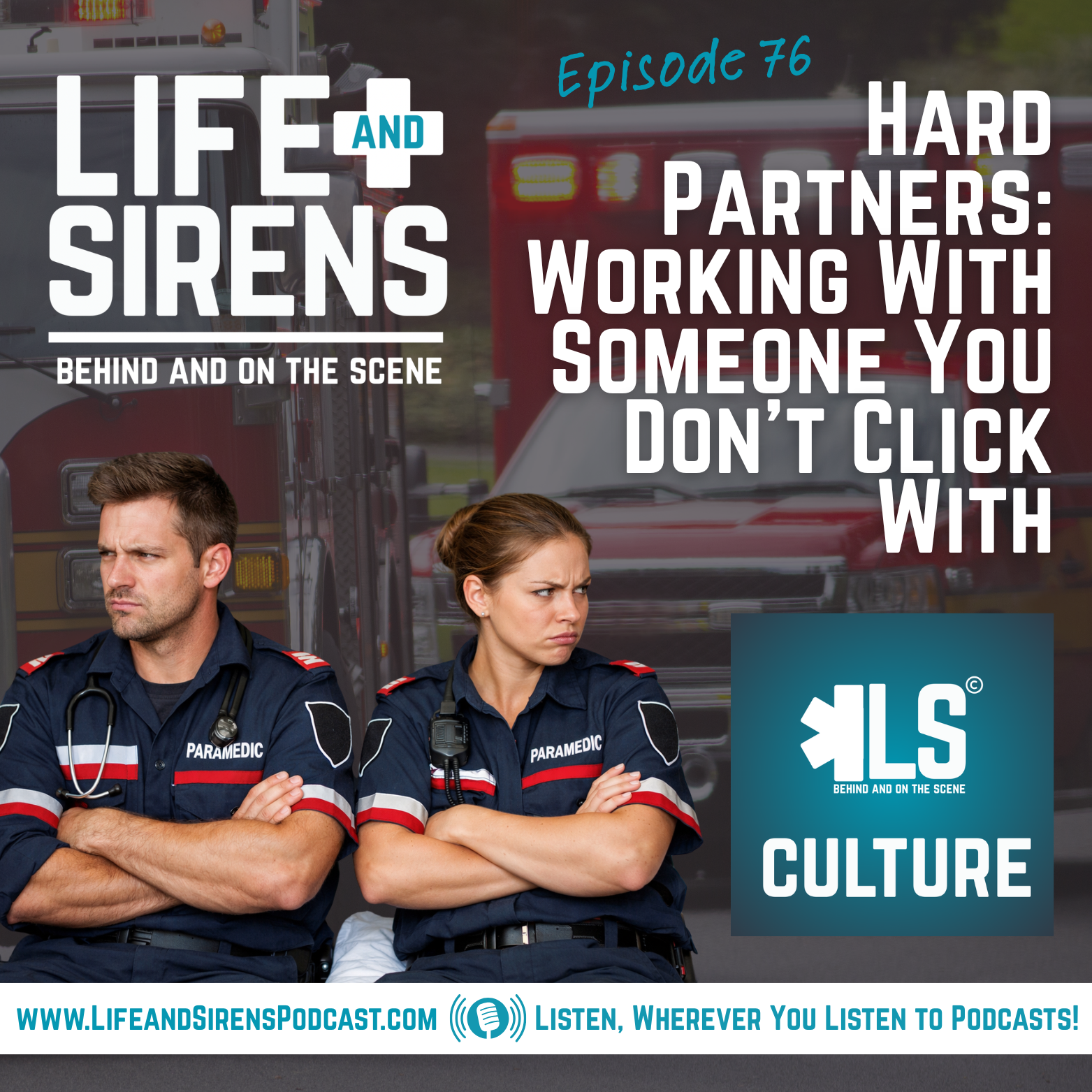
Two-Person Teams, High Stakes: EMS Partnership Dynamics
In EMS, you don’t get the luxury of large teams or long onboarding periods—you get one partner, one truck, and high-stakes decisions from the moment tones drop. In this episode, we take a deep dive into the reality of two-person crew dynamics and how interpersonal relationships directly impact safety, communication, and patient care.
Backed by research and real-world experience, we explore why teamwork in EMS isn’t just about personality compatibility—it’s a clinical competency that affects everything from decision-making to burnout.
In This Episode
Why EMS teamwork is uniquely high-pressure
The difference between task conflict vs relationship conflict
How stress and cognitive load impact communication
What psychological safety actually looks like on a truck
How poor teamwork increases risk for errors
The link between workplace culture, burnout, and retention
Practical strategies to improve partner communication and trust
Why EMS Partnerships Are Different
Unlike most healthcare settings, EMS providers often work in two-person teams, creating:
High dependency on one another
Increased emotional exposure
Limited buffer for conflict
Frequent partner changes and unfamiliar crews mean providers are constantly:
Rebuilding trust
Establishing communication styles
Navigating new interpersonal dynamics
Conflict Is Inevitable—But Not Always Bad
Not all conflict is harmful.
Task Conflict (Cognitive)
Disagreements about patient care or treatment decisions
Can improve outcomes when handled respectfully
Relationship Conflict (Emotional)
Personality clashes or interpersonal tension
Decreases trust and increases stress
Understanding the difference is key to managing conflict effectively.
The Psychology Behind Conflict
When conflict arises, your brain doesn’t just see disagreement—it may interpret it as threat.
This can trigger:
Fight-or-flight responses
Reduced listening
Poorer decision-making
In high-stress environments like EMS, this response can directly impact patient care.
Operational Impact: Why Teamwork Matters
Strong teamwork improves:
Communication clarity
Adaptability during critical calls
Clinical decision-making
Poor teamwork leads to:
Increased cognitive workload
Delayed interventions
Higher risk of errors
In EMS, teamwork isn’t optional—it’s patient safety.
Psychological Safety on the Truck
The best teams create an environment where providers feel safe to:
Speak up
Question decisions
Share concerns
Without psychological safety:
Information gets withheld
Mistakes go unchallenged
Learning stops
Culture, Burnout & Retention
Workplace dynamics don’t just affect calls—they affect careers.
Research shows that incivility and poor teamwork are linked to:
Emotional exhaustion
Job dissatisfaction
Increased intent to leave EMS
The Role of Emotional Intelligence
Providers with strong emotional intelligence tend to:
Communicate more effectively
Manage stress better
Build stronger partnerships
They’re also more likely to become effective leaders.
The Attribution Trap
We tend to:
Blame others’ mistakes on their personality
Excuse our own based on circumstances
This bias can quickly erode trust between partners.
Recognizing it is the first step to correcting it.
Practical Strategies for Better Teamwork
Simple habits can dramatically improve partner dynamics:
Pre-shift expectations conversation
Closed-loop communication
Clear role assignment on scene
Private, respectful feedback
Post-call debriefs
These aren’t “nice to have”—they’re essential skills.
Discussion Questions from This Episode
Have you ever had a partner who increased your stress level?
How did that affect patient care?
What behaviors build trust the fastest?
Should agencies have more control over partner assignments?
Is conflict training missing from EMS education?
Key Takeaway
Teamwork is not just personality compatibility—it’s a clinical competency and a psychological skill set.
References
Patterson PD et al. — EMS Workforce & Safety Research (NIOSH)
Fernandez AR et al. — EMS Teamwork Behaviors
De Dreu CKW & Weingart LR — Task vs Relationship Conflict
Edmondson A — Psychological Safety
Flin R et al. — Safety at the Sharp End
Leiter MP & Maslach C — Burnout Research
AHRQ — TeamSTEPPS
Rock D — SCARF Model
Ross L — Fundamental Attribution Error
