
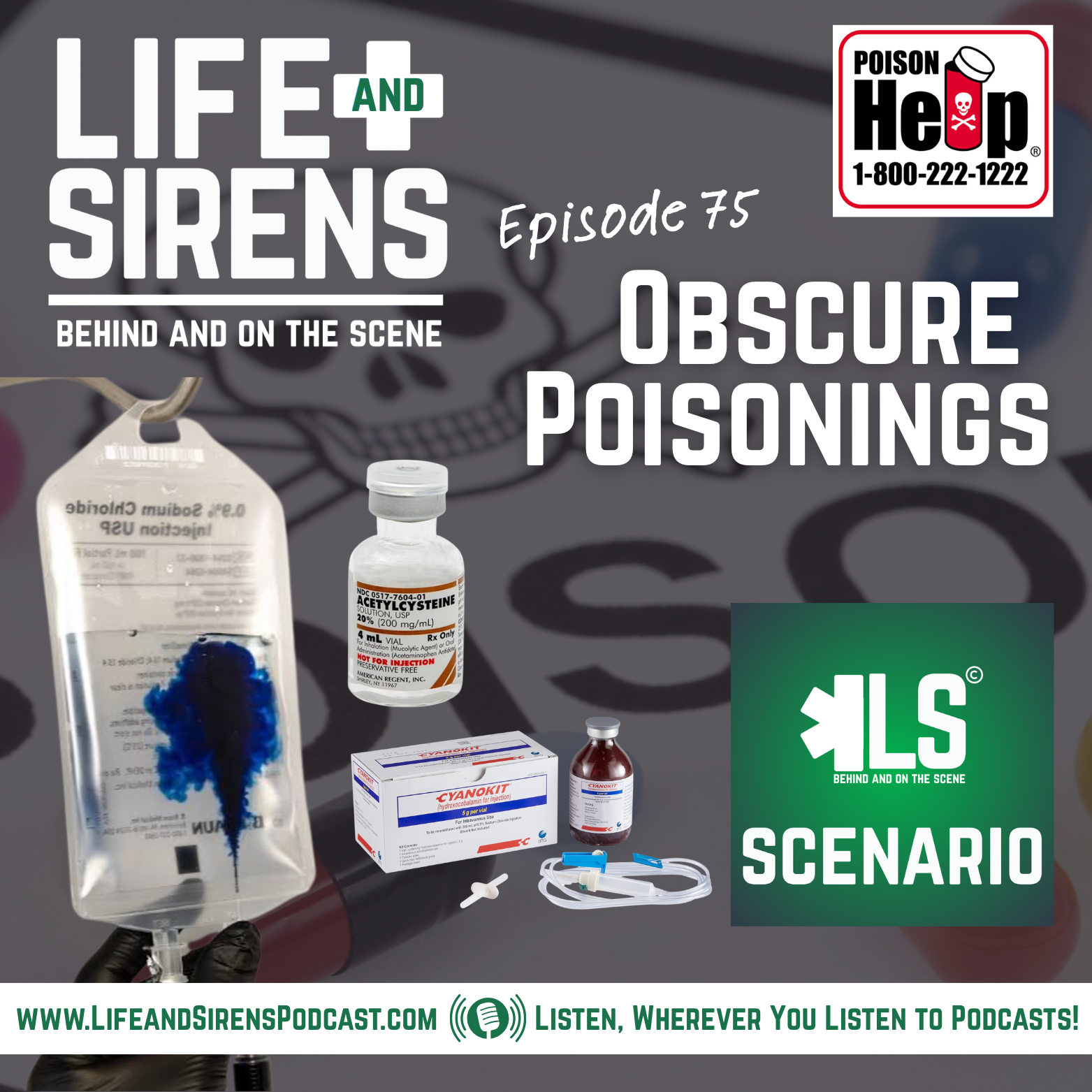
Because not every altered mental status is what it seems.
The Call That Doesn’t Add Up
Dispatch drops tones for an altered patient. You walk in expecting the usual—maybe hypoglycemia, maybe drugs, maybe sepsis.
But something feels… off.
They’re tachycardic.
Breathing fast.
Skin flushed.
Glucose normal.
And then someone says, “He was working in the garage all morning.”
Within minutes, the patient begins to seize.
No trauma. No clear history. No obvious answer.
So what’s actually happening?
The Reality of Toxicology in EMS
You don’t need to be a toxicologist to manage these patients—but you do need to recognize when something isn’t adding up.
The most dangerous poisonings in EMS aren’t always obvious. They often present like:
Stroke
Sepsis
Overdose
Psychiatric emergencies
The key isn’t memorizing every toxin—it’s learning to recognize patterns.
Toxic Alcohols: The Delayed Killers
Methanol & Ethylene Glycol
These patients often look “just drunk”… until they don’t.
The danger isn’t the alcohol itself—it’s what the body turns it into:
Methanol → Formic acid → damages the optic nerve
“Methanol steals sight before it steals life.”Ethylene glycol → Oxalic acid → causes kidney failure
High-Yield Clues:
Tachypnea without lung findings
Severe nausea and vomiting
Vision changes (“snowstorm vision”)
Normal glucose despite altered mental status
The Trap:
Symptoms may worsen 12–24 hours later. Patients can appear stable… then crash.
🚑 EMS Focus:
Airway awareness
Cardiac monitoring
IV access
Early transport
Cyanide: The Hidden Killer in Smoke
Cyanide poisoning is far more common than most EMS providers realize—especially in structure fires.
Modern materials (plastics, foam, insulation) release cyanide gas when burned.
💡 Key Concept:
The body has oxygen… but can’t use it.
This is called histotoxic hypoxia.
🚨 Field Clues:
Altered mental status
Hypotension
Cardiac instability
Severe lactic acidosis
Pearl: Lactate > 8 is highly concerning for cyanide.
💉 Treatment:
Hydroxocobalamin (Cyanokit)
Converts cyanide into vitamin B12
Turns the patient (and urine) bright red
If your fire patient is crashing faster than expected—think cyanide.
Organophosphates: When the Body Floods Itself
Seen in:
Farms
Pesticide exposure
Industrial accidents
Suicide attempts
What Happens:
Organophosphates block acetylcholinesterase, causing massive buildup of acetylcholine.
The result? Total parasympathetic overload.
Classic Toxidrome:
SLUDGE-M
Salivation
Lacrimation
Urination
Defecation
GI distress
Emesis
Miosis
Plus:
Bronchorrhea (drowning in secretions)
⚠️ EMS Pearl:
Protect yourself.
These patients can contaminate providers.
You cannot treat the patient if you become the second victim.
💉 Treatment:
Atropine → dry secretions (give aggressively)
Pralidoxime (2-PAM) → reverses the mechanism
Methemoglobinemia: When Oxygen Can’t Bind
Here’s the problem: oxygen is present—but hemoglobin can’t carry it.
Causes You’ll Actually See:
Benzocaine sprays
Nitrates
Contaminated water
Certain medications
Hallmark Sign:
Chocolate-colored blood
Pulse ox that doesn’t match the patient
“When the monitor doesn’t match the patient—trust the patient.”
Treatment:
Methylene blue → rapid reversal
Sodium Nitrite: The Emerging Threat
This is a growing and dangerous trend, often seen in intentional ingestions.
Mechanism:
Forces hemoglobin into a form that cannot carry oxygen → rapid hypoxia.
Field Clues:
Sudden cyanosis
Altered mental status
Severe hypoxia with clear lungs
Gray/blue skin
Treatment:
Methylene blue
These patients can deteriorate fast. Recognition is everything.
How EMS Should Approach Unknown Poisoning
Here’s the shift:❌ Stop asking: “What did they take?”
✅ Start asking: “What is the body telling me?”
Look for patterns:
Oxygenation vs ventilation
Perfusion changes
Mental status trends
Skin findings
Vital sign abnormalities
Immediate Priorities:
Airway
Oxygen
Glucose
Temperature
ECG
IV access
And yes—consider Narcan when appropriate… but don’t anchor on it.
Use Your Resources
Poison Control:
📞 1-800-222-1222
Free. 24/7. Extremely helpful.
Use them.
Final Takeaway
You won’t see these calls every week.
But when you do—they won’t give you much time.
Great medics don’t just treat what’s obvious.
They recognize what’s hiding underneath.
