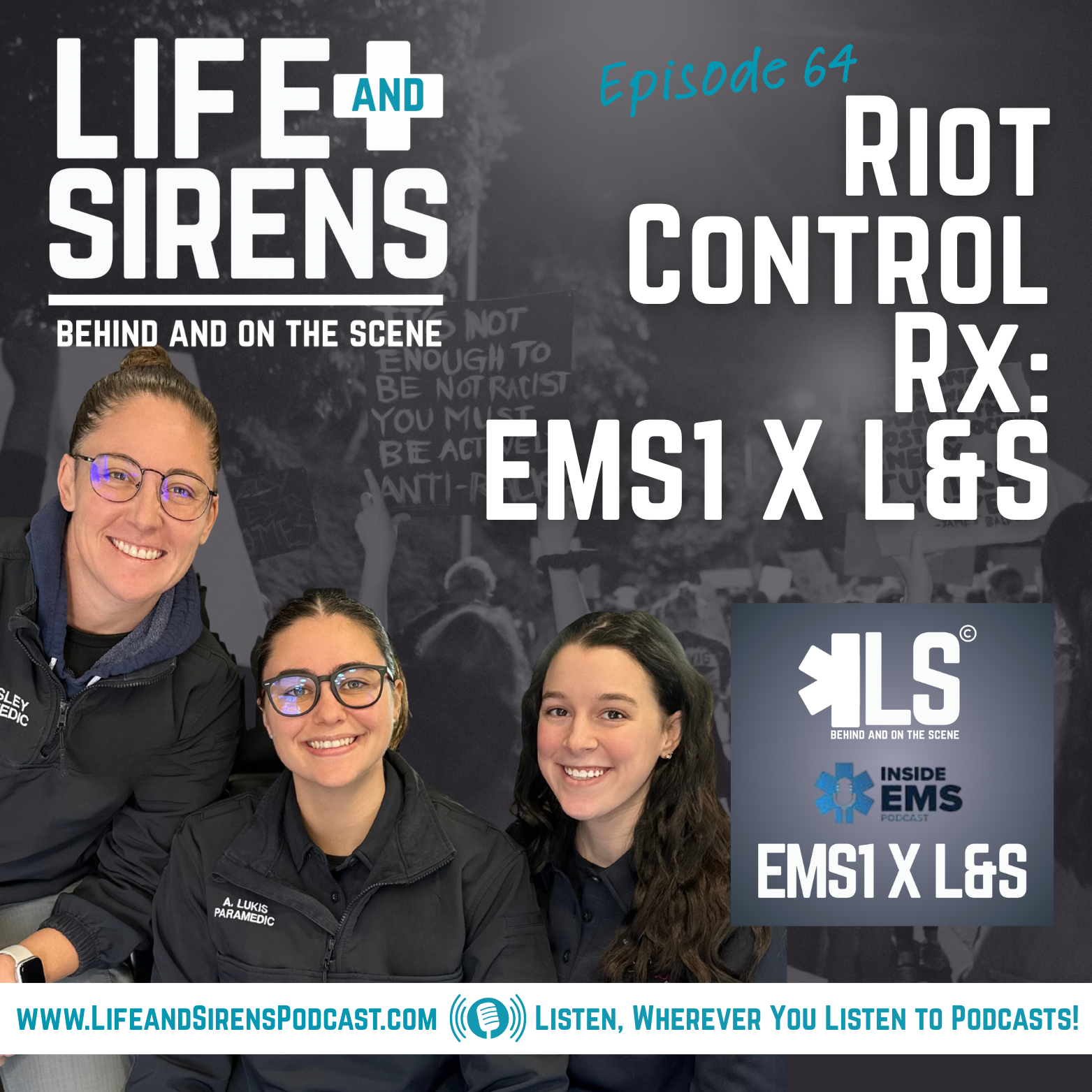
Based on EMS1 Article: “Riot Control Rx: How to assess and when to transport patients injured by tear gas, pepper spray or rubber bullets” (EMS1, January 2026)

Built From EMS1. Built for the Street
This episode — and this conversation — exists because of EMS1.
The Life & Sirens crew developed this content directly from EMS1’s clinical reporting and education leadership. EMS1 continues to be one of the most trusted voices in EMS education, operational insight, and frontline clinical relevance. Their work consistently bridges real-world field medicine with evidence-based guidance — and this topic could not be more timely.
As local and global events continue to create environments of protest, civil unrest, and large-scale public demonstrations, EMS is increasingly encountering chemical exposure patients and impact munition injuries in everyday response.
This is not fringe medicine. This is modern prehospital care.
And EMS1 recognized that before most platforms did.
Why This Topic Matters Right Now
Civil unrest isn’t new — but its frequency, scale, and medical consequences are increasing. EMS agencies are seeing repeated exposure calls during protest events, including:
Tear gas exposure (CS/CN agents)
Oleoresin capsicum (pepper spray)
Rubber bullets and impact munitions
These aren’t political scenarios — they are clinical presentations with predictable physiology, defined mechanisms of injury, and real risk profiles.
EMS1’s reporting reframes this clearly: social context may change, but medicine does not.
Airway is still airway. Breathing is still breathing. Trauma is still trauma.
Chemical Agent Exposure: Tear Gas & Pepper Spray
Clinical Reality
Chemical irritants stimulate pain and inflammation receptors. They don’t “poison” patients — but they can overwhelm respiratory systems, trigger bronchospasm, and create severe distress, especially in vulnerable populations.
Common findings:
Eye pain, tearing, blepharospasm
Coughing, wheezing, dyspnea
Skin burning and erythema
Nausea after ingestion of contaminants
EMS Priorities
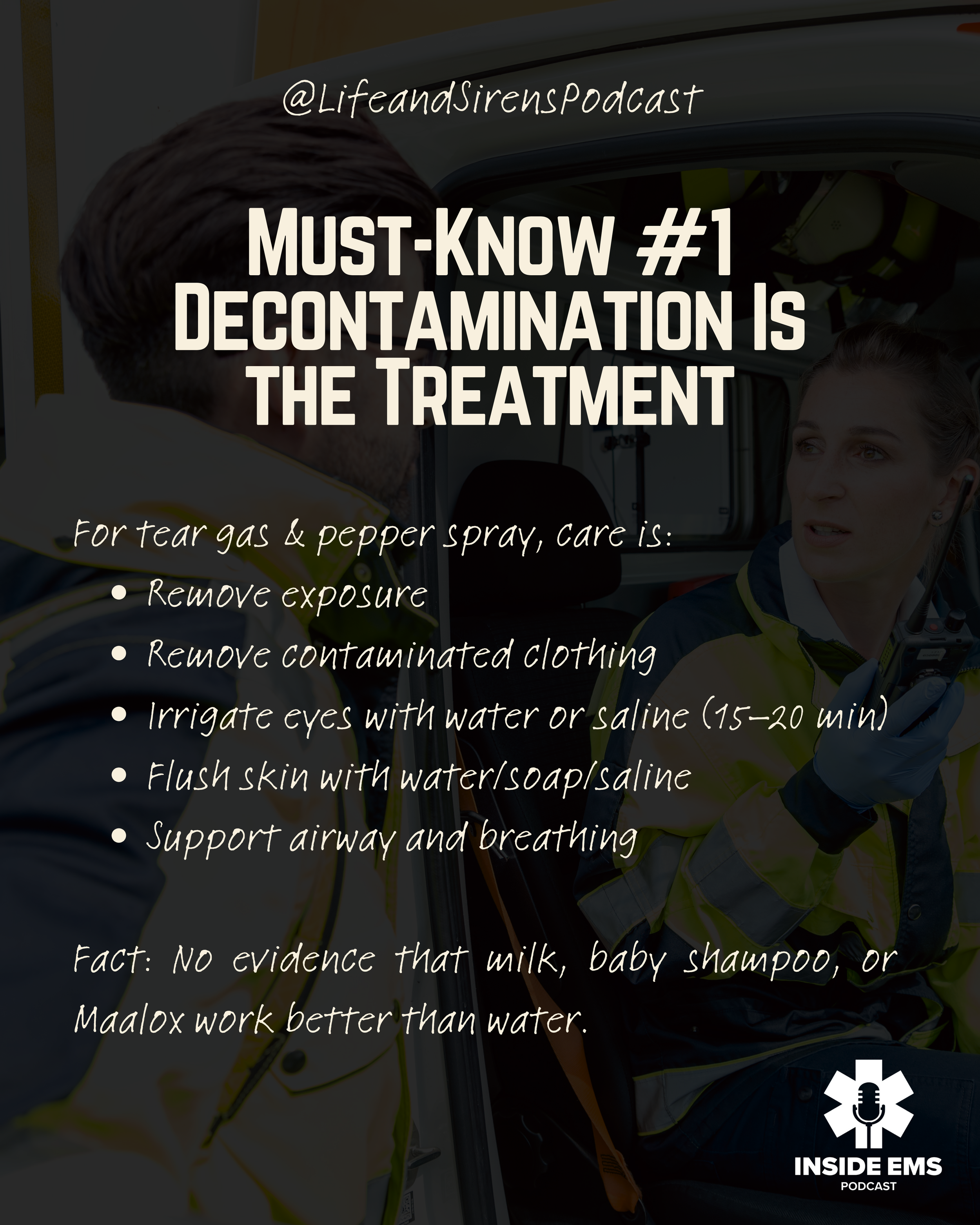
Immediate removal from exposure
Removal of contaminated clothing
Copious irrigation with water or saline
Airway and oxygenation management
Avoid: folk remedies like milk, oils, or non-evidence-based treatments
High-Risk Patients
Asthma
COPD
Cardiac disease
Pediatric and geriatric populations
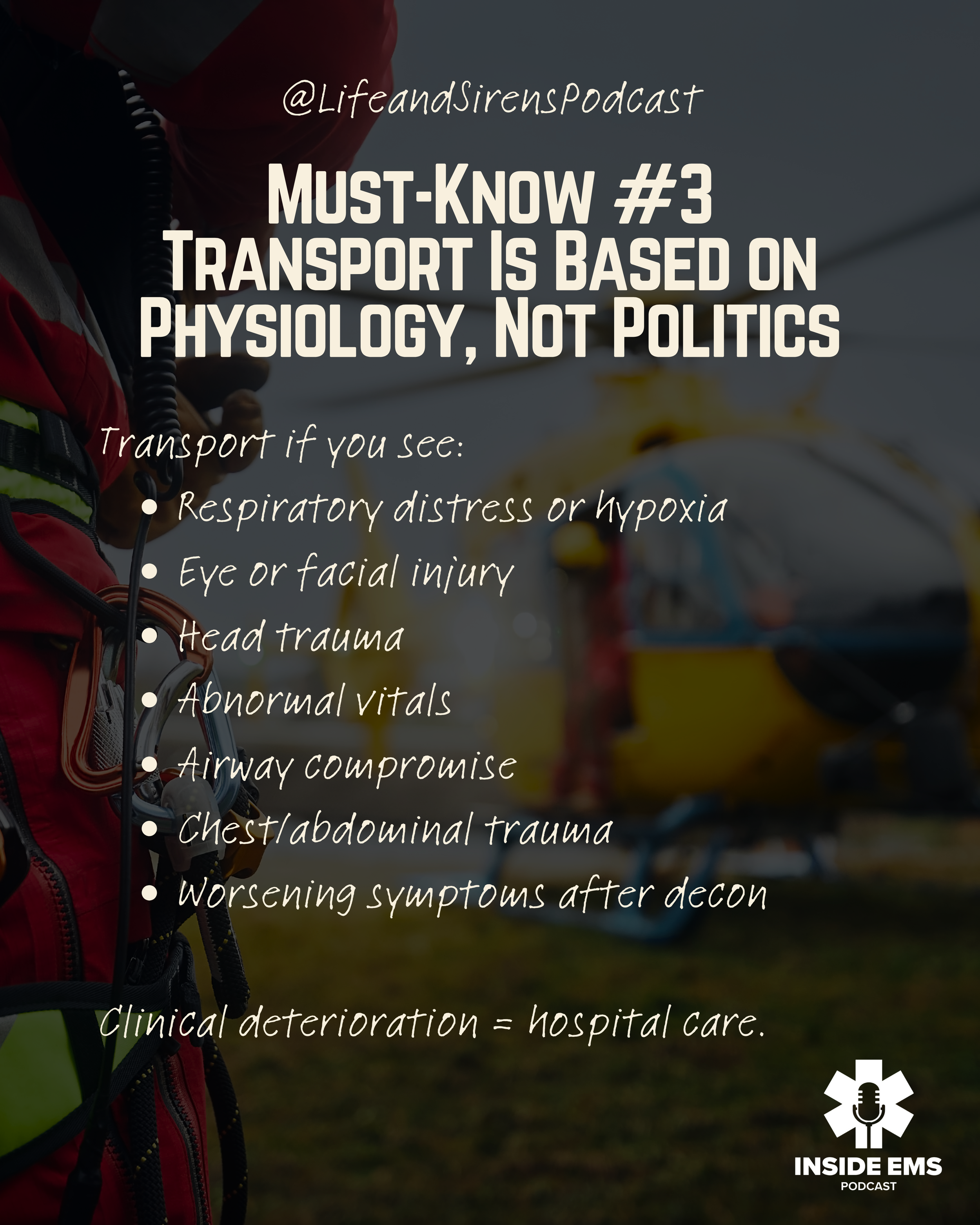
Persistent respiratory symptoms after decontamination = transport decision, not reassurance
Impact Munitions: “Less Lethal” Does Not Mean Low Risk
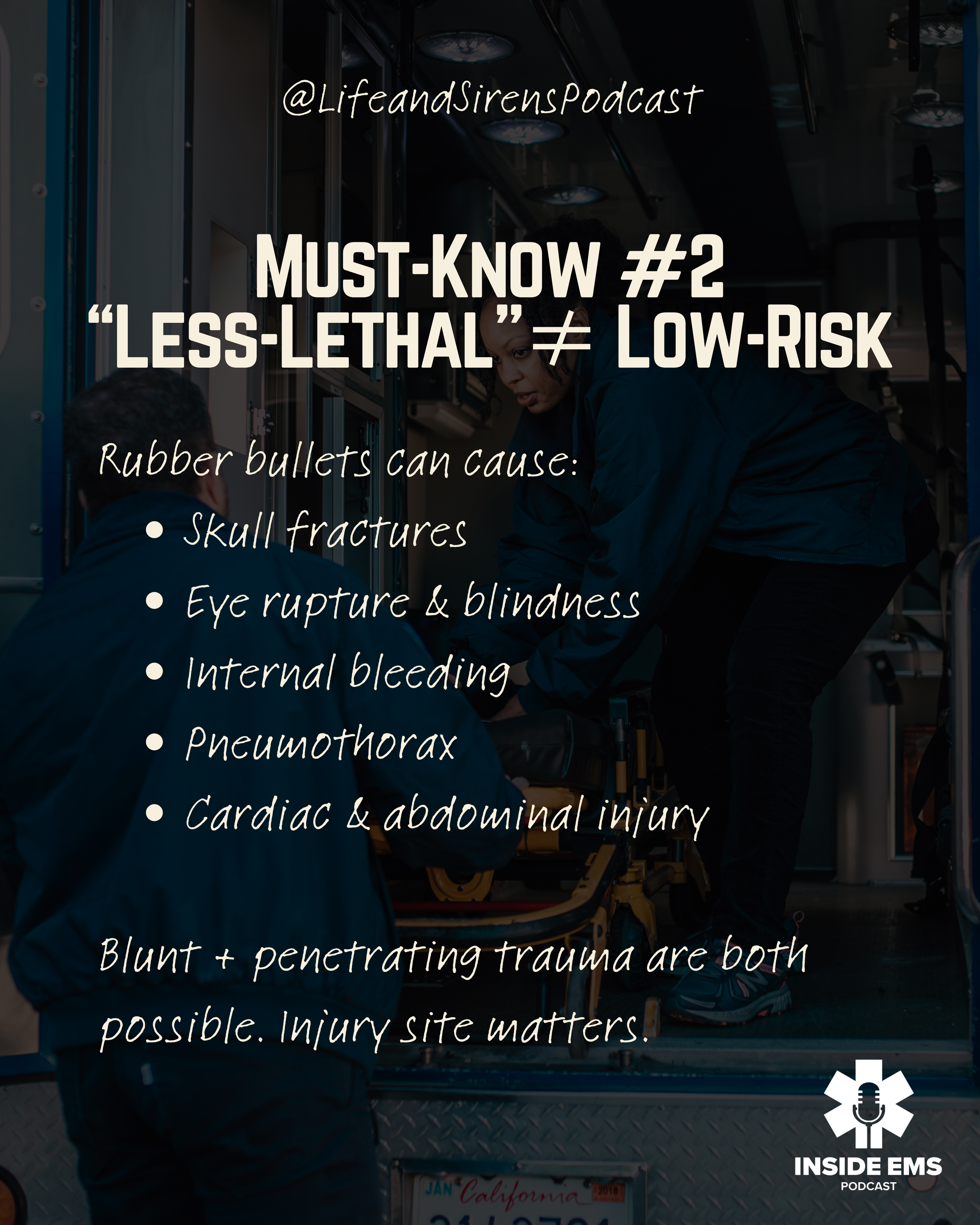
Rubber bullets and similar projectiles transfer kinetic energy capable of causing:
Internal bleeding
Solid organ injury
Fractures
Globe injuries
Head trauma
Field Assessment Must Include:
Focused trauma survey
Abdominal exam
Neurological assessment
Eye evaluation
Chest wall assessment
If it would concern you in an MVC — it should concern you here.
Mechanism matters.
Scene Safety Is Clinical Care
One of the most important messages EMS1 emphasizes — and this episode reinforces — is that scene safety is not secondary to medicine.
Civil unrest environments require:
Law enforcement coordination
Command structure integration
Cold-zone patient contact
Staging discipline
PPE use for airway and eye protection
Unsafe entry creates more patients.
Documentation Is System Medicine
Your PCR is not paperwork — it is system intelligence.
What EMS documents determines:
Hospital treatment pathways
Trauma activation decisions
Airway escalation
QI tracking
Protocol development
System preparedness
EMS1 consistently emphasizes documentation as a clinical tool — not an administrative task.
Practical Field Scenarios
Mild Chemical Exposure
Decontaminate, irrigate, monitor, transport if symptoms persist
Impact Injury
Treat as blunt trauma, assess deeply, transport early
Asthmatic Exposure Patient
Airway-first medicine, bronchodilators per protocol, early transport
Why We Credit EMS1
This entire episode exists because EMS1 continues to lead the profession in:
Relevant clinical journalism
Field-focused education
Evidence-based operational guidance
EMS system awareness
They don’t just report EMS — they shape it.
If you care about where this profession is going, EMS1 and the Inside EMS Podcast should be part of your regular learning.
Final Word
Civil unrest medicine is EMS medicine.
Chemical exposures follow physiology. Impact injuries follow physics. Scene safety follows leadership.
And EMS shows up in the middle of all of it.
Protect your airway.
Protect your eyes.
Protect your team.
Protect your exit routes.
No patient outcome is worth an unsafe entry.
This episode and blog are proudly inspired by EMS1’s reporting and education leadership.
Read the original EMS1 article: Riot Control Rx: How to assess and when to transport patients injured by tear gas, pepper spray or rubber bullets (EMS1)
Explore more EMS1 content and education:
Life & Sirens Podcast
Where medicine meets the moment — and how we show up matters.