Sepsis in Pediatrics: The Call That Looks Fine — Until It Isn’t
An EMS Perspective Driven by Handtevy Thinking
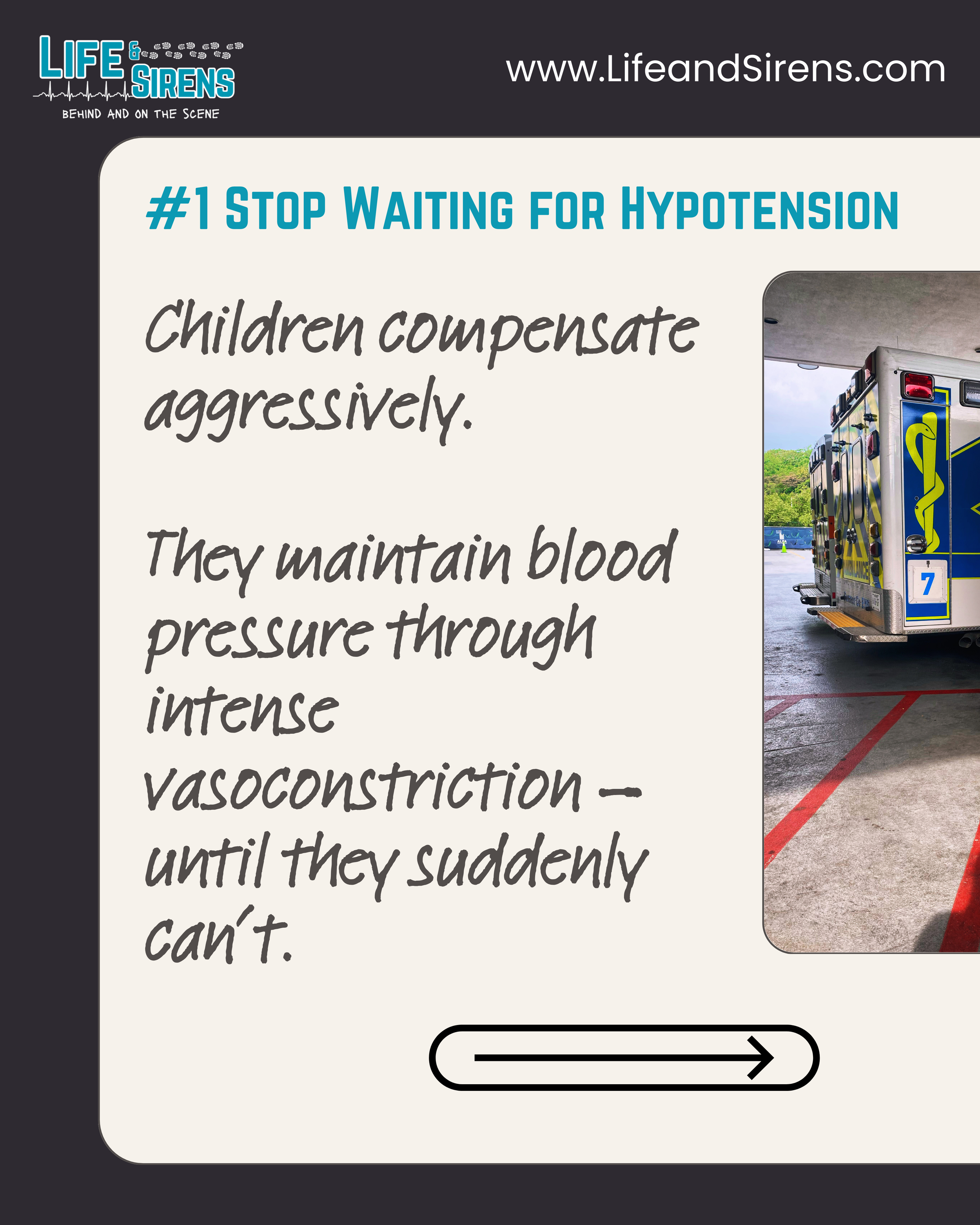
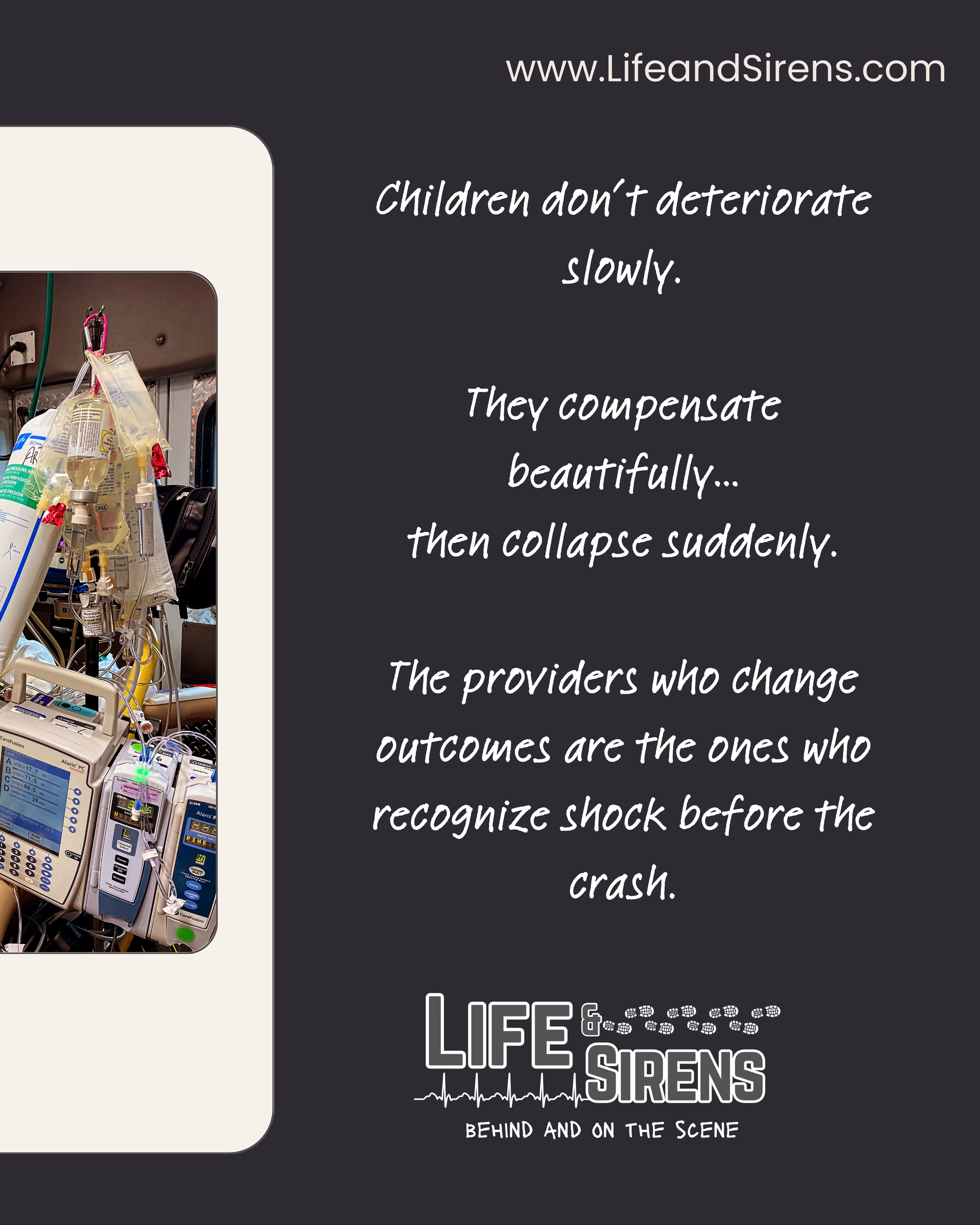
Pediatric sepsis is one of the most dangerous “looks fine” calls we run — because children compensate exceptionally well… until they suddenly cannot.
In the United States, pediatric sources estimate that more than 72,000 children are hospitalized for sepsis each year, and approximately 7,000 die, often described as exceeding pediatric cancer deaths. Outcomes are closely tied to early recognition and early treatment, placing EMS squarely in the critical first link of survival.
This is not a rare zebra.
This is a call hiding in plain sight.
Today, we’re examining pediatric sepsis through the EMS lens — what it actually looks like in homes, urgent cares, daycares, and nursing environments — and how Handtevy-style thinking helps providers recognize the physiologic story before the crash.
Weight-based. Pattern-based. Reassessment-heavy.
Because pediatric sepsis is not about memorizing numbers.
It is about recognizing perfusion failure in motion.
What Pediatric Sepsis Is — and What It Is Not
Sepsis is not simply “a bad infection.” It is a dysregulated physiologic response to infection that leads to organ dysfunction. When it progresses to septic shock, perfusion begins to fail — and in pediatric patients, hypotension is a late finding.
If you are waiting for low blood pressure, you are already behind the disease process.
Surveillance remains complex, but organizations such as the CDC and major children’s hospitals consistently emphasize the significant burden pediatric sepsis places on healthcare systems — and more importantly, on survival.
For infants especially, bacterial sepsis remains among the leading causes of death in U.S. mortality reporting.
The takeaway for EMS?
Stop hunting for a single “sepsis vital sign.”
Start hunting for the pattern.
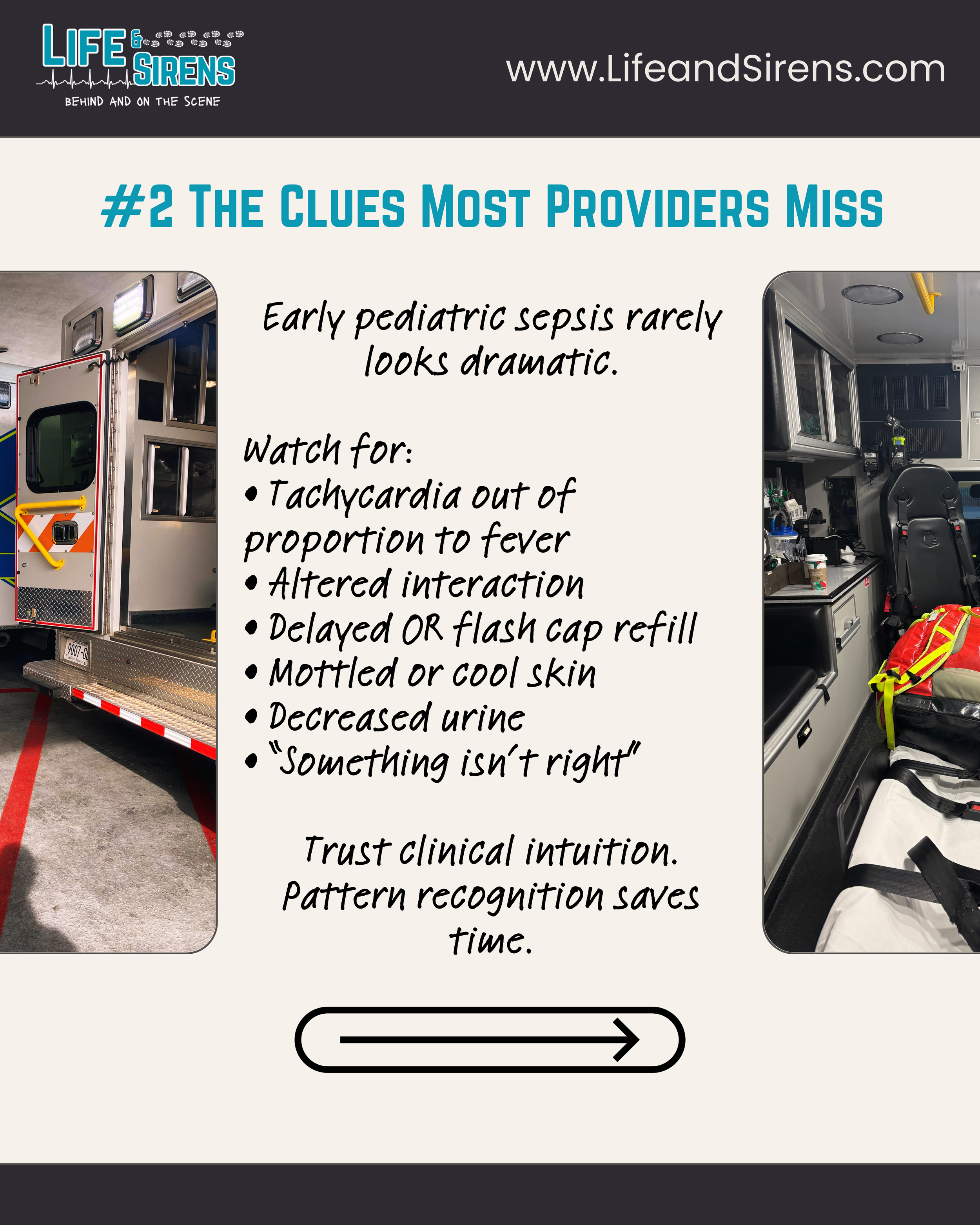
Look for:
Fever or hypothermia
Tachycardia that feels disproportionate
Altered mental status — the child who is “not acting right”
Perfusion changes such as delayed capillary refill, mottling, or cool extremities
Respiratory distress without a clean explanation
Sepsis is not a number.
Sepsis is a story.
And perfusion is the plot.
Why EMS Misses Pediatric Sepsis
Most pediatric sepsis begins disguised as something painfully ordinary.
A viral illness.
An ear infection.
A GI bug.
Pneumonia.
A UTI.
The trap is familiarity.
The beginning looks routine — until perfusion starts failing.
The Flu Kid Who Suddenly Isn’t
Parents often report:
“He’s had a fever for two days… but today he won’t drink and just wants to sleep.”
Red flags that are frequently underestimated in the field include:
New lethargy or inconsolability
Poor intake with decreased wet diapers
Skin that appears mottled, gray, or unusually pale
Viral illnesses can spiral into bacterial infections, severe dehydration, or inflammatory cascades. The moment that matters is often when perfusion begins to flip — and that flip can be subtle.
The “Just Dehydrated” Toddler
You arrive expecting dehydration.
Then you find:
Delayed capillary refill
Cool extremities
Behavior that feels off
Here is the clinical reality: dehydration and sepsis can coexist, and both can progress toward shock.
Handtevy thinking helps remove emotional guesswork from pediatric care. Weight-based interventions become automatic, allowing providers to focus on reassessment rather than calculation.
After every intervention, reassess:
Mental status
Perfusion
Lung sounds
Work of breathing
Reassessment is not extra work.
It is the safety mechanism.
Field Recognition: Commit to the Physiologic Story
Handtevy does more than provide drug dosing.
It trains providers to recognize physiology in motion.
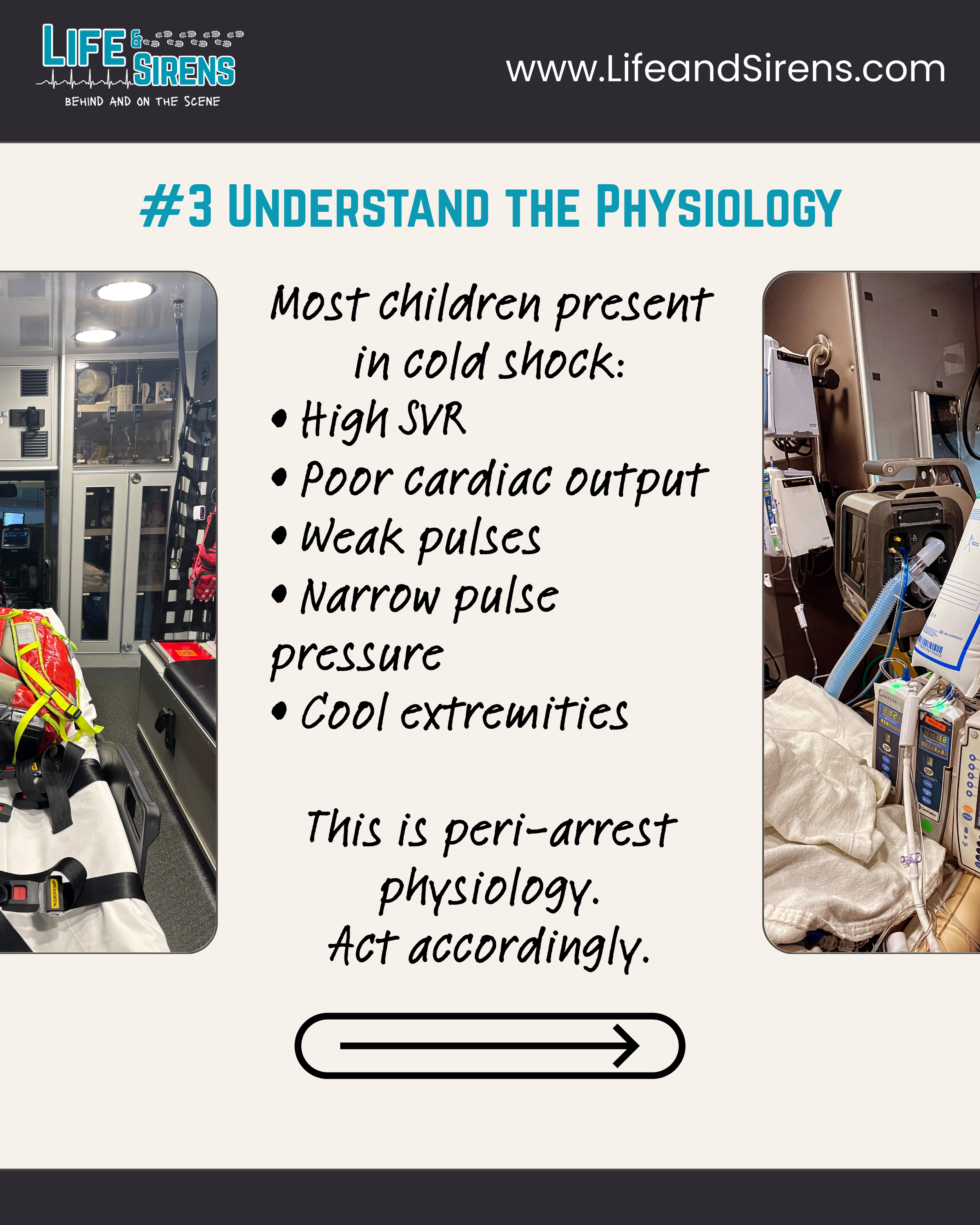
And pediatric sepsis is fundamentally a perfusion problem.
Watch for:
Sleepiness, weak cry, decreased interaction
Mottled skin, weak pulses, delayed capillary refill
Increased work of breathing — not just rate, but effort and fatigue
Persistent tachycardia even after calming or fever control
Temperature extremes, including hypothermia
Equally important is how you communicate the picture.
Use parent quotes.
Establish a timeline.
“Normal yesterday. Worse this morning. Now lethargic.”
Document trends:
“Cap refill 5 seconds, improved to 3 seconds after fluid bolus.”
“Mental status improved from moaning to tracking with eyes.”
Hospitals activate pathways based on stories like these.
Give them the story early.
Treatment Priorities: Time Matters
In pediatric septic shock, minutes are physiology.
Guidelines emphasize rapid recognition, early resuscitation, and timely antimicrobials.
Current recommendations support:
Antibiotics within one hour for septic shock
Within three hours for sepsis with organ dysfunction
Fluid resuscitation remains a cornerstone of early care.
Many pediatric references support an initial 20 mL/kg isotonic crystalloid bolus, followed by aggressive reassessment.
Balanced crystalloids are increasingly favored over normal saline in pediatric resuscitation, though evidence remains evolving.
For EMS, the operational priorities are clear:
Establish IV or IO access early
Deliver weight-based fluids
Reassess constantly
Monitor closely for fluid overload:
Rising work of breathing
Crackles
Hepatomegaly
If shock persists despite fluids, pediatric critical care literature supports early vasoactive therapy under protocol or medical direction.
Again — reassessment is the guardrail.
High-Risk Pediatric Patients EMS Must Recognize
Some children carry a narrower margin for error.
Treat them accordingly.
High-risk groups include:
Young infants
Immunocompromised children (oncology, transplant, chronic steroids)
Medically complex patients with devices such as VP shunts, tracheostomies, or G-tubes
Children with recent hospitalization or healthcare exposure
The Neutropenic Fever Call
When a parent says:
“My child has cancer and a fever — we were told to call 911.”
This is not routine.
Priorities should immediately shift toward:
Time-sensitive transport
Early vascular access
Detailed perfusion assessment
Destination planning
These patients often have protocol-driven antibiotic timelines and can deteriorate rapidly.
The Infant with Poor Feeding and Hypothermia
Not every critically ill infant presents with fever.
Hypothermia can be an ominous sign of systemic compromise — and neonatal sepsis remains a major contributor to infant mortality.
If your gut says something is wrong, listen.
Pattern recognition saves lives.
Documentation and Handoff: Triggering the Hospital’s Sepsis Machine
Your documentation can determine whether the receiving team activates a sepsis pathway — or misses the window.
Hospitals rely heavily on timeline, perfusion data, and response to treatment to initiate rapid therapy.
Document clearly:
Onset and progression
Last known normal
Perfusion findings
Mental status changes
Objective response to oxygen or fluids
Direct parent statements
Effective handoff language matters:
“Concern for sepsis with poor perfusion — cap refill five seconds, mottling, tachycardia, decreased interaction.”
“Received 20 mL/kg isotonic fluid; cap refill improved but tachycardia persists. Still concerning for septic shock.”
Specificity creates urgency.
Urgency saves time.
Time saves tissue.
Tissue saves lives.
The Reality of Pediatric Sepsis
Pediatric sepsis is a stealth emergency.
Children compensate.
Families normalize symptoms.
Scenes often appear calm — until they aren’t.
The data reinforces what experienced providers already suspect: tens of thousands of hospitalizations, thousands of deaths, and outcomes directly tied to early recognition.
EMS is not expected to identify the organism.
We are expected to recognize the physiology.
Perfusion failing.
Mental status changing.
Shock developing.
And to communicate that reality in a way that mobilizes the system.
Because in pediatric sepsis, the difference between subtle and critical is often measured in minutes.
Tiny humans.
Big physiology.
Same mission.